



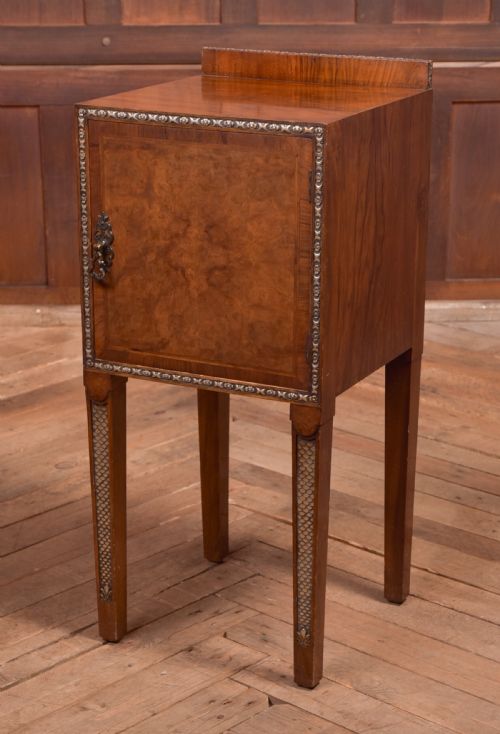
Burr Walnut Night Table
A burr walnut night table brings warmth and rich grain to the bedside, combining practical storage with striking decorative figures.
Burr Walnut Night Table
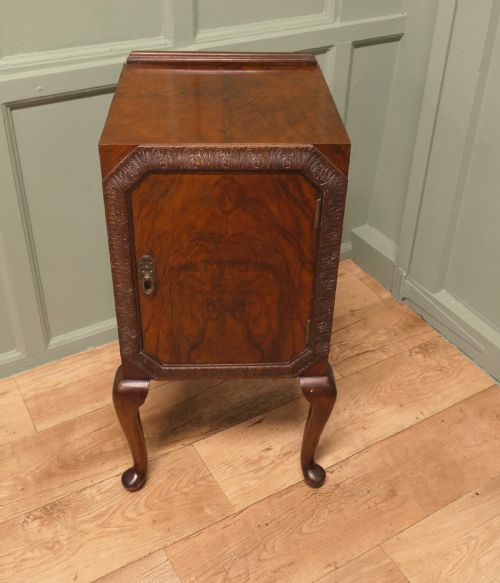
A burr walnut night table is a compact bedside piece designed to hold evening necessities while introducing considerable visual texture to a room. These items appear primarily as bedside cabinets, bedside tables, and pot cupboards from the early twentieth century.
The pieces listed on this page span several distinct decades and design influences, ranging from 1910 through 1930. Buyers frequently encounter Edwardian examples alongside pieces from the 1920s and 1930s.
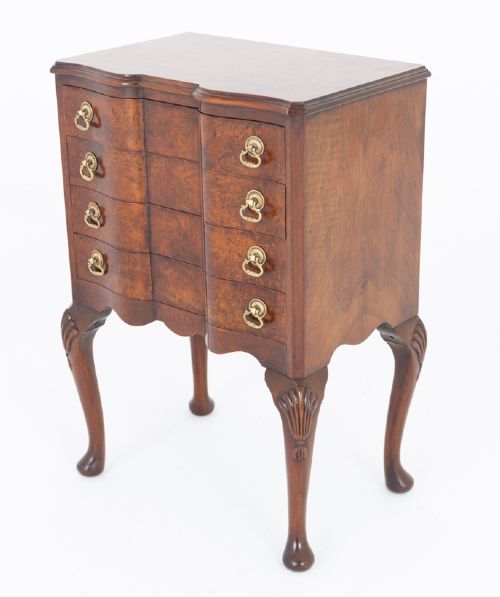
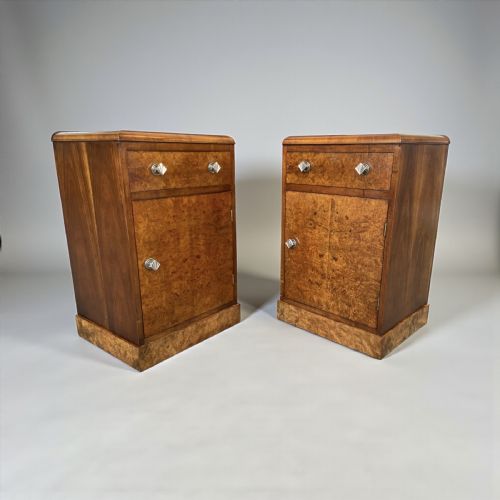
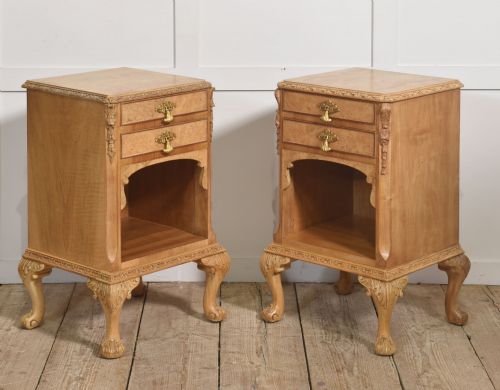
Stylistic approaches for a burr walnut night table divide into traditional revivals and modern interpretations. Queen Anne and Queen Anne Revival pieces sit alongside Art Deco designs.
How these pieces were made
Construction relies heavily on walnut and burr walnut veneer applied over a stable timber carcass to display the swirling grain patterns. Cabinetmakers selected these figured veneers specifically for their decorative impact on drawer fronts and cabinet doors.
Hardware details incorporate brass and chrome, depending on whether the piece follows a traditional revival or an Art Deco aesthetic. Support structures utilise cabriole legs on revival pieces or clean lines for modernist designs.
Burr Walnut Night Table Retail Price Guide 2026
Typical asking prices for burr walnut night table among the pieces listed under this phrase on Sellingantiques today, from the lower quarter to the upper quarter. They describe what is for sale here now, not the wider market.
Many a midnight reader has trusted a humble pot cupboard to guard books rather than its original porcelain contents.
What varies in quality
Quality in a burr walnut night table rests upon the selection and matching of the veneer across the primary surfaces. Finer examples display symmetrical grain patterns that flow seamlessly across doors and drawers.
The integrity of the construction and the refinement of the leg styling dictate the overall standard of the piece. Cabinets with well-proportioned cabriole legs or precise Art Deco geometry stand apart from simpler utility items.
The Burr Walnut Night Table Glossary
- Burr walnut
- A figured wood grain obtained from the wart-like growths on walnut trees. It creates complex, swirling patterns highly prized for cabinet fronts.
- Veneer
- A thin slice of superior wood applied over a secondary timber base. This technique allows cabinetmakers to utilise striking grain patterns economically.
- Cabriole leg
- A furniture leg that bends outward in a convex curve and tapers inward in a concave curve. It often terminates in a pad or scroll foot.
- Pot cupboard
- A traditional bedside cabinet originally designed to house a chamber pot. These practical items now function as general bedside storage.
Burr Walnut Night Table: Frequently Asked Questions
What periods do these night tables come from?
The available selection dates from the early twentieth century, specifically spanning the 1910s, 1920s, and 1930s.
Buyers will find examples representing Edwardian tastes alongside later Art Deco and Queen Anne Revival movements.
How do I identify an Art Deco piece?
Art Deco night tables often feature geometric forms, streamlined silhouettes, and sometimes chrome hardware.
These pieces contrast sharply with the curved lines and traditional forms of the Queen Anne Revival style.
What is the difference between a cabinet and a table?
A bedside cabinet typically includes a door or cupboards to enclose storage space out of sight.
Bedside tables may offer open shelving or surface tops without enclosing doors, though terminology in listings can overlap.
How do I care for burr walnut veneer?
Burr walnut requires protection from direct sunlight and excessive moisture to prevent the veneer from fading or lifting.
Regular dusting with a soft cloth and occasional waxing will maintain the lustre of the polished wood surface.