


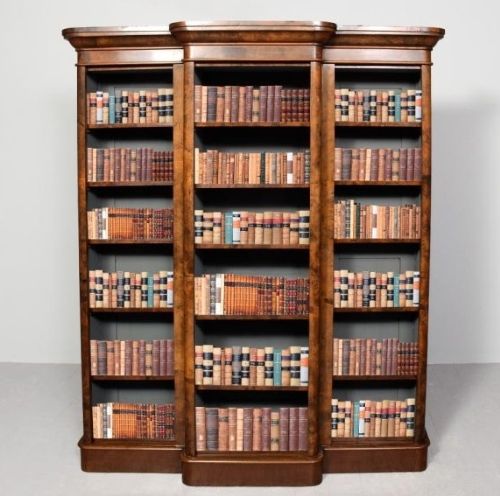


Burr Walnut Display Unit
A burr walnut display unit brings rich, swirling grain and functional elegance to a room, offering a storied home for cherished books and objects.
Burr Walnut Display Unit
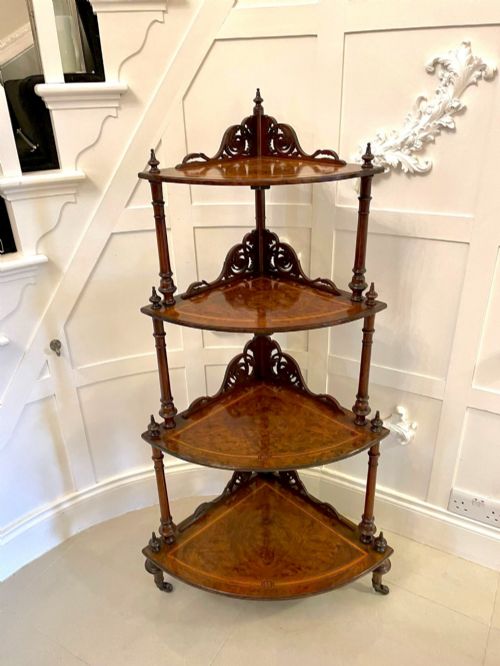
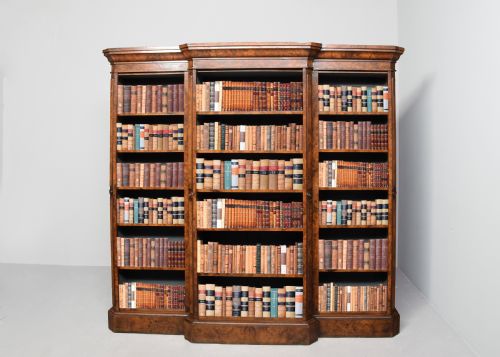
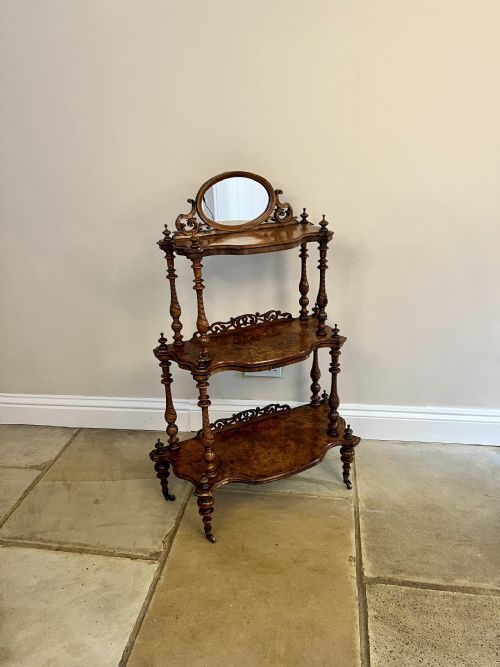
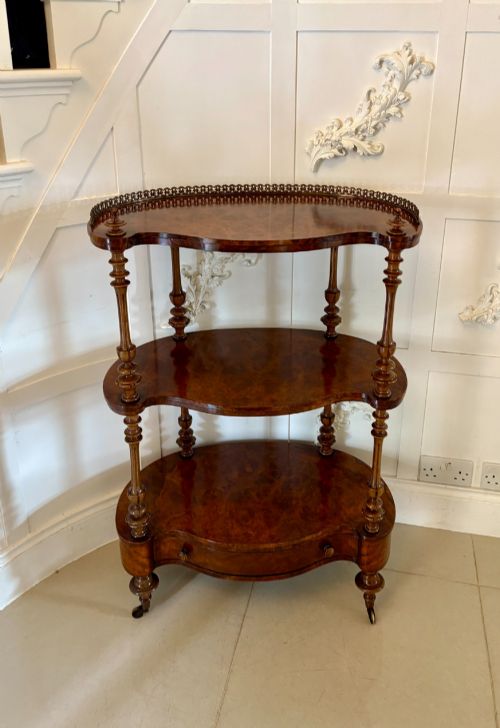
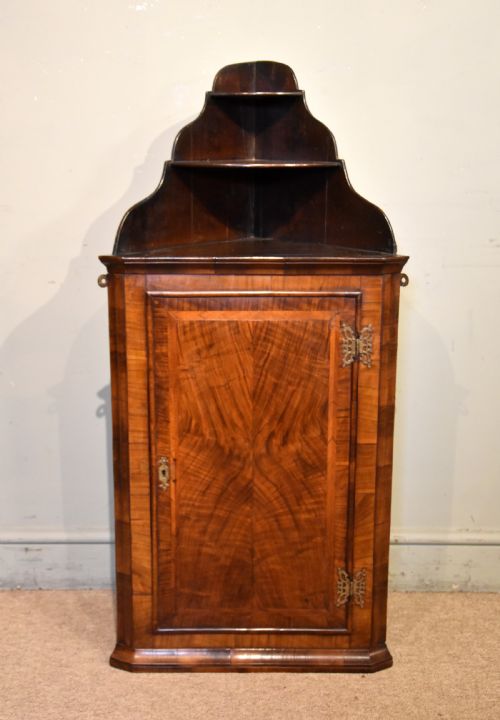
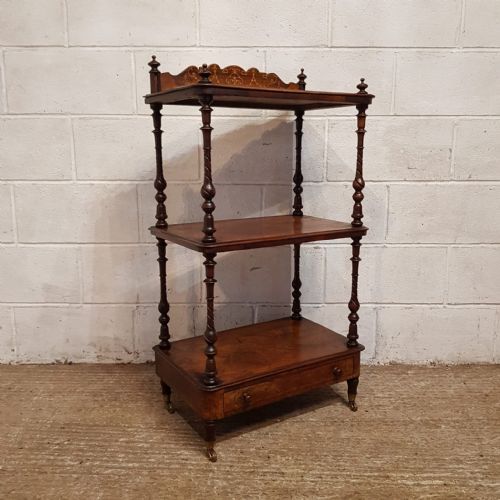
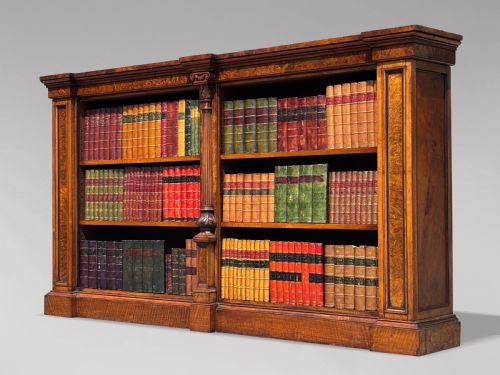
A burr walnut display unit encompasses an array of refined storage forms, including open bookshelves, multi-tiered whatnots, corner cupboards, and glazed cabinets designed to showcase treasured possessions. When exploring this selection, buyers frequently encounter pieces designed for versatile display, from slender early twentieth-century open bookshelves to serpentine Victorian whatnots.
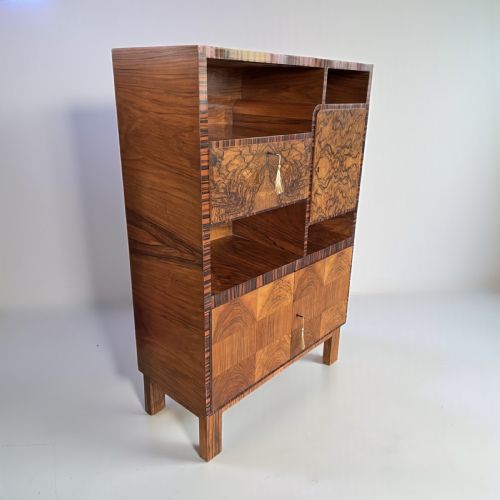
The objects span multiple centuries and stylistic revivals, taking root in eighteenth-century George I and Queen Anne designs through the robust craftsmanship of the Victorian era and into Art Deco creations. These furnishings adapt easily to contemporary interiors while maintaining the architectural silhouettes established in the nineteenth century and earlier decades.
How they were made
Cabinet makers utilised burr walnut veneer over supportive timber carcases to achieve mesmerising, swirling patterns across flat surfaces and curved door panels. This meticulous application of figured wood demanded immense skill to align natural growths seamlessly.
Makers integrated glass panels, mirror glass backs, and cast brass details to complement the dark, rich tones of the walnut timber. Structural integrity was preserved through adjustable shelving systems and sturdy joinery suited to supporting heavy collections of books or decorative objects.
Burr Walnut Display Unit Retail Price Guide 2026
Typical asking prices for burr walnut display unit among the pieces listed under this phrase on Sellingantiques today, from the lower quarter to the upper quarter. They describe what is for sale here now, not the wider market.
The listings span the Victorian era, the Art Deco period, and eighteenth-century revivals, utilising burr walnut, glass, brass, and mirror glass.
What varies in quality
The visual impact of a piece depends heavily on the selection and symmetry of the burr walnut veneer, where master craftsmen matched wild grain patterns across broad expanses. Finer examples display harmonious grain continuity across drawers, doors, and shelves without jarring discontinuities.
Construction depth defines the upper echelon of these furnishings, seen in delicate marquetry inlay, carved architectural flourishes, and serpentine or breakfront profiles. Superior proportions and thoughtful additions, such as adjustable shelving and high-grade mirror glass, elevate utilitarian storage into exhibition-standard furniture.
Epstein
The Burr Walnut Display Unit Glossary
- Burr walnut
- A highly prized timber harvested from the wart-like growths on walnut trees, yielding intricate and swirling grain patterns. It is typically sliced into thin veneers for cabinet fronts.
- Whatnot
- A piece of freestanding furniture consisting of multiple open shelves supported by slender pillars or columns, used for displaying ornaments and books. Victorian examples often incorporate intricate fretwork or mirrors.
- Breakfront
- A large cabinet or bookcase whose central section projects forward from the flanking wings. This architectural arrangement creates depth and visual rhythm in larger rooms.
- Marquetry
- The art and craft of applying pieces of veneer to a structure to form decorative patterns and pictures. Craftsmen use varied wood tones to create intricate floral or geometric motifs.
- Demi-lune
- A half-moon shape used to describe console tables and cabinets with a curved front and flat back. This form allows pieces to sit flush against a wall while saving floor space.
Burr Walnut Display Unit: Frequently Asked Questions
How do I style a display cabinet?
These cabinets suit living rooms, studies, and dining spaces where books and collections need a protective yet visible home.
Allow the rich, swirling grain of the walnut to anchor the room by pairing the cabinet with neutral walls and adequate lighting to highlight the interior shelves.
Are these pieces made of solid walnut?
Most pieces utilise burr walnut veneer applied over a stable timber carcase, a traditional technique that prevents warping while displaying decorative grain.
Solid walnut and secondary timbers form the structural frames, drawers, and internal shelving of the furniture.
How do I date a walnut bookcase?
Dating relies on stylistic clues, such as Queen Anne cabriole legs, Victorian serpentine mouldings, or the streamlined geometry of Art Deco pieces.
Construction methods, including the presence of adjustable shelf tracks and hand-cut joinery, provide further insight into the period of manufacture.