



Burr Walnut Display Table
These burr walnut display tables are showpieces of figured grain and polished glass designed to present precious objects.
Burr Walnut Display Table
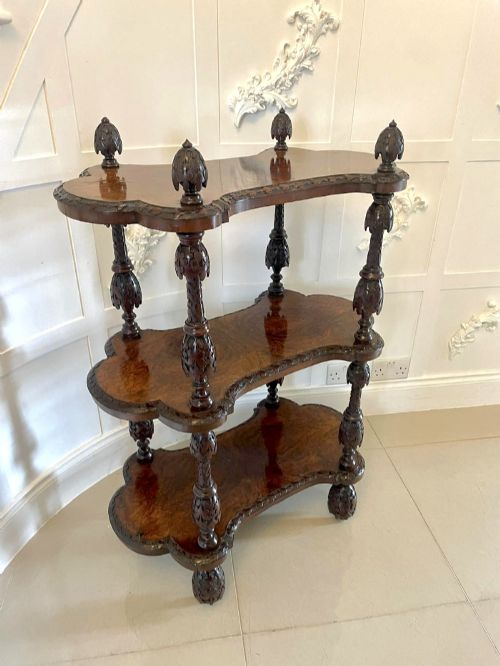
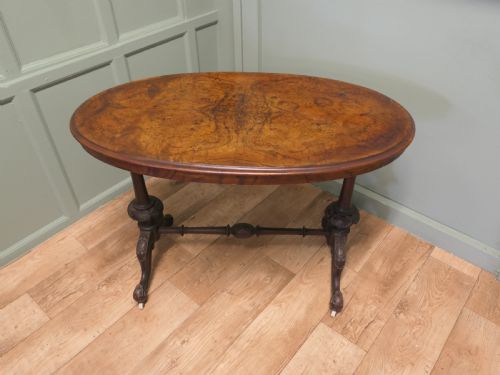
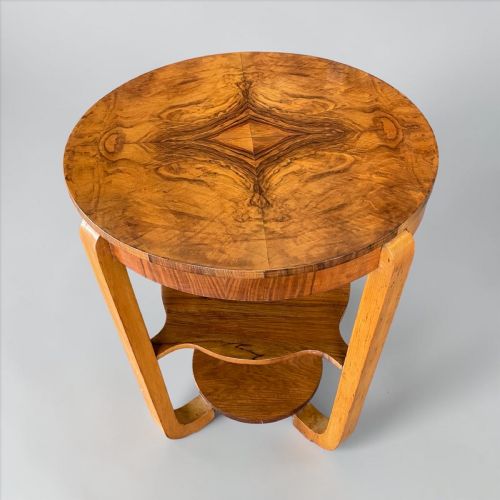
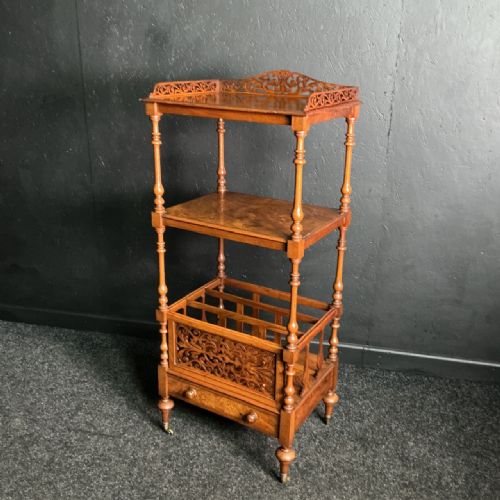
A burr walnut display table brings together rich timber figures and glazed display surfaces across several distinct forms. Buyers searching for a burr walnut display table most frequently encounter tiered whatnots, étaugères, and occasional tables dating from the Victorian and Art Deco eras.
The selection ranges from mid-Victorian freestanding cabinets and demi-lune console tables to streamlined 1930s three-tier occasional pieces. Makers utilised the striking grain patterns of the material to draw the eye, whether in an 1850s exhibition piece or a modernist design.
How they were made
Cabinet makers constructed these pieces using solid timbers overlaid with finely cut veneers of burr walnut to create intricate patterns across tabletops and shelves. Marquetry inlay, brass mounts, and ormolu details frequently accented the polished timber surfaces.
Internal structures incorporated secondary woods like ebony and ebonised timber, while glass panels were fitted into hinged display compartments and tabletops. Structural joinery supported multi-tiered formats such as etageres and whatnots without losing stability.
Burr Walnut Display Table Retail Price Guide 2026
Typical asking prices for burr walnut display table among the pieces listed under this phrase on Sellingantiques today, from the lower quarter to the upper quarter. They describe what is for sale here now, not the wider market.
Listings span from mid-Victorian 1850s exhibition pieces to 1930s Art Deco occasional tables, incorporating brass, glass, and marquetry inlay.
What varies in quality
The richness and symmetry of the burr walnut grain dictate the visual impact of each piece, with tighter and more complex figuring marking out superior examples. Craftsmanship shows in the precision of the marquetry inlay and the integration of brass and ormolu mounts.
Proportion and structural ambition also separate standard production from exhibition pieces, such as grand freestanding whatnots or fine demi-lune consoles. The quality of the original glass and the crispness of carved wooden details further define the upper tier.
Hille·Holland and Sons
The Burr Walnut Display Table Glossary
- Burr walnut
- A prized timber veneer harvested from the deformed growth or node of a walnut tree, yielding dense, swirling grain patterns. It forms the primary decorative surface on these display tables.
- Whatnot
- A multi-shelved open cabinet used for displaying ornaments and small objects. These pieces often feature turned supports and graduated tiers.
- Étagère
- A French-style piece of furniture consisting of a set of open shelves for holding display items. They appear in both Victorian and later 19th-century forms.
- Ormolu
- Gilded bronze ornamentation applied to furniture edges and mounts. It provides a metallic contrast to the dark, figured timber.
- Demi-lune
- A half-moon shape characteristic of console tables designed to sit flush against a wall. This profile maximises floor space while offering surface display area.
Burr Walnut Display Table: Frequently Asked Questions
Where should I place an etagere?
An etagere suits corners or wall placements where its multiple open shelves can catch the light and display collections effectively. Freestanding versions also work well in the centre of a room.
Because these pieces feature finished grain on all sides, many nineteenth-century variants function as room dividers or standalone console accents.
How do I date a burr walnut table?
Dating relies on structural proportions, edge treatments, and the presence of stylistic markers such as marquetry inlay or ormolu mounts. Mid-Victorian examples often feature turned columns and carved fretwork.
Later pieces from the 1930s adopt cleaner modernist lines while retaining the distinctive walnut veneer. Comparing the secondary woods beneath the veneer also helps determine the period.
Are these tables suitable for everyday use?
These tables are designed for gentle display rather than heavy utility, given their delicate veneers and glazed compartments. Regular dusting and careful placement away from direct heat protect the polished finish.
Their sturdy tier construction easily supports books, porcelain, and decorative silver collections when distributed evenly across the shelves.