


Burr Walnut Cylinder Desk
Burr walnut cylinder desk furniture offers rich grain patterns and hidden writing compartments, combining practical workspace with striking domestic display.
Burr Walnut Cylinder Desk
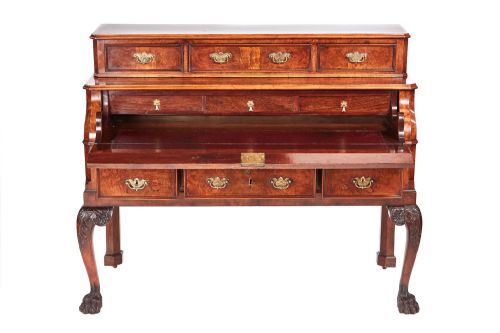
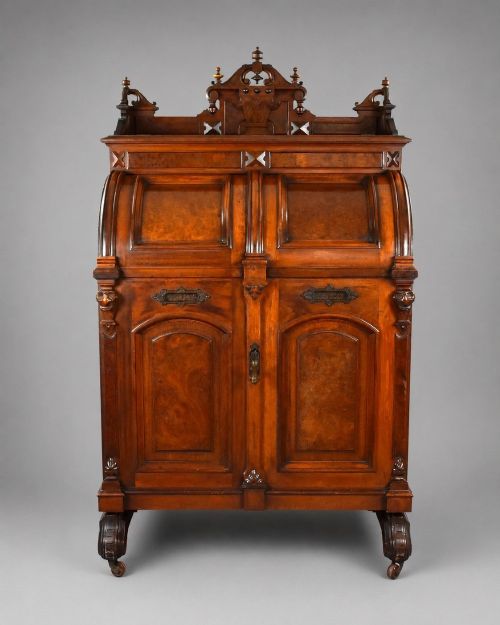
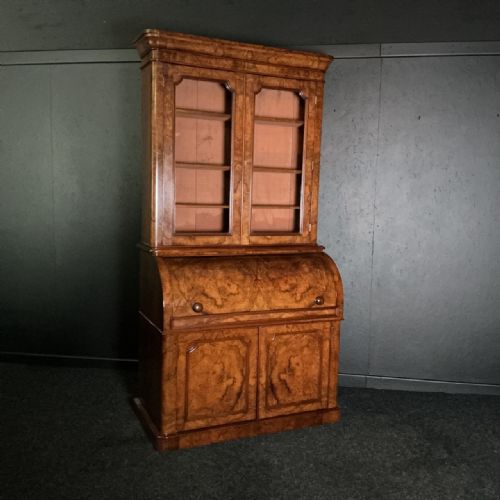
A burr walnut cylinder desk brings together figured timber veneers and a curved enclosing roll top that conceals the fitted interior workspace. Pieces matching this description appear across the Victorian and 18th century periods, incorporating styles such as Dutch Rococo and William & Mary alongside standard Victorian designs.
The selections span comprehensive bureau bookcases and writing desks, where makers utilised walnut, burr walnut, and fruitwood inlay. Buyers encounter forms ranging from mid-nineteenth century pedestal iterations to earlier continental marquetry examples originating in Dutch and Italian workshops.
Construction and materials
Cabinetmakers applied highly figured burr walnut veneers over structural carcasses of oak and secondary timbers, pairing the polished wood surfaces with contrasting fruitwood inlay for floral marquetry details. Brass hardware and leather writing surfaces were integrated into the functional interior compartments of the cylinder action.
Joinery techniques united curved wooden slats for the cylinder roll mechanisms with dovetailed drawer construction and cabinet housings. Giltwood accents and glass doors occasionally completed larger bureau bookcase compositions from the eighteenth and nineteenth centuries.
Current listings and archive records feature pieces spanning from the William and Mary period through the Victorian era.
Judging execution and finish
Quality rests upon the symmetry and richness of the burr walnut veneer selection across the curved cylinder front and main panels. Finer examples display meticulous alignment of grain patterns and precise fruitwood floral marquetry.
The smoothness of the mechanical cylinder action and the complexity of the interior pigeonholes and small drawers distinguish standard production from superior pieces.
Wiggers·Wells Fargo·Wooton
The Burr Walnut Cylinder Desk Glossary
- Burr walnut
- Wood taken from the abnormal growth of a walnut tree, producing swirling, knotty grain patterns prized for decorative veneer.
- Cylinder desk
- A writing desk featuring a rounded, quarter-circle wooden shutter that rolls back to reveal the desk interior.
- Marquetry
- Decorative veneer work arranged in pictorial or floral patterns using various tinted woods such as fruitwood.
- Bureau bookcase
- A dual-purpose tall furniture form combining a slant-front or cylinder desk base with upper shelving enclosed by doors.
- William & Mary
- An English furniture style dating around 1700 characterised by rich walnut veneers and upright architectural proportions.
Burr Walnut Cylinder Desk: Frequently Asked Questions
How do cylinder desks operate?
The curved wooden cylinder slides along a track to open or close, simultaneously moving the internal writing surface forward or backward in some mechanical designs.
This system protected the owner's correspondence and writing materials from dust and prying eyes while maintaining a tidy appearance in the room.
Where were these desks placed?
These pieces sat in libraries, drawing rooms, and studies as primary workspace furniture for estate management and correspondence.
Their finished backs and detailed marquetry often allowed them to stand away from walls rather than remaining strictly confined to corners.
How do I care for burr walnut?
Keep the timber away from direct heat sources and strong sunlight to prevent the walnut veneer from drying out or splitting.
Apply traditional wax polish occasionally to nourish the grain and maintain the depth of the polished surface.
How do I spot 19th century work?
Nineteenth century examples often display heavier Victorian proportions, machine-sawn secondary timbers, and characteristic cylinder mechanisms.
Comparing the secondary woods like oak or mahogany helps distinguish these pieces from earlier eighteenth century variants.