




Burr Walnut Coffer
These burr walnut coffer pieces are figured storage boxes and chests prized for their rich timber grain.
Burr Walnut Coffer
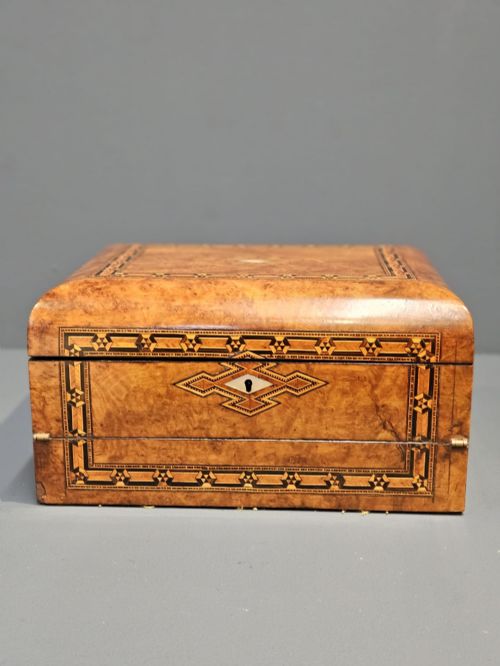
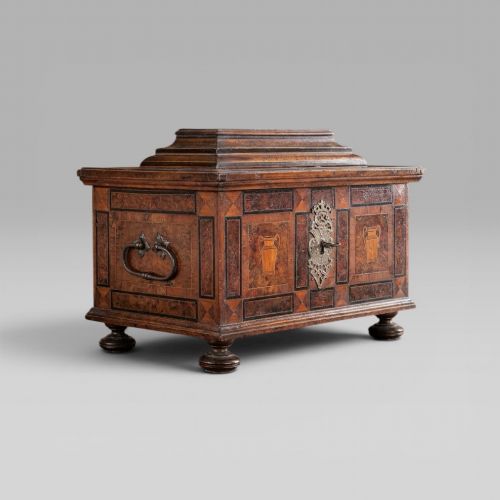
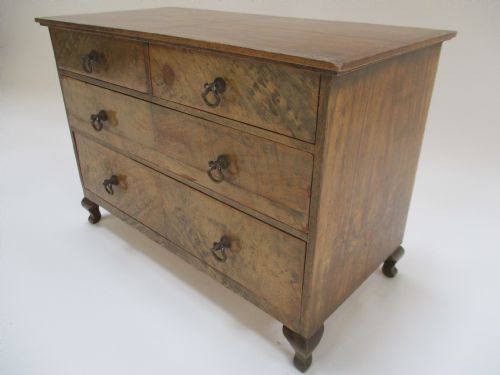
When you search for a burr walnut coffer, you are looking at substantial storage furniture and smaller caskets defined by highly figured timber. The examples on this page span several centuries, reaching from the late seventeenth century through the Georgian and Victorian eras up to the early twentieth century.
The forms vary considerably across these periods, appearing as miniature furniture, jewellery boxes, caskets, cellerettes, mule chests, and larger chests of drawers or chests on stand. Walnut and burr walnut dominate the material record, frequently paired with brass mountings, oak secondary timbers, and occasional marquetry decoration.
You are most likely to meet Georgian chest forms and Victorian smaller boxes when browsing these listings. The styles range through Queen Anne, George I, George III, Regency, Victorian, and Edwardian designs.
Materials and construction
Cabinetmakers constructed these pieces using solid walnut, oak, and other hardwoods for internal framing and structural stability. The characteristic decorative surfaces rely on thinly sliced burr walnut veneers applied to primary panels to display intricate, swirling grain patterns.
Metalwork played a functional and decorative role, with brass hinges, escutcheons, mounts, and iron fittings securing the lids and drawers. Specialised workshops also employed marquetry techniques to embellish specific surfaces on select forms.
Burr Walnut Coffer Retail Price Guide 2026
Typical asking prices for burr walnut coffer among the pieces listed under this phrase on Sellingantiques today, from the lower quarter to the upper quarter. They describe what is for sale here now, not the wider market.
Walnut burrs grow from tree burls as a defensive reaction to stress, accidentally gifting centuries of dining rooms wildly swirling wooden patterns.
Assessing quality
Quality in these pieces rests primarily on the selection and matching of the burr walnut veneer across the primary surfaces. Finer examples display symmetrical grain patterns that flow evenly across drawers and lids, demonstrating superior timber selection by the cabinetmaker.
The sophistication of the secondary construction and the integrity of the original brass or iron mounts also define the higher tier of the range. Pieces retaining their early surface patination and proportioned architectural elements stand apart from later or heavily altered examples.
Whytock & Reid
The Burr Walnut Coffer Glossary
- Burr walnut
- A wood derived from the wart-like growths on walnut trees, yielding highly figured, swirling veneer patterns. Cabinetmakers prize this timber for its decorative impact on primary surfaces.
- Cellerette
- A lockable container or cabinet designed to hold bottles of wine or spirits. These vessels often feature fitted interior compartments and substantial carrying handles.
- Chest on stand
- A case piece consisting of a main chest body elevated on a separate framework with legs. This form raises the storage area off the floor and lightens the visual mass.
- Mule chest
- A traditional storage chest featuring one or more drawers built into the base beneath the main compartment. It combines the deep storage of a standard chest with the accessible drawer space of a cabinet.
Burr Walnut Coffer: Frequently Asked Questions
What is a burr walnut coffer?
A burr walnut coffer is a storage piece constructed with decorative burr walnut veneer. These items range from large chests to small caskets.
Cabinetmakers built them to store valuables, textiles, or provisions while displaying the rich, knotted grain of the walnut timber.
How old are these pieces typically?
The pieces span from the late seventeenth century through the Georgian and Victorian periods into the early twentieth century. Earlier examples often date from the Queen Anne and George I eras.
Construction details and hardware styles help determine the exact period of manufacture for each item.
How were these boxes used originally?
These items served various domestic storage needs depending on their specific form. Larger chests held household linens or clothing, while miniature chests and jewellery boxes secured precious items.
Cellerettes were kept in dining rooms to manage wine and spirits for the household.
How do I care for burr walnut?
Burr walnut requires stable indoor humidity and protection from direct sunlight to prevent the veneer from drying out or splitting. Gentle dusting with a dry cloth maintains the polished surface.
Avoid placing these items near direct heat sources or damp environments.