



Burr Framed Picture
These burr framed picture examples bring tactile warmth to a room through richly grained wooden borders surrounding historic artworks.
Burr Framed Picture
A burr framed picture combines period artwork, such as oil paintings, watercolours, pencil sketches, or needlework, with a distinctive burr wood border. These pieces span eras from the Regency period through the Victorian and Edwardian epochs into the early twentieth century.
Most examples encountered here pair nineteenth-century canvases or paper works with figured maple frames. The subject matter ranges from intimate portrait miniatures and animal studies to architectural engravings and military scenes.
Materials and construction
Makers utilised highly figured burr maple and other woods to create decorative frames that enhanced the visual impact of the enclosed paper, canvas, or panel. These timber sections display swirling grain patterns formed by tree growths.
The artworks themselves utilise traditional media including oil paint, watercolour, pencil, and Berlin work needlework on canvas, protected beneath glass where appropriate.
Burr Framed Picture Retail Price Guide 2026
Typical asking prices for burr framed picture among the pieces listed under this phrase on Sellingantiques today, from the lower quarter to the upper quarter. They describe what is for sale here now, not the wider market.
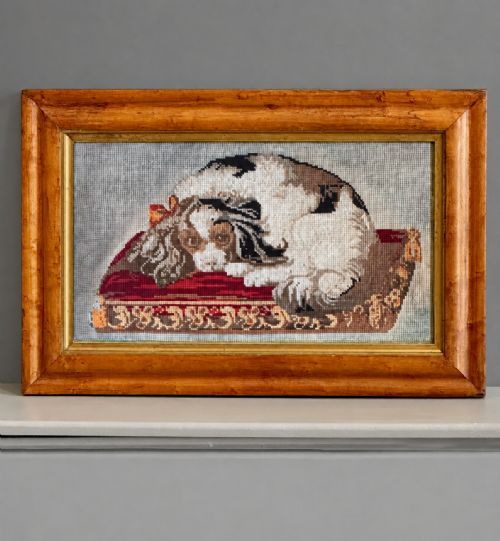
A King Charles spaniel immortalised in Berlin work needlework watches over the collection from its burr maple home.
Assessing quality in burr framed picture items
Quality rests in the intensity and symmetry of the burr wood figuring on the frame, alongside the skill evident in the painting, sketch, or needlework it encloses. Superior examples maintain a harmonious scale between the decorative wooden border and the artwork.
The preservation of the original framing materials relative to the artwork contributes significantly to the integrity of the piece, distinguishing finer decorative objects from later assembled combinations.
The Burr Framed Picture Glossary
- Burr wood
- Timber harvested from tree growths that produces complex, swirling grain patterns. This material was frequently utilised for decorative veneer on nineteenth-century frames.
- Berlin work
- A style of coloured needlework popular in the nineteenth century that used charted patterns. These colourful wool embroideries often appeared in domestic interiors.
- Portrait miniature
- A small, detailed painting executed on materials like paper or vellum. Such works capture individual likenesses on an intimate scale.
- Regency
- A period in British history spanning the early nineteenth century defined by specific neoclassical design characteristics. Pieces from this era often display clean lines and classical motifs.
Burr Framed Picture: Frequently Asked Questions
What periods do these pieces come from?
The inventory spans the Regency era, the nineteenth century generally, the Victorian and Edwardian periods, and into the early twentieth century around 1910 and 1920.
This broad chronological range reflects changing interior decoration fashions where distinct frame types were paired with contemporary or earlier works of art.
What types of artwork are framed?
Items include oil paintings on panel or canvas, watercolours, pencil sketches, hand-coloured portrait miniatures, engravings, and Berlin work needlework.
Each medium offers a different window into historical domestic taste and artistic production across multiple decades.
How do I care for burr framed picture items?
Keep wooden frames away from direct sunlight and sudden temperature shifts to protect the timber and any underlying paper or canvas from fading. Dust the burr wood gently with a dry cloth.
Avoid moisture on both the frame and the exposed artwork surfaces to preserve the original materials over time.
Are the frames original to the artwork?
Many examples retain their period frames, such as burr maple borders housing nineteenth-century needlework or oil paintings.
Examining the construction methods on the reverse helps determine how long the frame and artwork have remained together.