


Burmese Ruby Cluster Ring
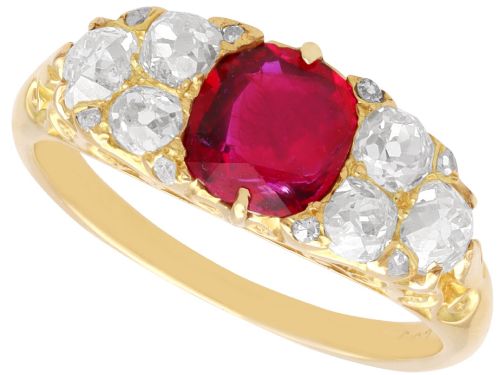
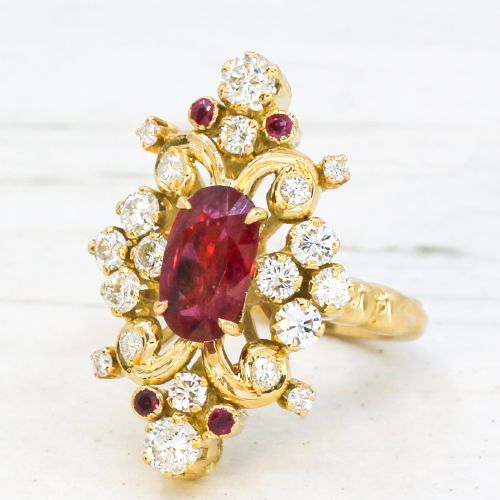
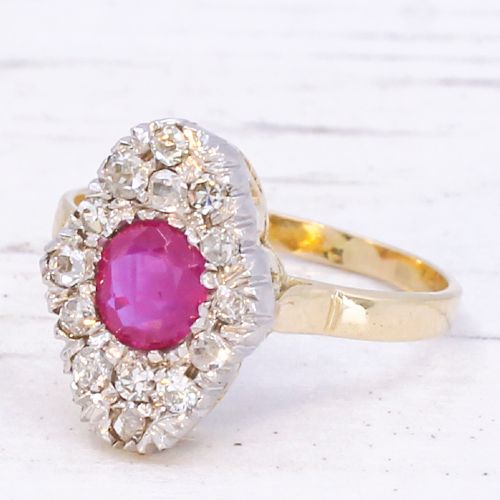
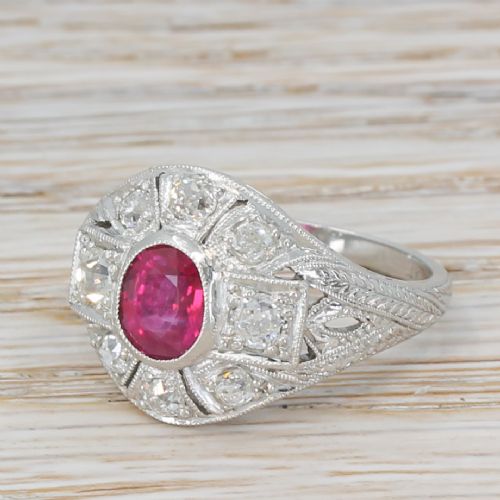
A burmese ruby cluster ring brings together vibrant red stones and sparkling diamonds in lasting precious metal settings from the Victorian, Art Deco and mid-century periods.
Burmese Ruby Cluster Ring
A burmese ruby cluster ring centres on a striking red ruby surrounded by a halo of diamonds. These pieces emerge from periods spanning the Victorian era through Art Deco designs and into mid-century styles.
The version most commonly met on this page pairs a central ruby with diamonds in platinum or gold settings. Art Deco and Victorian examples frequently appear alongside vintage 1940s and 1950s pieces.
How they were made
Goldsmiths worked with platinum, yellow gold, silver, 18ct white gold and 18ct yellow gold to construct these rings. Stones were secured using precise claw or bezel settings designed to maximise light transmission through the rubies and diamonds.
Gemstones shaped as cabochons or faceted cuts were arranged into navette or traditional cluster formations. Old cut, rose cut and brilliant cut diamonds frame the central rubies.
Some nineteenth-century makers used silver settings over gold backs to keep diamond sparkles bright under gaslight.
What varies in quality
The depth of colour in the ruby and the proportions of the surrounding diamond cluster define the visual impact of the piece. Fine examples balance the saturation of the stone with precise symmetry in the metalwork.
The integrity of the original metal settings and the uniformity of the diamond cuts contribute to the character of each ring. Weight distribution across the finger also differs among Victorian navette styles and compact Art Deco clusters.
The Burmese Ruby Cluster Ring Glossary
- Cluster ring
- A ring featuring a central gemstone encircled by a group of smaller stones, typically diamonds. This arrangement maximises overall sparkle and presence on the hand.
- Navette
- A boat-shaped ring design that tapers to points at either end. This elongated silhouette is frequently seen in Victorian pieces.
- Cabochon
- A gemstone shaped and polished with a smooth, rounded surface rather than faceted. This cut highlights the internal characteristics of the stone.
- Old cut diamond
- A hand-cut diamond shape common in antique jewellery, characterised by a smaller table and larger culet. These cuts catch candle or incandescent light distinctively.
Burmese Ruby Cluster Ring: Frequently Asked Questions
How do I care for my ring?
Clean your ring gently using warm soapy water and a soft brush to remove everyday oils from beneath the stones. Avoid harsh chemical cleaners that might affect the metal or stones.
Store the piece in a dedicated fabric-lined box to prevent scratches from other jewellery. Regular checks by a jeweller ensure the claw settings remain secure.
Can I wear this daily?
Platinum and 18ct gold provide durable foundations for regular wear, though older settings require mindful handling during physical tasks. Removing the ring during heavy work protects the delicate prongs.
Victorian and Art Deco pieces benefit from occasional professional inspection to maintain the security of the stones. With sensible care, these rings endure decades of regular use.
What periods do these come from?
The pieces span from the late nineteenth century through the Art Deco era and into the mid-twentieth century. Victorian examples date from the 1880s and 1890s.
Art Deco items typically date from the 1920s and 1930s, while mid-century and vintage designs cover the 1940s, 1950s and 1960s.