





Bullseye Mirror Wood
These bullseye mirror wood pieces gather convex glass and gilded frames to cast a curved room into a single vibrant glance.
Bullseye Mirror Wood
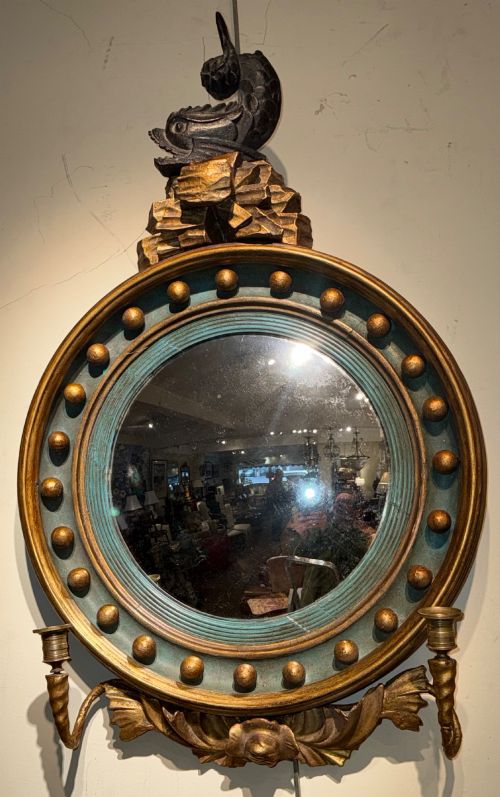
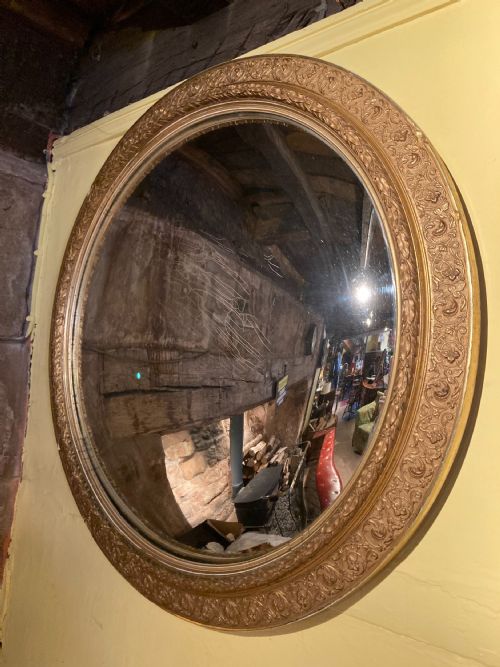
When you search for a bullseye mirror wood piece, you are looking at circular wall mirrors built with convex glass that pushes the entire room back into a wide, curved reflection. These pieces appear most frequently in Regency and nineteenth century formats, alongside later revivals from the early twentieth century.
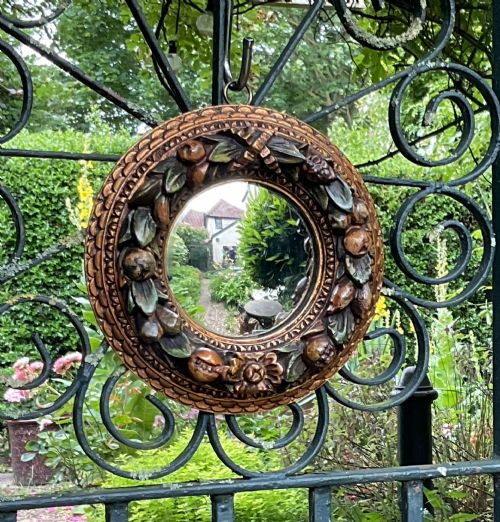
The objects listed on this page take the form of wall mirrors and hall mirrors designed to hang in principal rooms and narrow corridors alike. You will encounter compact carved examples from around nineteen-twenty alongside grander Regency interpretations with gilded frames.
The style spans Regency, Grand Regency, Arts and Crafts, and Victorian revivals, demonstrating how makers returned to the convex form across multiple decades. Each piece relies on a circular wooden frame to contain the hemispherical glass plate safely within its rebate.
How they were made
Makers constructed the primary frames using carved wood, timber, and ebonised wood, often building up decorative mouldings with gesso before finishing the surface. Gilt and giltwood treatments provide the bright metallic sheen seen across the Regency and nineteenth century examples.
The central glass element is formed as a convex plate rather than flat sheet glass, requiring specialised blowing or slumping techniques to achieve the distinctive bulging curve. Carved wooden details, including applied ornaments and crests, are secured directly to the primary frame.
Bullseye Mirror Wood Retail Price Guide 2026
Typical asking prices for bullseye mirror wood among the pieces listed under this phrase on Sellingantiques today, from the lower quarter to the upper quarter. They describe what is for sale here now, not the wider market.
Convex mirrors were often called butler's mirrors because their wide-angle view allowed servants to monitor the entire dining table from a corner.
What varies in quality
Quality rests upon the crispness of the carved wood and the depth of the gesso preparation beneath the gilding. Finer pieces display sharp detail in any applied ornaments, whereas simpler versions rely on plain turned wooden rims.
The integrity of the convex glass plate and the richness of the giltwood surface distinguish the standard of manufacture. Original mercury silvering showing soft oxidation differs visibly from later glass replacements.
The Bullseye Mirror Wood Glossary
- Convex mirror
- A circular glass plate curved outward to reflect a wide-angle view of the interior space. This optical property distinguishes the form from standard flat wall mirrors.
- Giltwood
- Timber coated with a thin layer of gold leaf over a prepared gesso ground. It provides a durable and reflective metallic surface for the frame.
- Ebonised wood
- Timber stained or treated to resemble dark ebony wood. It offers a contrasting dark border around the reflective glass.
- Gesso
- A plaster mixture applied to wooden frames to create a smooth surface for gilding and carving. It allows intricate decorative details to be moulded onto the wood.
Bullseye Mirror Wood: Frequently Asked Questions
What is a bullseye mirror?
A bullseye mirror is a circular wall mirror featuring a convex glass plate that reflects a panoramic view of the room. The curved glass makes interior spaces appear brighter by catching light from multiple angles.
These pieces were historically placed in living spaces and halls to monitor gatherings and distribute natural light. The wooden frames range from plain timber to elaborate gilded designs.
How do I hang a convex mirror?
Convex mirrors require secure wall fixings due to the combined weight of the heavy wooden frame and thick curved glass. You should use a sturdy wall hook or bracket rated to support the specific weight of the piece.
Position the mirror at eye level where the curved reflection captures the best angles of the room. Avoid hanging them in areas subject to dampness to protect the wooden frame and gilt surface.
How do I date a wooden wall mirror?
Dating relies on examining the construction of the wooden frame, the preparation layers beneath the finish, and the characteristics of the glass. Regency examples feature distinct carving styles and framing proportions compared to later nineteenth century and twentieth century revivals.
Tool marks on the reverse of the timber and the method of securing the glass offer further clues to the period of manufacture. Comparing the style to documented pieces helps confirm the era.
What is the difference between gilt and giltwood?
Gilt refers generally to any object surface covered with a thin layer of gold leaf, paint, or metallic powder. Giltwood specifically denotes a wooden base that has been gilded using traditional leaf application methods over gesso.
Understanding this distinction helps identify how the frame was constructed and finished by the maker. Both finishes require gentle dusting without liquid cleaners to preserve the metallic surface.