

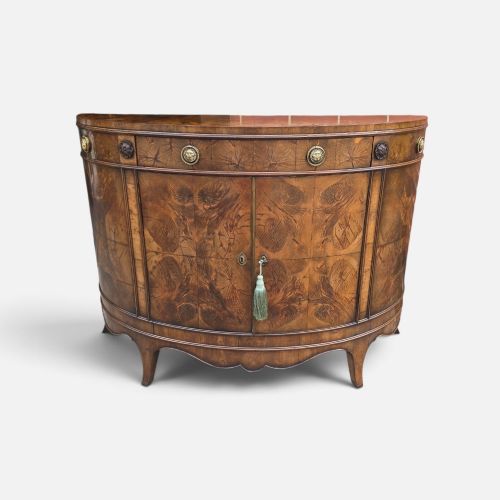


Brown Yew Cabinet
These brown yew cabinet selections bring rich timber grain and classic storage forms into a room, offering warm tones and sturdy construction.
Brown Yew Cabinet
A brown yew cabinet encompasses a diverse range of furniture designed for storage and display, appearing in forms such as chests of drawers, bureau bookcases, side cabinets, and commodes. When exploring this selection, buyers encounter everything from Georgian style reproductions of the 1930s to authentic 18th century examples and Victorian music sheet cabinets.
The objects span multiple centuries and stylistic revivals, including Edwardian pieces, Aesthetic Movement sideboards, and George V serving cabinets. This variety ensures that whether a room requires a compact kneehole desk or a tall standing corner cupboard, the timber grain provides a consistent visual anchor.
How they were made
Cabinet makers utilised solid yew wood and burr yew veneers to accentuate the characteristic knotty patterns and deep warm colour of the timber. Surfaces are frequently enhanced with contrasting details such as ebonised wood and walnut inlay.
Functional elements rely on traditional hardware, incorporating brass handles, locks, and binding. Glazed doors utilise astragal bars to secure glass panels within the wooden framework.
Brown Yew Cabinet Retail Price Guide 2026
Typical asking prices for brown yew cabinet among the pieces listed under this phrase on Sellingantiques today, from the lower quarter to the upper quarter. They describe what is for sale here now, not the wider market.
Music sheets finally found a proper home when Victorian cabinet makers added specialised internal slots behind glazed doors.
What varies in quality
The distinction between tiers of quality rests heavily on the selection and matching of the timber figure, particularly where burr yew or wood veneer is applied across large surfaces like commodes and sideboards. Superior examples display thoughtful grain alignment and meticulous preparation.
Construction methods and secondary details also dictate the standing of a piece, separating standard utility furniture from finer items with intricate brass hardware, inlaid contrasting woods, and precise glazing bars.
The Brown Yew Cabinet Glossary
- Burr yew
- Timber taken from the growth excrescence of a yew tree, prized by cabinet makers for its swirling, highly figured grain patterns. It is frequently sliced into veneers for decorative surfaces on commodes and cabinets.
- Astragal glazed
- A method of framing glass in cabinet doors using slender wooden mouldings known as astragals. This technique divides the glass pane into smaller segments typical of bookcases and display cabinets.
- Kneehole desk
- A compact writing table featuring a central recess for the user's legs, flanked by pedestals of small drawers. These tables often showcase fine yew wood construction.
- Demi-lune
- A half-moon shape used for the footprint and top of side cabinets and commodes. This curved form allows furniture to sit flush against a wall while offering a softer profile.
Brown Yew Cabinet: Frequently Asked Questions
What rooms suit a yew cabinet?
These pieces fit naturally into studies, living rooms, and hallways where their warm timber tones complement traditional and eclectic interiors alike.
Their varied forms, from compact chests to tall bookcases, allow them to function as both practical storage and display focal points.
How do I care for yew wood?
Regular dusting with a dry, soft cloth maintains the natural lustre of the wood finish without building up residue.
Keep the timber away from direct heat sources and strong sunlight to prevent the grain from drying out or fading over time.
What is the difference between solid yew and burr yew?
Solid yew uses the straight-grained heartwood or sapwood of the tree for structural components and standard panels.
Burr yew utilises specialised knotted growths sliced into thin veneers, creating complex and decorative patterns across tabletops and drawer fronts.
How do I identify the period of a piece?
Dating relies on examining the construction techniques, hardware, and stylistic traits associated with eras like the Georgian period, Victorian age, or 1930s revivals.
Materials such as ebonised wood trim or specific brass binding offer further clues to when a cabinet was constructed.