



Brown Wooden Umbrella Rack
A brown wooden umbrella rack is a practical hallway staple, combining sturdy timber frames with dedicated storage for wet walking sticks and coats.
Brown Wooden Umbrella Rack
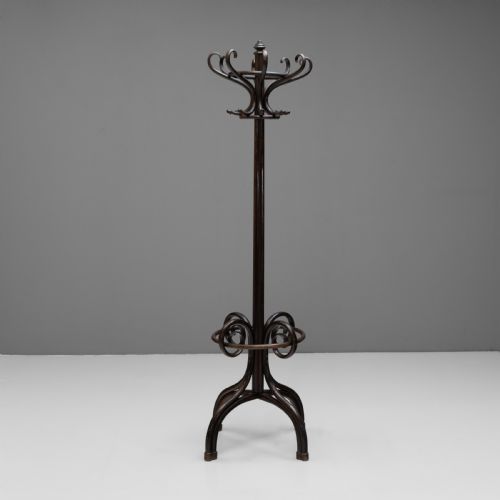
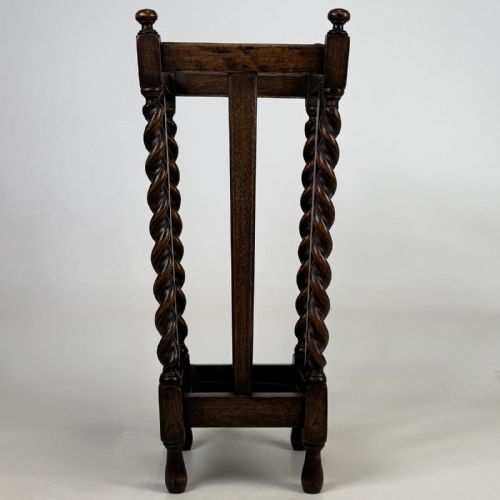
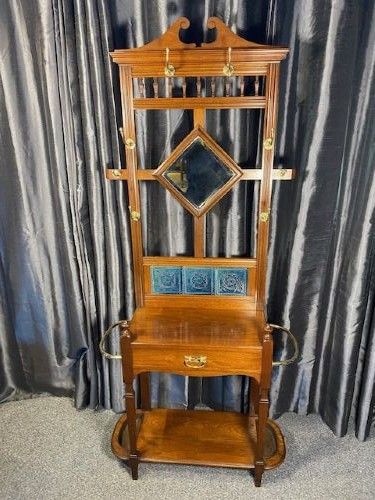
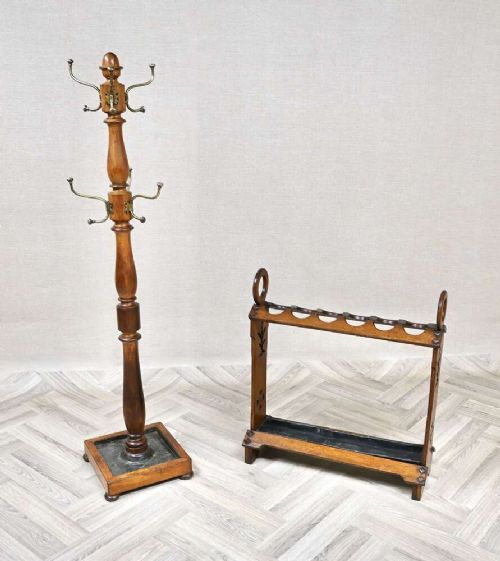
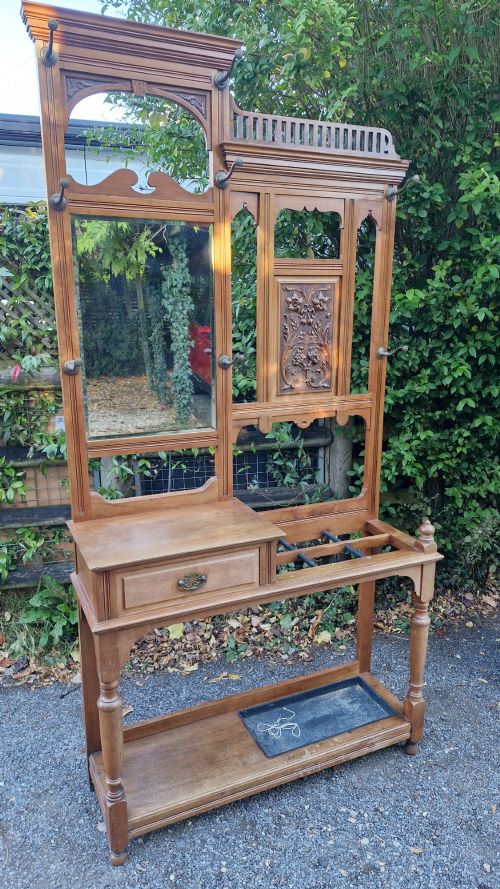
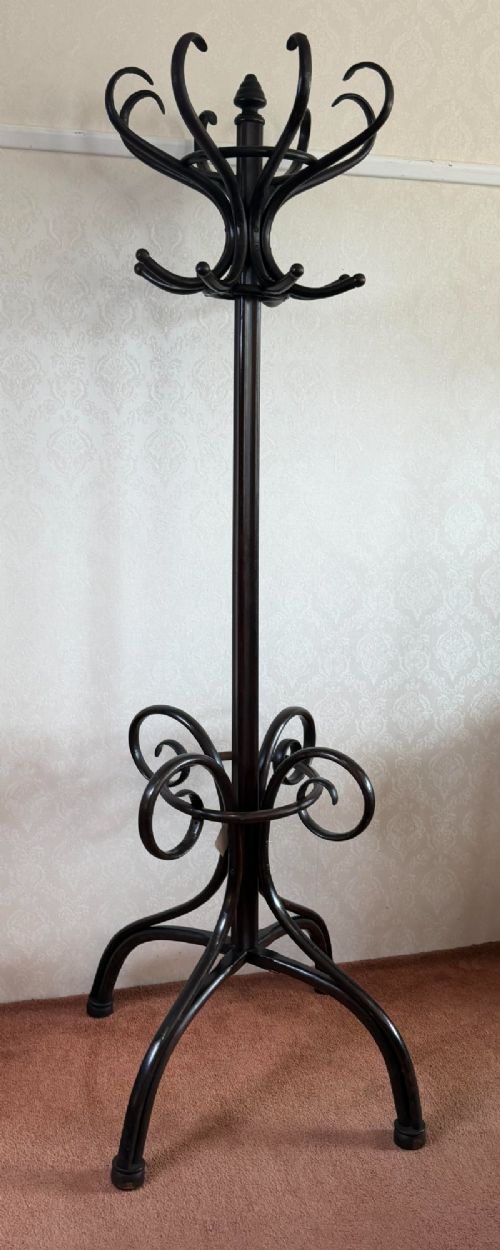
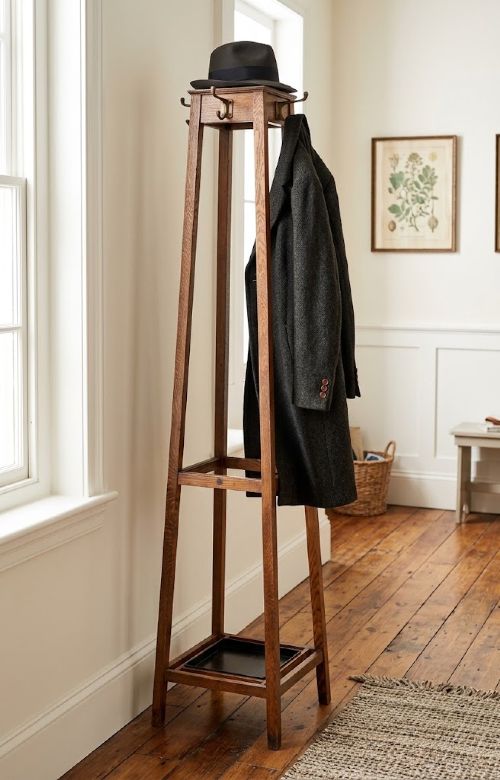
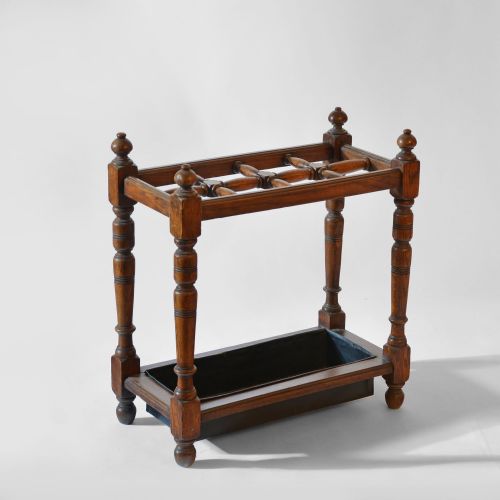
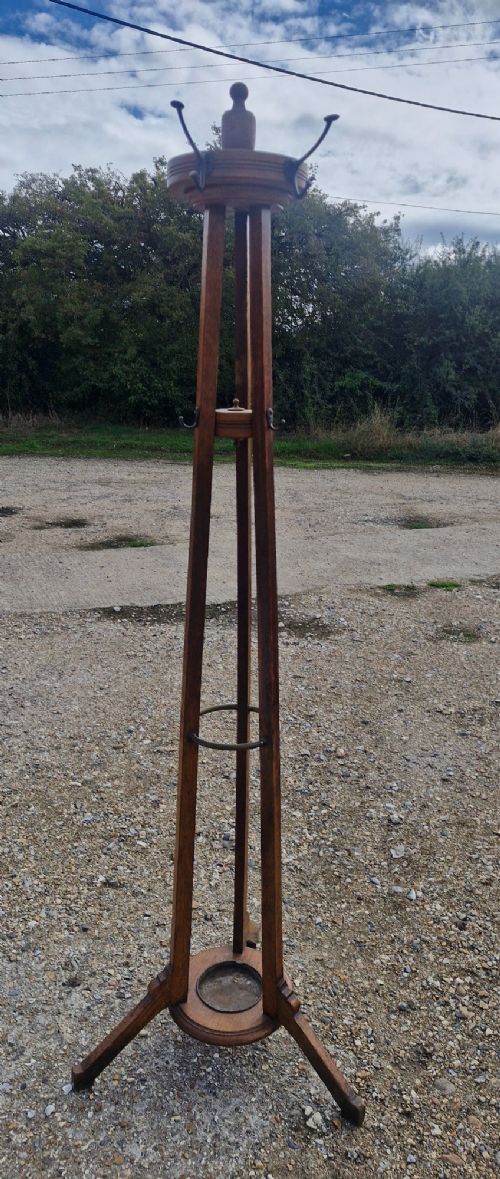
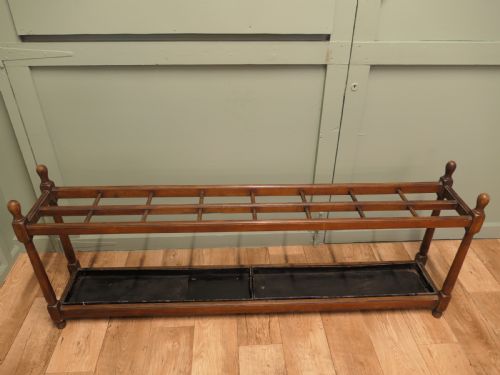
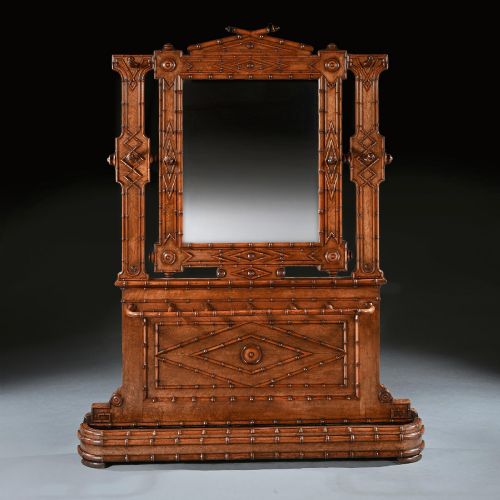
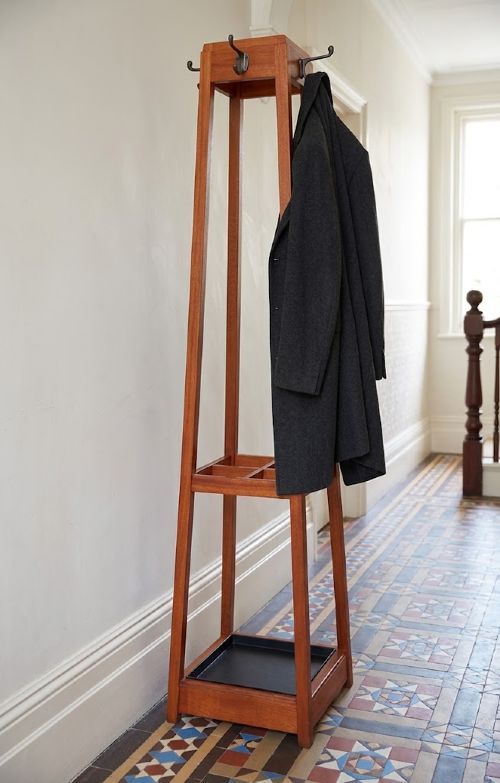
A brown wooden umbrella rack generally appears in forms such as dedicated stick stands, multi-functional hall stands, and combined coat and hat units. These pieces hail predominantly from the Victorian, Edwardian, and Arts and Crafts periods, utilising robust timbers suited to busy entryways.
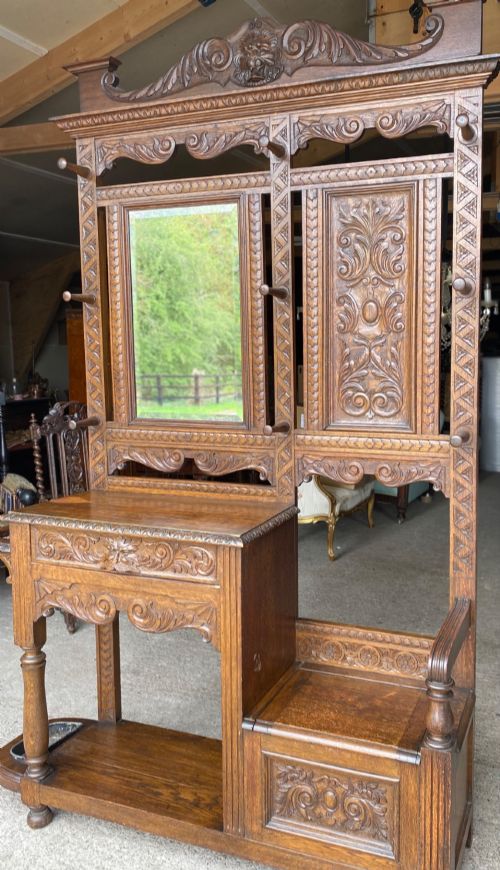
You are most likely to encounter oak and bentwood examples on this page, often featuring integrated metal drip trays to catch rainwater. Many pieces blend umbrella storage with mirror backs, small seats, or hooks for hats and garments.
The aesthetic ranges from utilitarian country house designs to ornate Black Forest carvings and sleek bentwood curves. They serve as functional furniture designed to organise the entrance of a home.
Materials and construction methods
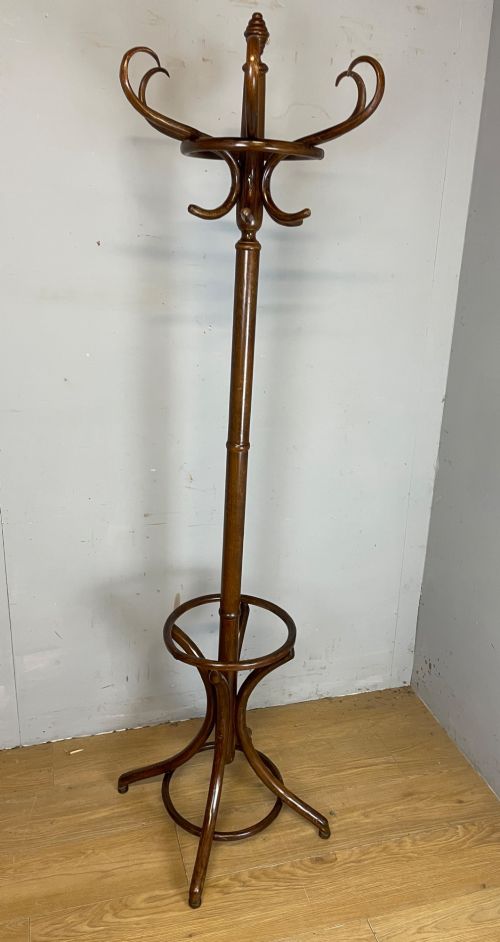
Makers relied heavily on solid oak, walnut, beech, and mahogany, often pairing timber with brass hooks and removable metal drip trays. Bentwood pieces utilise steaming techniques to bend beech into curved silhouettes.
Joinery techniques span traditional mortise and tenon frames in Arts and Crafts oak stands to steam-bent construction in revolving hat and umbrella stands. Carved details frequently appear on Victorian and Black Forest items.
Surfaces were finished to highlight the natural grain of the wood, ranging from dark polished mahogany to warm polished oak and honey-toned bentwood.
Brown Wooden Umbrella Rack Retail Price Guide 2026
Typical asking prices for brown wooden umbrella rack among the pieces listed under this phrase on Sellingantiques today, from the lower quarter to the upper quarter. They describe what is for sale here now, not the wider market.
Listings feature oak, walnut, beech, and mahogany, spanning the Victorian, Edwardian, and Arts and Crafts eras.
Judging quality in hall and umbrella furniture
Quality rests upon the integrity of the timber, the weight of the frame, and the presence of original fittings such as brass hooks and metal drip trays. Superior pieces show crisp carving and sturdy, wobble-free construction.
The complexity of the design distinguishes standard hall furniture from finer examples, particularly where makers incorporated bevelled mirror glass, pivoting mechanisms, or sculptural carved elements like bears.
Thonet·GW Evans
The Brown Wooden Umbrella Rack Glossary
- Hall stand
- A large piece of hallway furniture combining hooks, a mirror, umbrella holders, and frequently a bench seat with a storage compartment.
- Bentwood
- Wood that has been heated with steam to make it pliable, allowing manufacturers to bend it into curved structural shapes.
- Drip tray
- A removable metal basin placed at the base of an umbrella rack to catch water from wet sticks and prevent floor damage.
- Black Forest
- A nineteenth-century style of intricate wood carving, often depicting animals such as bears, originating from the mountainous region of Germany.
- Japonisme
- The influence of Japanese art on Western design, seen in certain aesthetic period maple and bamboo furnishings.
Brown Wooden Umbrella Rack: Frequently Asked Questions
Where should I put a brown wooden umbrella rack?
These stands belong in an entrance hall, porch, or boot room where guests arrive and outdoor gear is stored.
Their narrow footprints allow them to fit neatly against hallway walls while keeping walking sticks and umbrellas contained.
How do I protect the wood from wet umbrellas?
Most antique stands include original metal drip trays designed to catch moisture before it reaches the timber floor.
Emptying and drying these trays regularly prevents water damage to the wooden base of the rack.
Are these umbrella racks suitable for daily use?
Solid oak and bentwood stands were built for heavy everyday traffic in period homes and hotels.
Their robust construction handles daily storage of heavy coats, walking sticks, and umbrellas quite easily.
How do I tell Victorian from Edwardian stands?
Victorian pieces tend to feature darker, heavily carved walnut or oak with substantial proportions and ornate mirror frames.
Edwardian and later examples often display lighter oak, simpler Arts and Crafts lines, or fluid bentwood curves.