
Brown Wooden Tub Chair
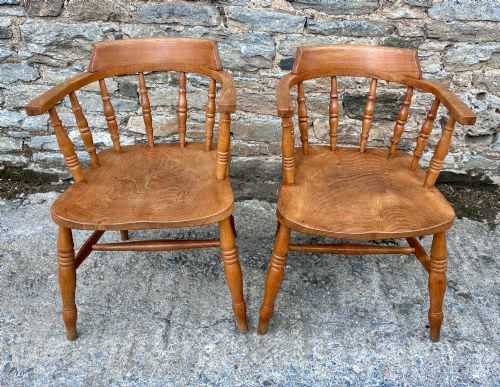
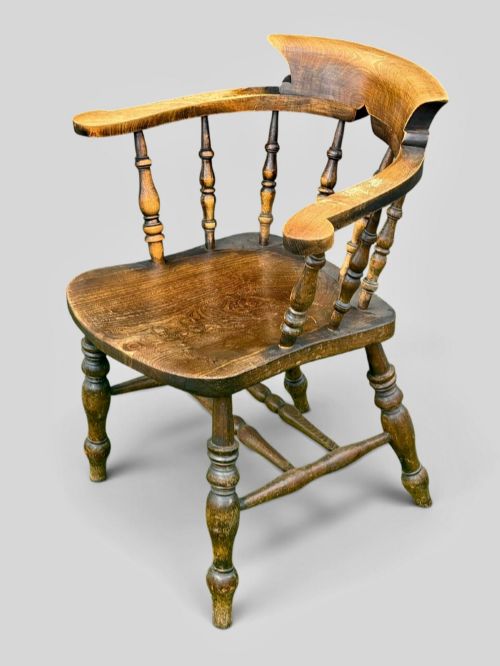
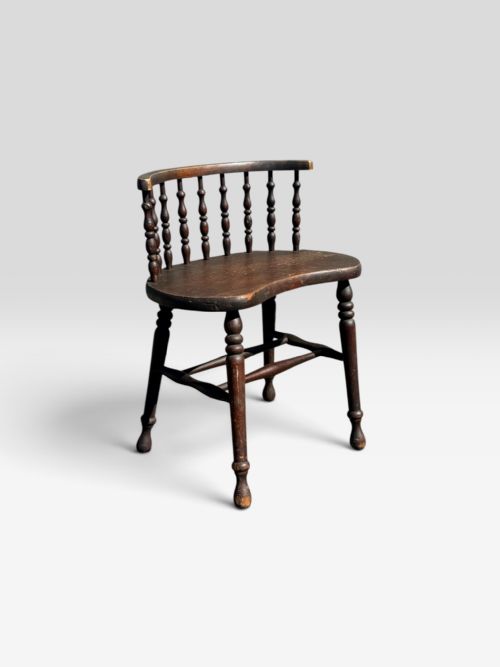
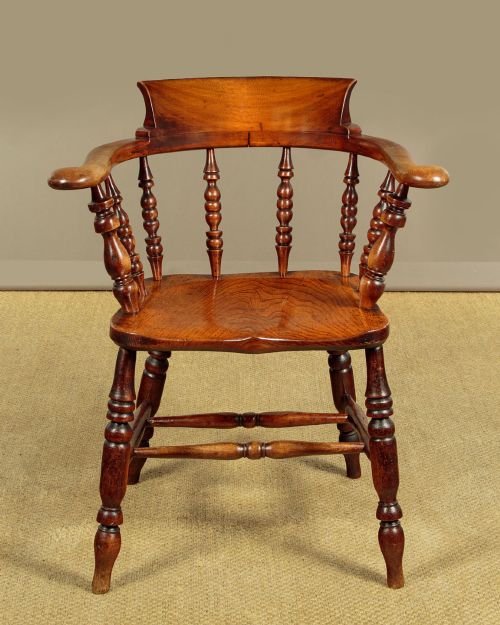
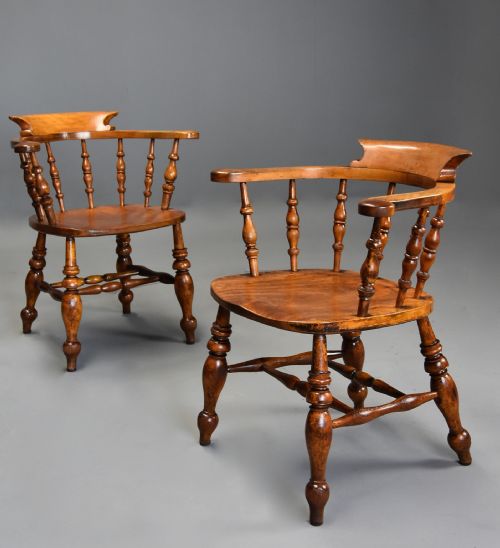
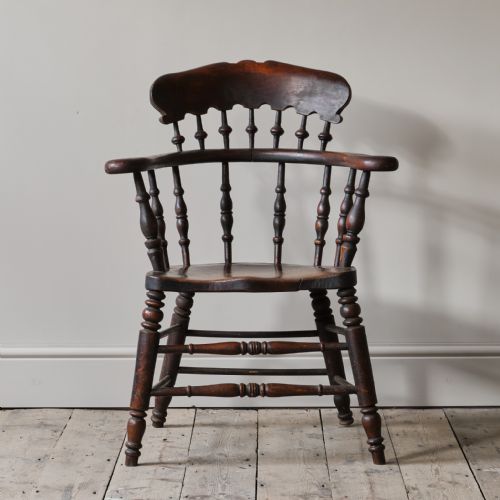
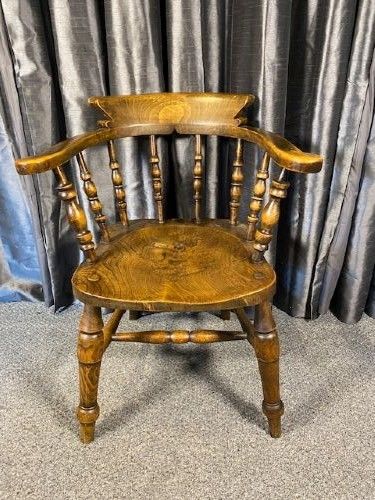
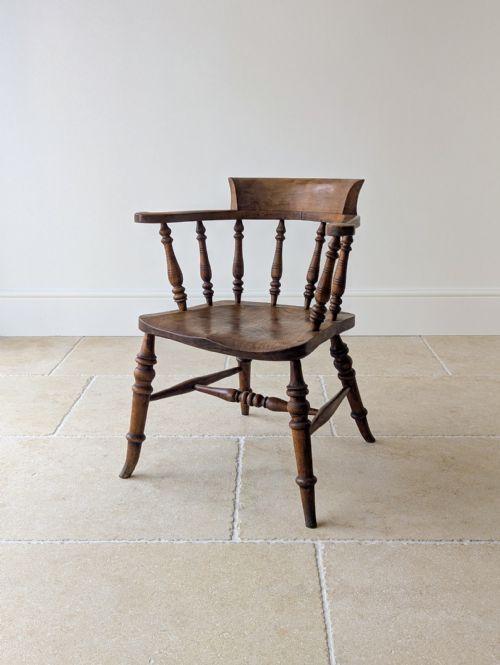
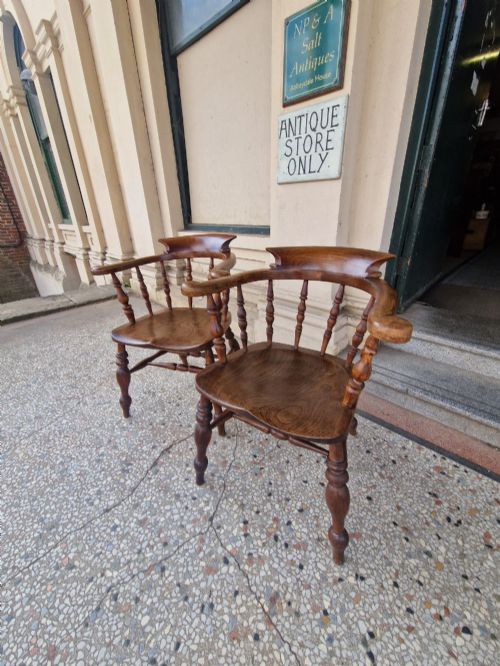
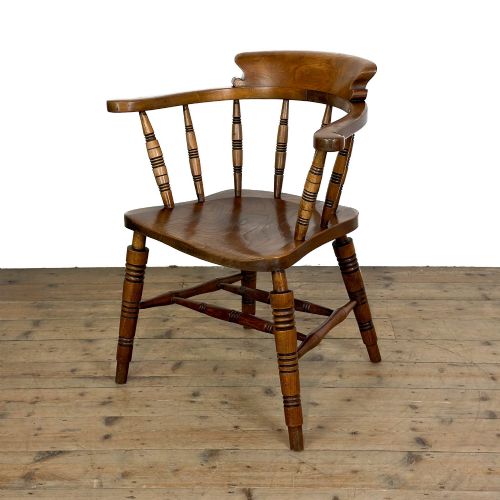
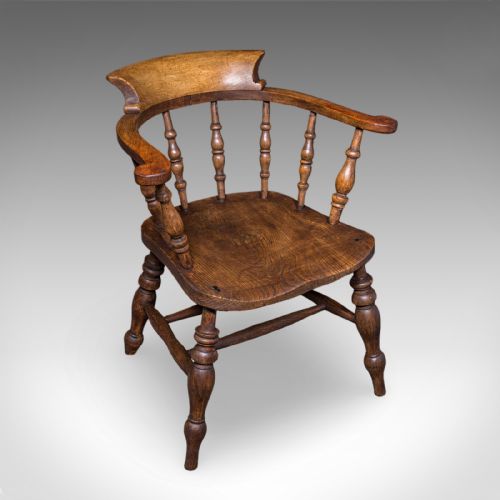
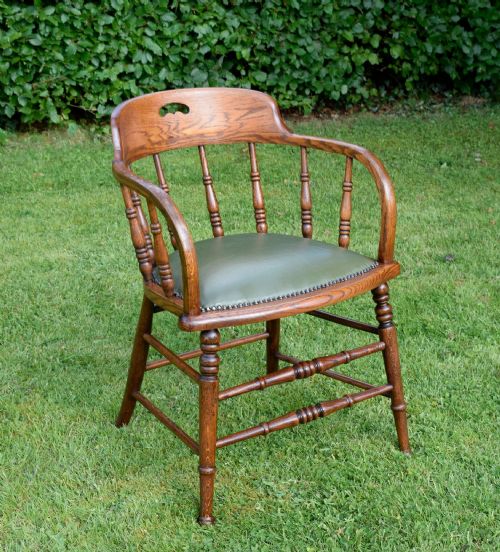
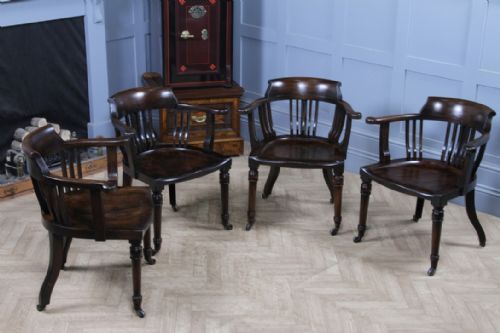
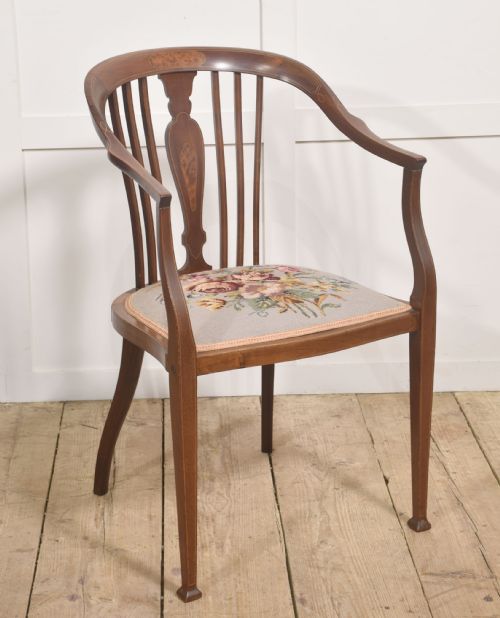
A brown wooden tub chair brings low-slung, rounded comfort to a study, combining sturdy timber frames with supportive wraparound arms.
Brown Wooden Tub Chair
A brown wooden tub chair encompasses sturdy low-backed seating designed for studies, offices and living rooms, spanning Victorian and Edwardian eras. Buyers search this phrase to find solid timber frames with comfortable, curved armrests that enclose the sitter.
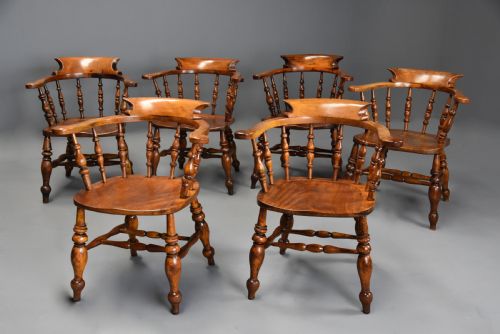
The selections available here rely heavily on nineteenth and early twentieth century origins, featuring classic forms like the captain's chair, smoker's bow and desk armchair. Elm, beech and oak dominate the offerings, often showing deep, rich timber tones built for daily use.
How they were made
Cabinet makers and country joiners utilised native hardwoods such as elm for solid, shaped seats alongside beech, ash and oak for turned spindles and steam-bent backrails. These resilient timbers were chosen for their ability to withstand the heavy stress placed on desk and office seating.
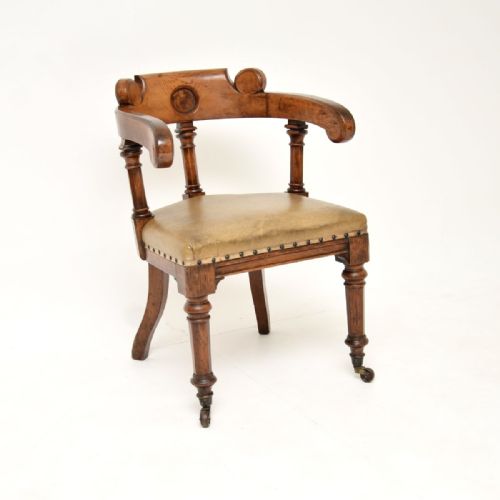
Traditional construction methods involved intersecting tenons, sturdy dowels and carved saddle seats designed to match the contours of the body. Selected examples incorporate brass castors or leather upholstery to add functional mobility and refined detail.
The listings span the Victorian and Edwardian eras, utilising native hardwoods such as elm, beech, oak and ash.
What varies in quality
The distinction between standard utility seating and finer examples rests upon the choice of timber and the depth of the grain. Burr elm seats and rich mahogany frames demonstrate superior material selection by the maker.
Structural integrity and untouched surface patination separate exceptional specimens from heavily restored alternatives. Original turned components and tight joinery retain the character accumulated over generations of use.
The Brown Wooden Tub Chair Glossary
- Smoker's Bow
- A low-backed wooden armchair with a continuous curved armrail supported by turned spindles, often featuring a solid elm saddle seat.
- Captain's Chair
- A sturdy wooden desk chair possessing a rounded backrest and robust proportions suited to office or library use.
- Bergère
- An enclosed upholstered armchair with exposed wooden framing and woven cane panels along the sides and back.
- Turned
- Shaped on a lathe by rotating the timber against a chisel to create cylindrical or decorative spindle profiles.
- Patina
- The surface sheen and warm depth acquired by wood through age, handling and regular polishing.
Brown Wooden Tub Chair: Frequently Asked Questions
What is a brown wooden tub chair used for?
These pieces serve primarily as functional desk chairs, study seating or occasional accent chairs in traditional interiors. Their enclosed backs provide comfortable support during long periods of seated work.
They appear frequently in libraries, home offices and studies where sturdy timber construction meets practical ergonomics. The low profile allows them to slide easily beneath standard desk heights.
How do I date a Victorian wooden chair?
Dating relies on examining the timber species, construction marks and the style of turning on the spindle legs. Victorian examples often combine elm seats with beech or ash framework.
Later pieces from the Edwardian period tend to utilise lighter mahogany frames or simpler joinery techniques. Examining the underside can reveal tool marks indicative of specific manufacturing decades.
What timbers were used to build them?
Maker workshops utilised robust domestic hardwoods capable of enduring daily wear in commercial and domestic settings. Elm provided tough, splinter-resistant timber for sculpted seats.
Beech, ash and oak formed the structural uprights, curved armrails and turned legs. More formal examples occasionally incorporate mahogany, walnut or yew wood.
How should I care for antique wood?
Preserving the timber involves keeping chairs away from direct heat sources and sudden humidity changes. Regular application of suitable beeswax helps maintain the natural moisture of the grain.
Avoid chemical cleaning agents that strip away the historic surface sheen. Gentle dusting with a dry cloth protects the accumulated patina over time.