

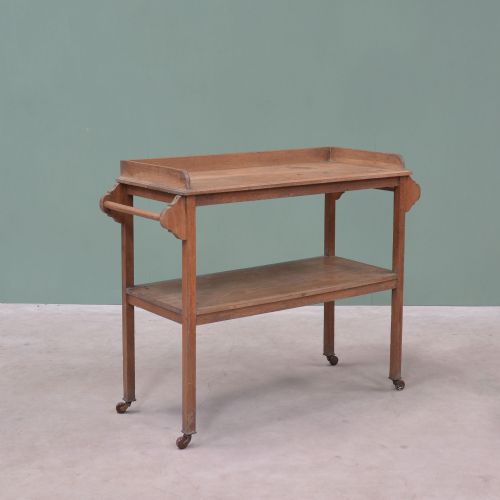
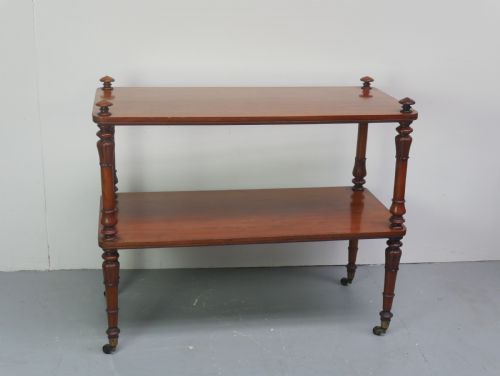
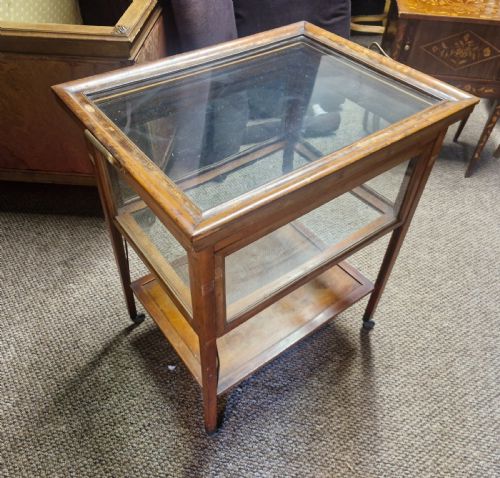


Brown Wooden Tea Trolley
A brown wooden tea trolley brings practical mobility and period character to entertaining, offering tiered shelving and removable trays for serving.
Brown Wooden Tea Trolley
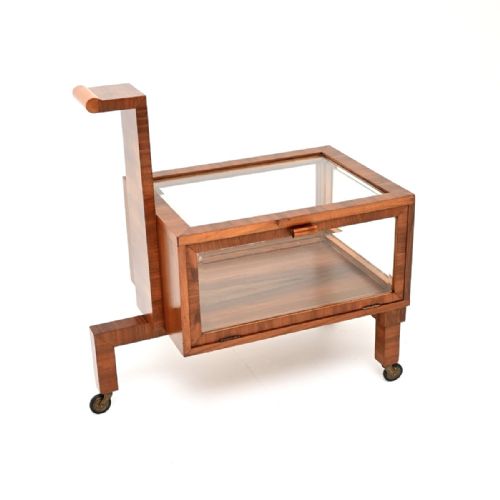
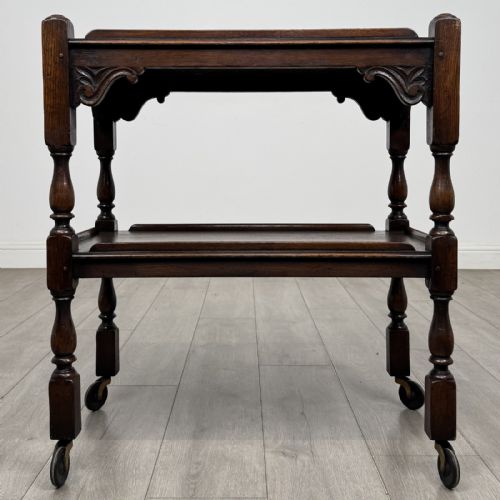
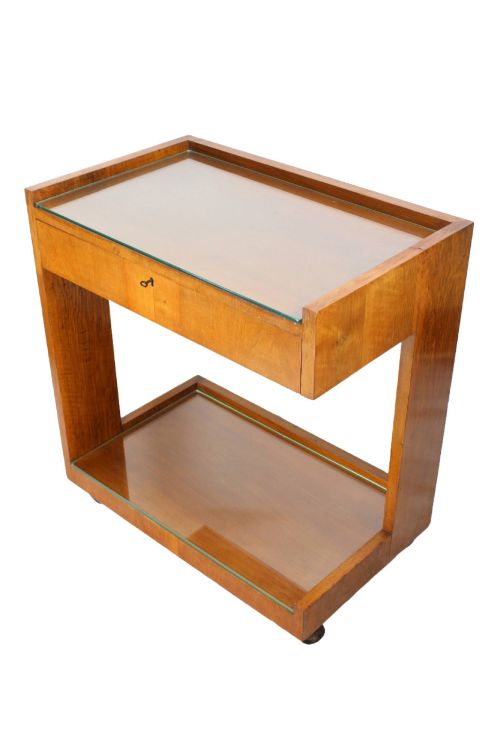
A brown wooden tea trolley is a movable serving piece designed for afternoon tea, drinks, or general hospitality, typically featuring wheels and multiple tiers. These items appear in forms ranging from Edwardian oak designs to Art Deco walnut bar carts and Victorian dumb waiters.
The selection extends from simple two-tier serving carts to more specialised forms like drinks cabinets and carved hardwood pieces. These items serve equally well as mobile cocktail bars or characterful side tables in a modern interior.
Materials and construction
Construction relies heavily on traditional cabinet-making timbers such as mahogany, oak, and walnut, often finished with detailed veneer work or inlay. Structural elements incorporate turning, such as barley twist legs, alongside fitted drop-leaf mechanisms and hinged folding tops.
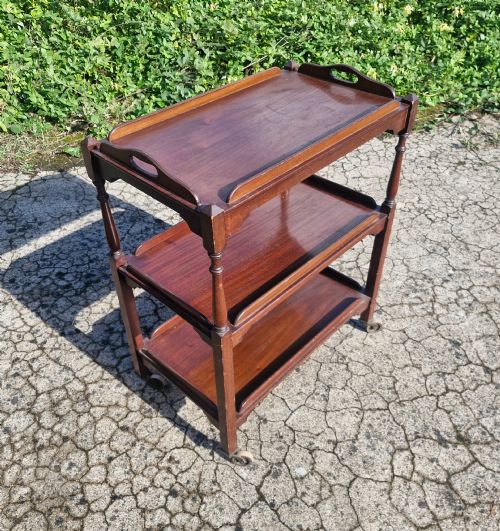
Metal and brass hardware appear frequently on castors, handles, and gallery rails, facilitating smooth mobility and securing items on upper tiers. Removable trays often feature integrated wooden handles or glass inserts to protect the underlying timber surface during service.
Brown Wooden Tea Trolley Retail Price Guide 2026
Typical asking prices for brown wooden tea trolley among the pieces listed under this phrase on Sellingantiques today, from the lower quarter to the upper quarter. They describe what is for sale here now, not the wider market.
One exceptional trolley comes equipped with a baize-lined surface, neatly doubling as a mobile card table for impromptu gaming sessions.
Quality and craftsmanship
The distinction between standard examples and finer pieces lies in the selection of figured timbers, such as figured walnut and rich mahogany, alongside crispness in carved details and inlay work. Superior construction is evident in the stability of multi-tiered frames, the smooth operation of drop leaves, and the precise fit of removable trays.
Hardware quality also dictates the tier, with solid brass castors and robust metal mechanisms outlasting lighter, stamped components. The integration of secondary materials like cane binding or specialised glass adds further distinction to the overall execution of the piece.
Lusty of Leicester
The Brown Wooden Tea Trolley Glossary
- Drop leaf
- A tabletop with hinged flaps on either side that can be raised to increase surface area or lowered when space is limited. This mechanism allows the trolley to adapt easily to different room layouts.
- Dumb waiter
- A tiered piece of freestanding furniture used for holding food or tableware without the need for immediate servant attendance. Victorian examples often combine shelving with wheeled mobility.
- Gallery
- A raised wooden or metal rim running along the edge of a tray or shelf to prevent items from sliding off during movement. This feature is common on upper tiers of drinks carts.
- Tier
- An individual shelf or level within the structure of the trolley, typically arranged in two or three stages. Multiple tiers maximise storage and display space while maintaining a compact footprint.
- Veneer
- A thin layer of finely figured wood applied over a secondary timber base to create decorative exterior surfaces. Walnut veneer is particularly characteristic of Art Deco serving pieces.
Brown Wooden Tea Trolley: Frequently Asked Questions
How do I use a tea trolley today?
A tea trolley functions effectively as a mobile bar cart for serving drinks, a plant stand, or an adaptable side table in a living room. Its wheels allow it to move easily from the kitchen to entertaining spaces.
Lower tiers provide convenient storage for glassware, bottles, or books, while removable top trays can be lifted off to serve guests directly.
What periods do these trolleys come from?
The selection spans from Victorian and Edwardian pieces through to Art Deco designs from the 1920s and 1930s. Earlier examples often feature oak or mahogany with turned legs, while later versions embrace walnut veneers and streamlined silhouettes.
Occasional pieces reflect regional styles such as Anglo-Indian carved hardwood or mid-century British production.
Are the trays removable?
Many models feature a lift-off top tray designed to be carried independently for serving refreshments. These trays often include integrated handles or raised edges for secure handling.
Fixed-top variations generally offer folding mechanisms or drop leaves to adjust the surface area instead.
How do I care for wooden serving surfaces?
Protect timber surfaces by using coasters and avoiding prolonged exposure to moisture or direct heat. Regular dusting and occasional application of appropriate wood wax maintain the finish of mahogany, oak, and walnut.
Brass castors and metal hardware benefit from gentle cleaning to preserve their original appearance without damaging adjacent wood.