

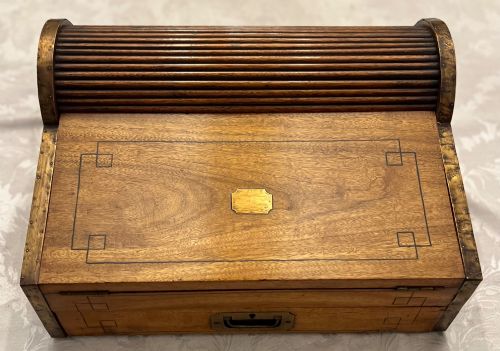
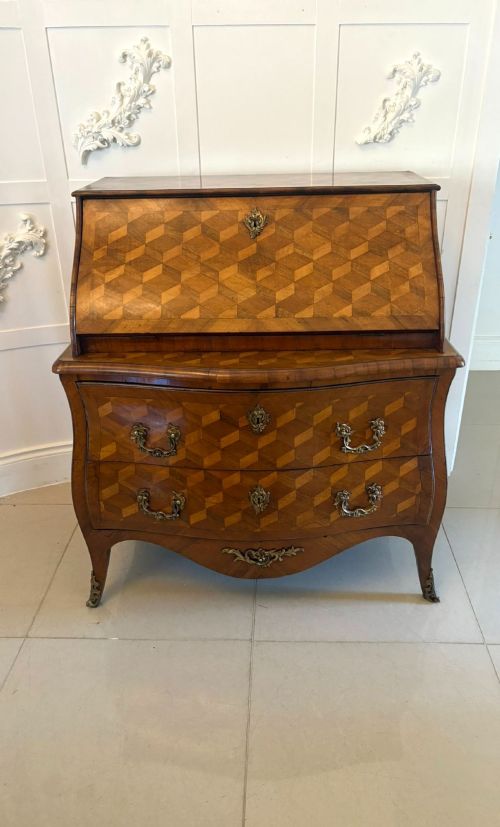
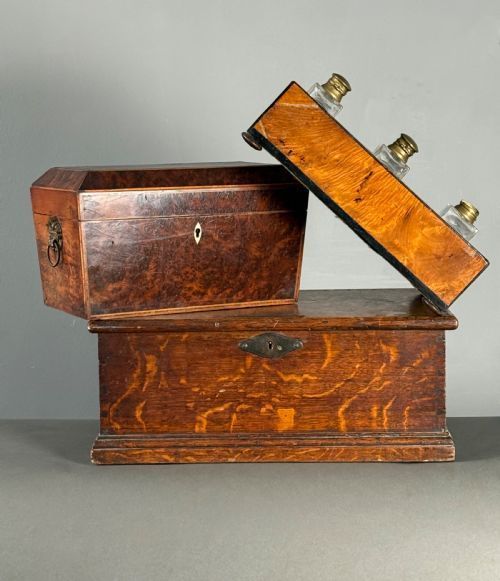
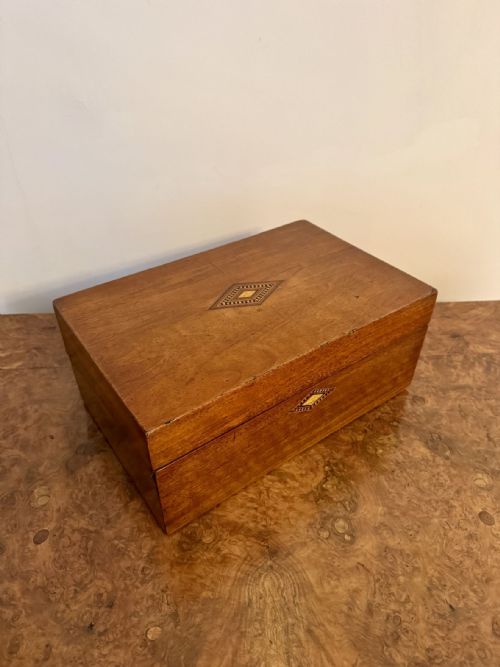
Brown Wooden Slope
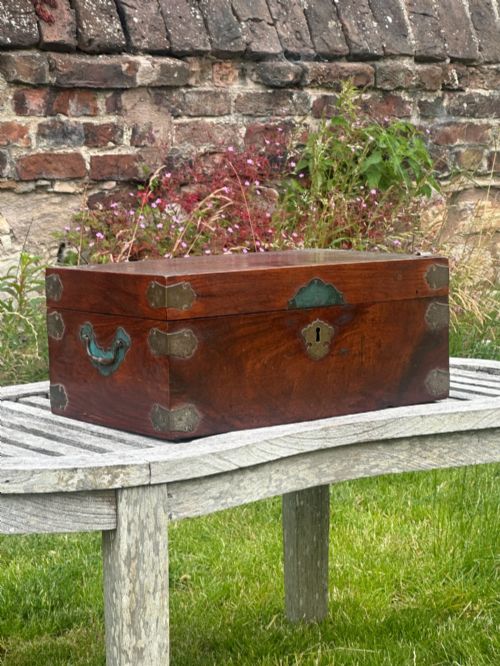
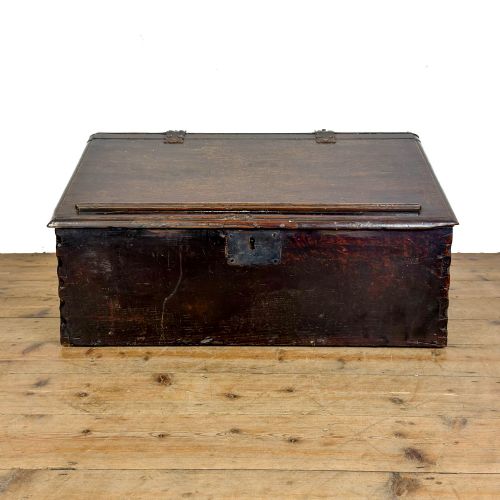
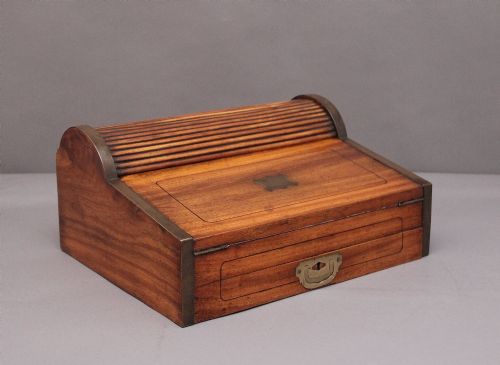
A brown wooden slope offers a practical surface for correspondence, rooted in centuries of cabinet-making traditions from the Georgian and Victorian eras.
Brown Wooden Slope
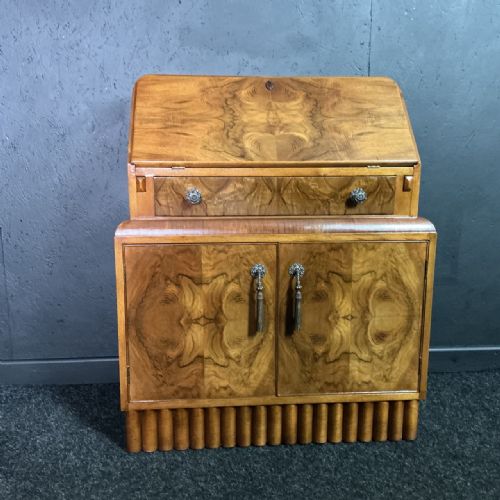
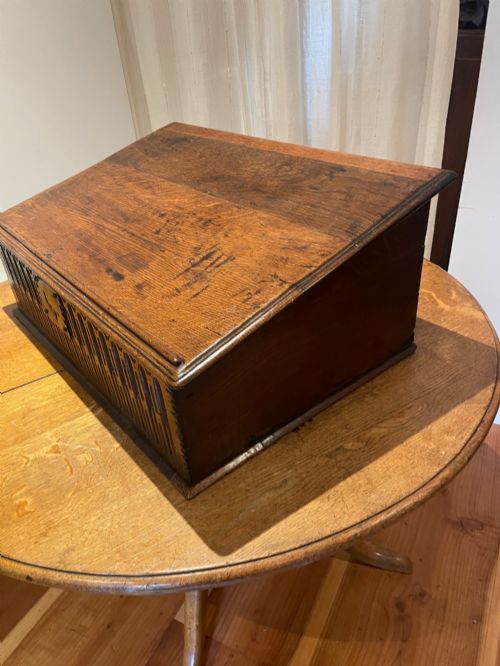
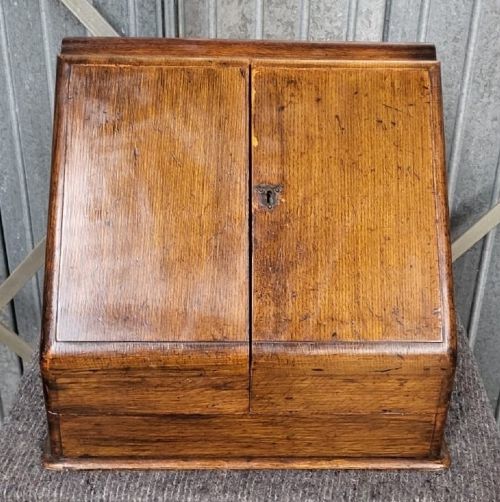
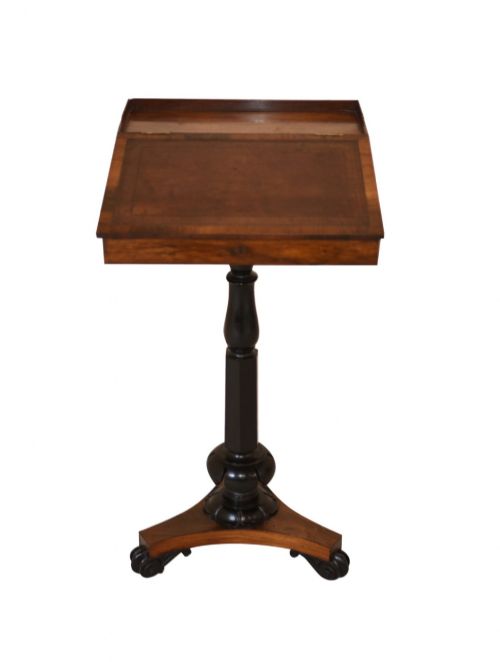
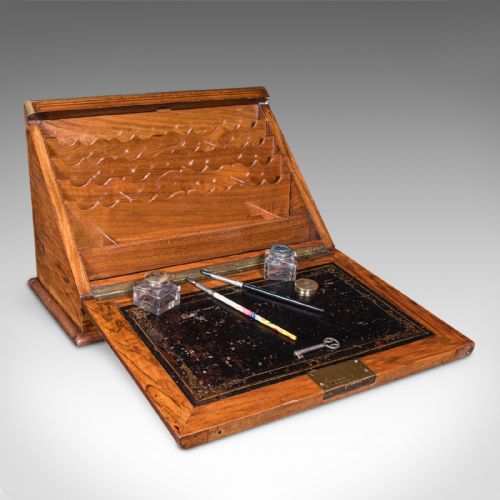
A brown wooden slope encompasses portable writing boxes, fall-front bureaux, and davenports designed for personal correspondence and document storage. These pieces emerge primarily from the 18th and 19th centuries, crossing Georgian, Regency, and Victorian periods.
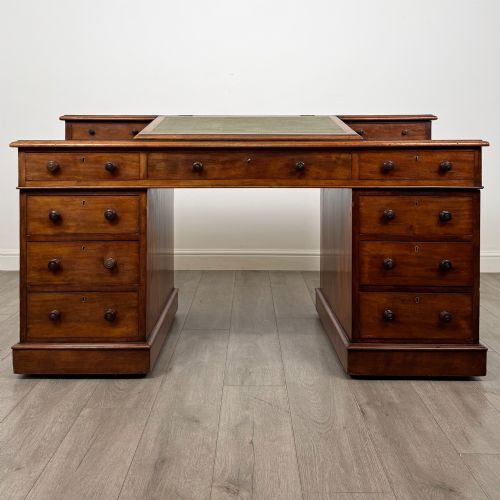
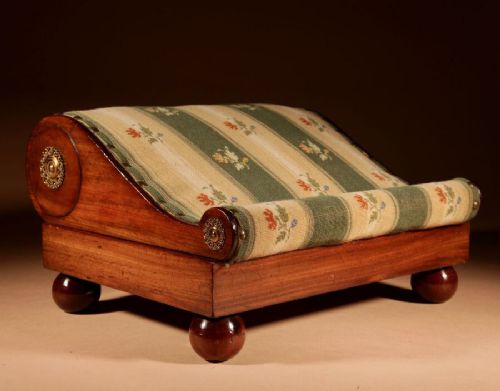
The selections on this page span compact portable correspondence boxes fitted with secret compartments to larger pedestal desks and oak clerk tables. Woods range from native oak and elm to imported mahogany, walnut, camphor, and rosewood.
Buyers meet variations involving brass bound campaign boxes, Tunbridge ware inlays, and Anglo Indian constructions alongside traditional European fall-front forms. Each variation reflects the specific writing habits and interior requirements of its original era.
Materials and Construction
Cabinet makers built these pieces using dense hardwoods such as mahogany, walnut, and oak, often applying burr walnut veneers or parquetry to visible surfaces. Brass fittings, including corner brackets, carrying handles, and escutcheons, reinforced travel pieces designed for campaign use.
Interiors integrated secondary woods, pigeonholes, and small drawers, sometimes featuring leather writing surfaces or velvet inserts. Joinery relied on traditional dovetailed drawer construction and framed panels to handle the stress of daily writing and frequent transport.
Brown Wooden Slope Retail Price Guide 2026
Typical asking prices for brown wooden slope among the pieces listed under this phrase on Sellingantiques today, from the lower quarter to the upper quarter. They describe what is for sale here now, not the wider market.
Listings feature woods spanning mahogany, walnut, oak, camphor, and elm across the 18th, 19th, and early 20th centuries.
Distinctions in Execution
Quality rests in the selection of timber figures, such as matched burr walnut or figured mahogany, and the precision of inlaid details like Tunbridge ware or bone and mother-of-pearl accents. Finer pieces demonstrate careful attention to internal fittings, secret compartments, and original brass hardware.
The integrity of the structural joinery and the survival of original patination separate standard commercial items from exceptional cabinet work. Pieces retaining functional locks, keys, and untouched timber surfaces hold greater fidelity to their original state.
Maple and Co·Pairs MFG Co
The Brown Wooden Slope Glossary
- Writing slope
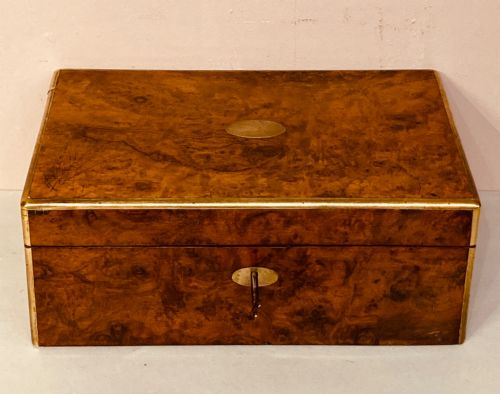
- A portable box with a slanted lid that opens to reveal a desk surface and stationery compartments. These boxes were frequently carried on travels or placed upon tables.
- Bureau
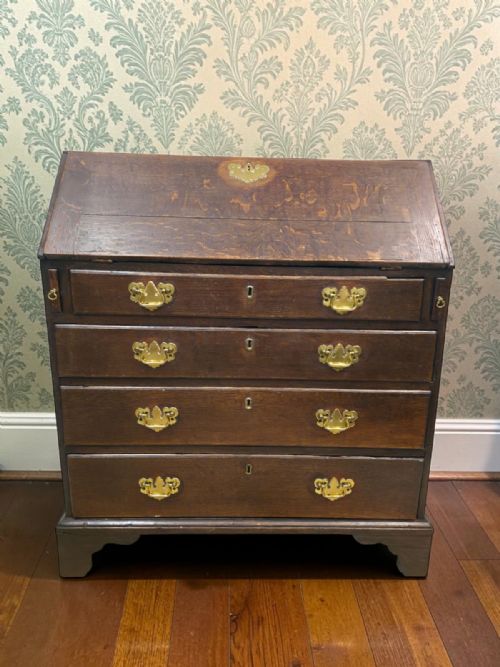
- A desk featuring a hinged sloping flap that drops down to form a writing surface above a chest of drawers. Early examples often rest on bracket feet with fall-front designs.
- Davenport
- A compact pedestal desk popular in the Victorian period, featuring a sloping top and drawers accessed from the side. It combined storage with a dedicated writing surface.
- Tunbridge ware
- A type of decorative woodwork characterised by tiny mosaic tiles formed from differently coloured woods to create pictorial designs. It appears frequently on Victorian boxes.
- Campaign box
- A portable chest or writing box reinforced with brass corners and recessed handles designed for military officers on the move. These pieces prioritise robust construction and portability.
Brown Wooden Slope: Frequently Asked Questions
What is a brown wooden slope used for?
These pieces served as dedicated writing stations for penning letters, storing stationery, and keeping personal documents secure. The sloping lid provided an ergonomic angle for writing before flat desks became standard.
Today, they function as decorative writing surfaces, laptop stands, or tabletop organisers in domestic spaces, maintaining their historical utility while fitting modern rooms.
How do I tell a Georgian slope from a Victorian one?
Georgian writing slopes and bureaux generally exhibit simpler, robust proportions in oak or mahogany, often relying on brass escutcheons and bracket feet for decoration. Tunbridge ware inlays, burr veneers, and complex internal stationery fittings point toward the later Victorian period.
Examining the secondary woods inside the drawers and the style of the brass hardware helps confirm the manufacturing period when visual ornament provides mixed clues.
Are these pieces suitable for daily use?
Most portable writing boxes and larger desks handle everyday writing or laptop use comfortably, provided the internal leather or wood surface is treated with care. Their compact footprints make them practical for writing letters or organising modern stationery.
Care should be taken with antique hinges, original locks, and delicate veneers to preserve the structural integrity of the piece over time.
Why do some writing boxes have brass corners?
Brass corners and recessed carrying handles identify campaign pieces built for travel during military campaigns or colonial service. These metal reinforcements protected the wood from knocks during transport across rough terrain.
Over time, civilian buyers adopted these robust travel boxes for domestic use due to their durability and secure locking mechanisms.