

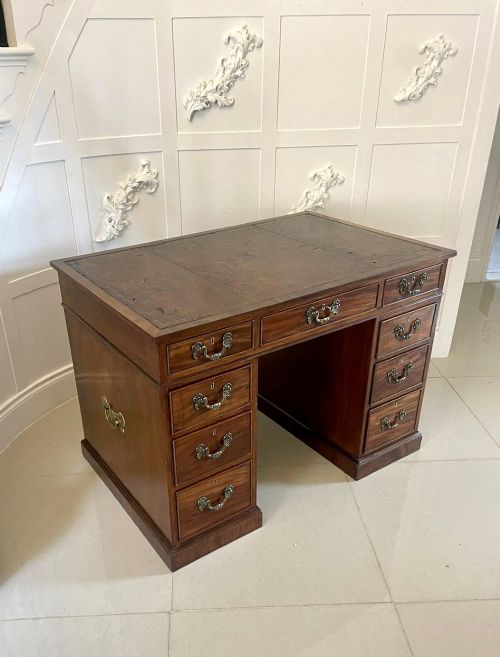
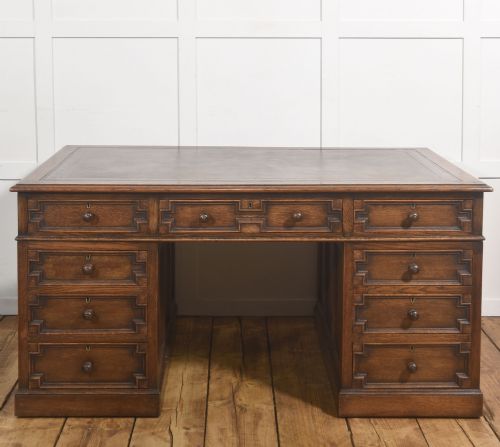
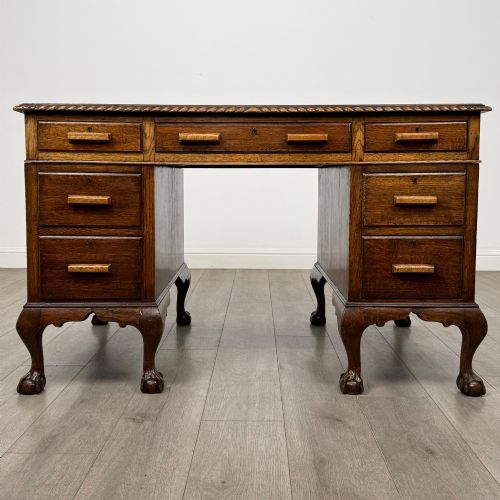
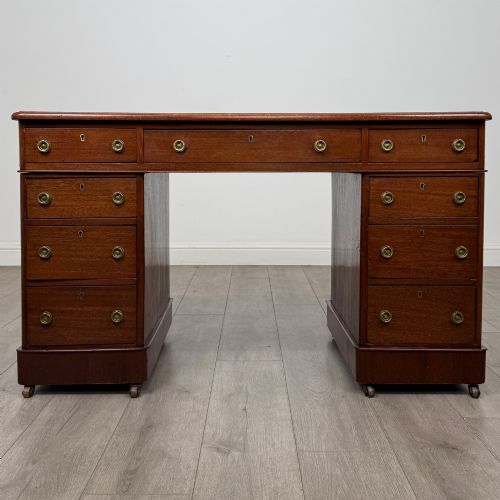


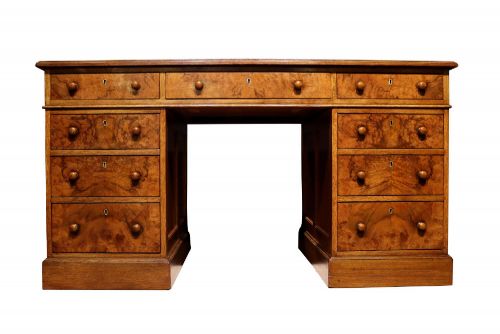
Brown Wooden Partner Desk
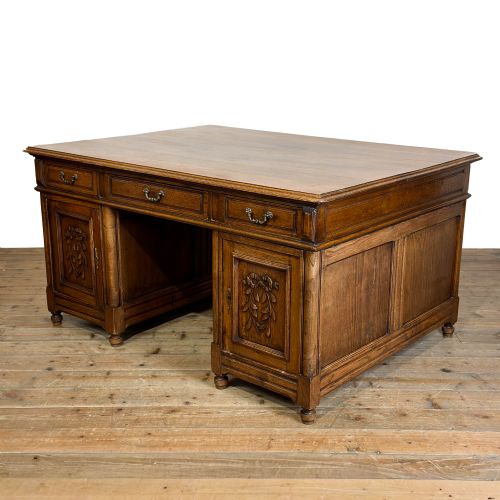
A brown wooden partner desk is a substantial writing table built for two people to work face to face, offering generous proportions and deep storage.
Brown Wooden Partner Desk
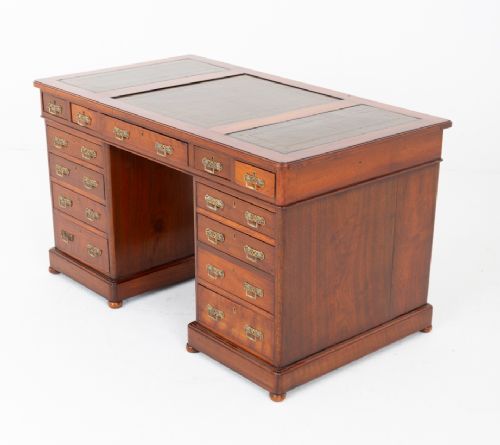
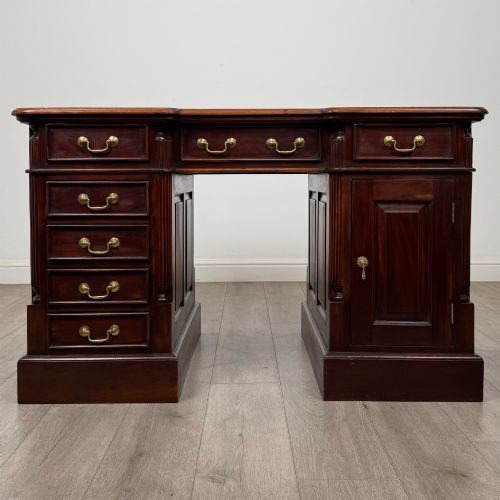
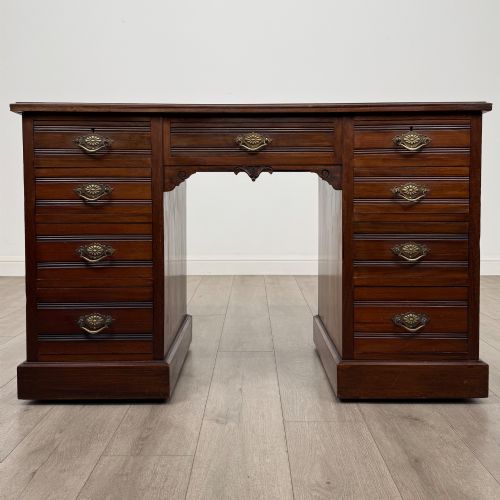
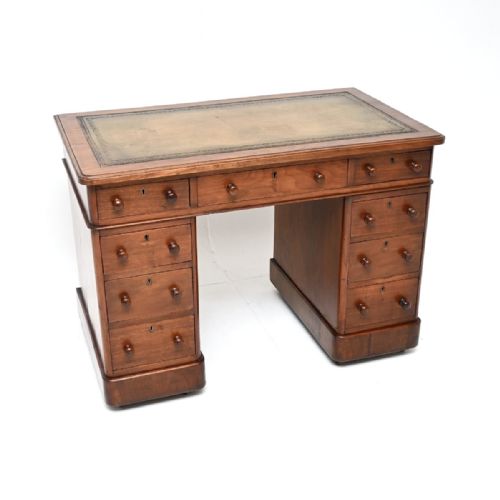
A brown wooden partner desk is a substantial double-sided piece designed with banks of drawers or cupboards beneath both long sides, allowing two people to work opposite one another. The versions most commonly met on this page date from the Victorian and Edwardian periods, constructed in rich timbers like mahogany, oak, and walnut.
These writing tables served in professional offices, libraries, and grand estate rooms where clerks, solicitors, or partners needed simultaneous access to a large writing surface and partitioned storage. They follow forms ranging from simple panelled oak construction to elaborate Chippendale revival designs with carved pillars and claw and ball feet.
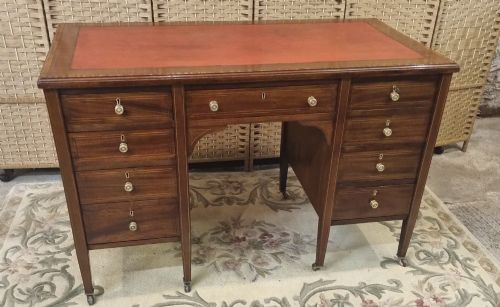
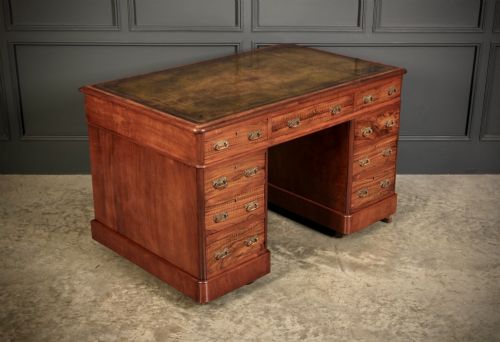
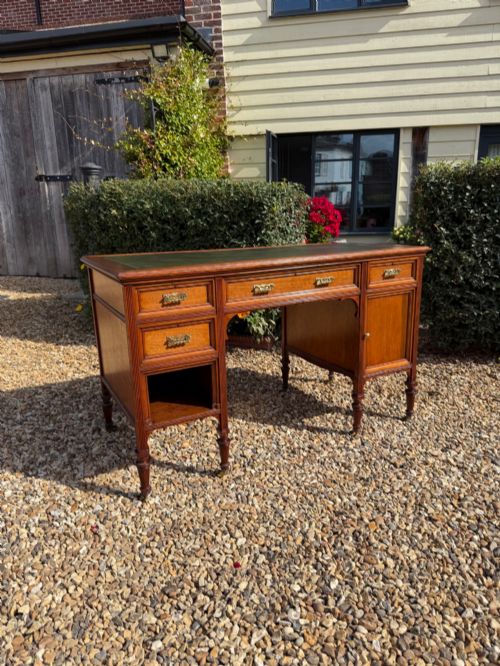
The layout typically incorporates pedestals with sets of graduated drawers flanking a central kneehole, often topped with a contrasting inset writing surface made of leather. Whilst many examples follow traditional English cabinet-making traditions, variations include French art deco pieces and Chinese interpretations dating back to the nineteenth century.
Materials and Construction
Cabinet-makers built these desks using solid timbers and decorative veneers such as mahogany, oak, walnut, burr walnut, and kingwood, chosen for durability and grain pattern. Secondary woods were utilised for internal drawer linings and framing, whilst brass handles, escutcheons, and occasional ormolu mounts added functional detail to the exterior.
Writing surfaces were traditionally inset with panels of dyed or tooled leather, secured around the edges with blind or gilt tooling. Joinery techniques involved precision dovetailing for the drawer boxes and sturdy mortise and tenon joints for the main pedestals and plinths, ensuring the framework could support heavy daily use.
Brown Wooden Partner Desk Retail Price Guide 2026
Typical asking prices for brown wooden partner desk among the pieces listed under this phrase on Sellingantiques today, from the lower quarter to the upper quarter. They describe what is for sale here now, not the wider market.
Listings for a brown wooden partner desk span the Victorian, Edwardian, and Art Deco periods, utilising mahogany, oak, walnut, and brass.
Assessing Quality and Execution
Quality in a brown wooden partner desk rests on the selection of timber and the precision of the cabinet-making, distinguishing standard office furniture from bespoke commission work. Superior examples display carefully matched wood veneers, finely cut dovetail joints in the drawer construction, and original hardware rather than modern replacements.
The refinement of carved details, such as pillars, panel moulding, and specialised feet, separates finer workshop production from plain utilitarian pieces. Furthermore, the presence of maker labels, stamp marks, or provenance associated with known estates indicates a higher level of original design and craftsmanship.
Howard and Sons·Étienne Kohlmann·Maurice Adams·Deighton and Dunthorne
The Brown Wooden Partner Desk Glossary
- Partners desk
- A large double-sided writing table featuring drawers and cupboards opening on both the front and back to accommodate two users facing each other.
- Pedestal desk
- A freestanding desk comprising a top surface supported by two separate columns of drawers, leaving a kneehole space in the centre.
- Kneehole
- The central recessed space beneath a desk top designed to accommodate the user's legs while seated.
- Ormolu
- Gilded bronze mounts and decorative elements applied to furniture, frequently seen on mid-nineteenth-century and continental pieces.
- Dovetail
- An interlocking joint used in drawer construction, prized for its tensile strength and resistance to being pulled apart.
Brown Wooden Partner Desk: Frequently Asked Questions
What is a partner desk used for?
A partner desk provides a dual-sided workspace designed for two individuals to sit opposite each other while utilising shared drawers and writing surfaces.
They were traditionally used in legal offices, banks, and estate studies where colleagues needed direct access to the same paperwork and storage compartments.
How do I care for the leather top?
The leather writing surface should be kept clean from dust and treated periodically with specialised leather balms to prevent drying and cracking.
Avoid placing excessive moisture or unpadded hot items directly onto the surface to preserve the original tooling and colour.
Are all partner desks double-sided?
True partner desks feature working drawers or cupboards accessible from both the front and the back of the furniture.
Some single-sided pedestal desks resemble them in appearance, but possess false drawer fronts or plain panelling on the reverse side.
How do I identify the period of a desk?
Dating relies on examining the timber species, construction methods, hardware styles, and stylistic motifs present across the piece.
Victorian and Edwardian examples often display characteristic revival styles, machine-sawn internal components, and specific handle designs typical of their era.