
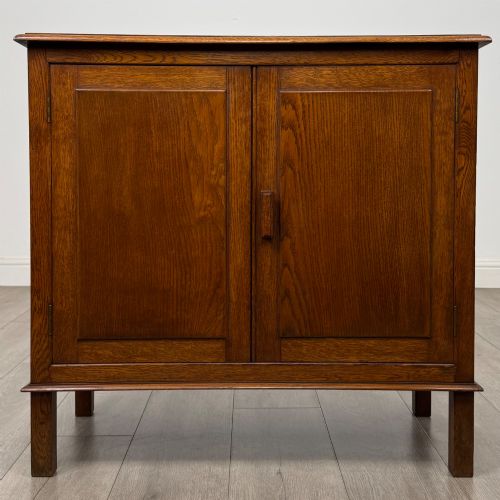
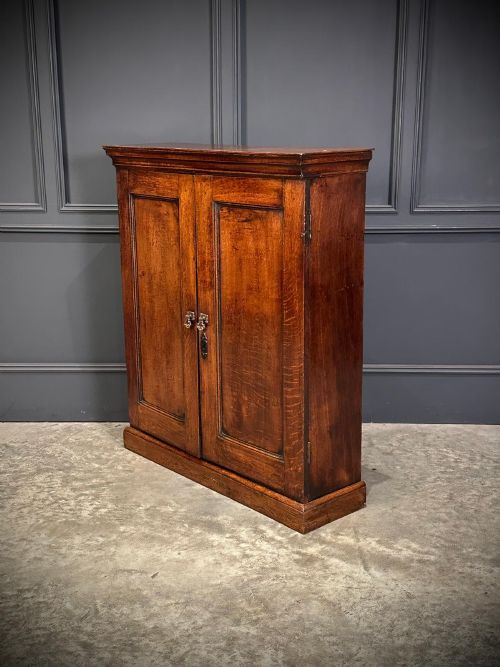
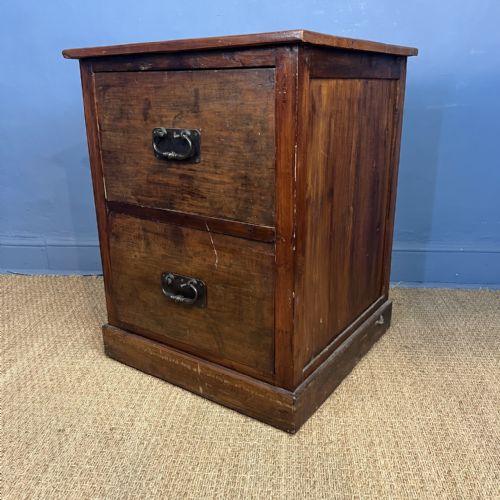
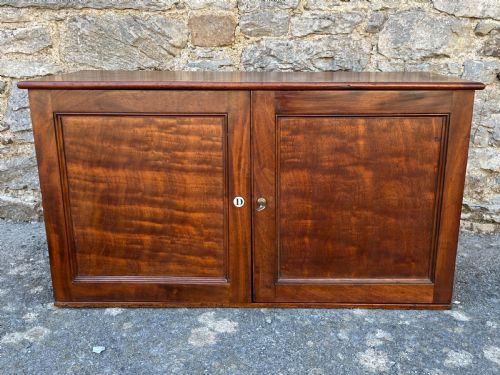
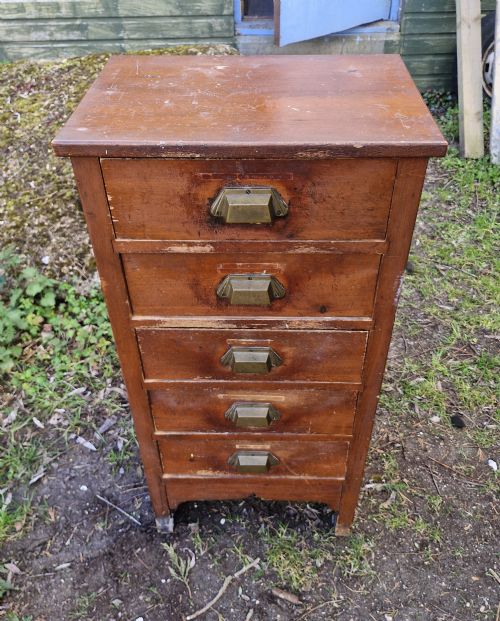

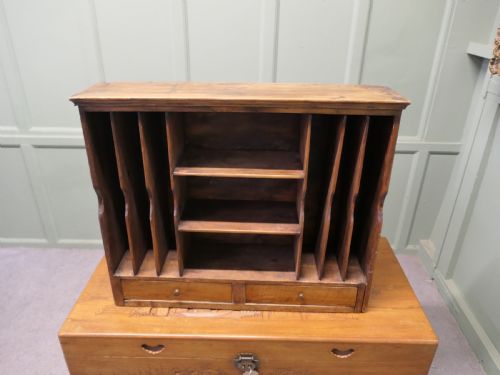


Brown Wooden Office Storage
Brown wooden office storage comprises functional antique pieces designed to organise papers and books in a workspace.
Brown Wooden Office Storage
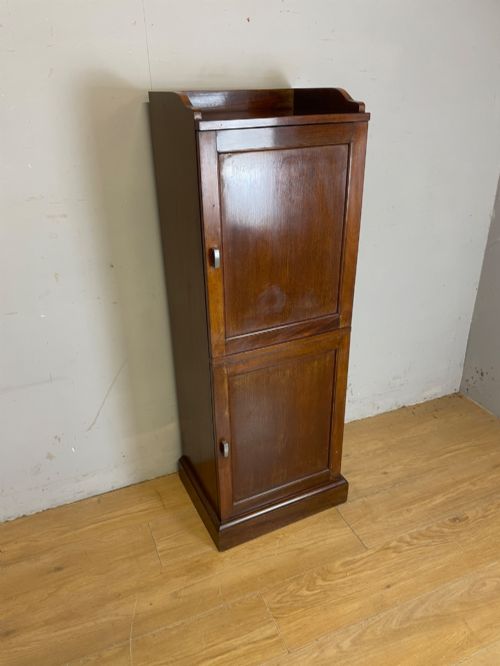
When searching for brown wooden office storage, buyers encounter practical items such as filing cabinets, bookcases, cupboards, and desktop organisers. These pieces originate from various periods including the Georgian, Victorian, and Edwardian eras, extending into the early twentieth century.
Origins vary from British institutional workshops to Anglo-Indian studios and French post offices, demonstrating how workspace furniture adapted to administrative demands over past centuries. Buyers find both upright sectional units and low countertop organisers suited to domestic and commercial interiors.
Materials and construction methods
Cabinet makers utilised dense hardwoods like solid mahogany, oak, and walnut, providing the structural strength necessary for heavy daily filing use. Secondary timbers and pine frequently appear in internal drawer construction and backing panels.
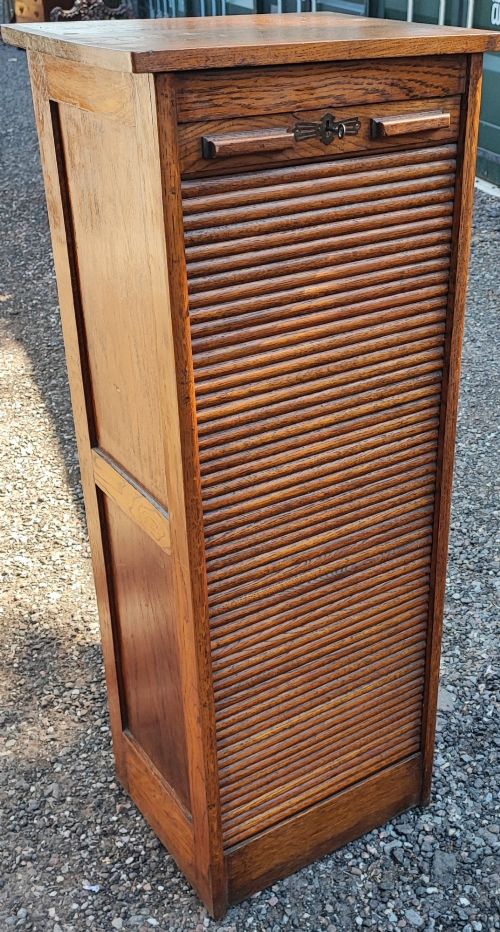
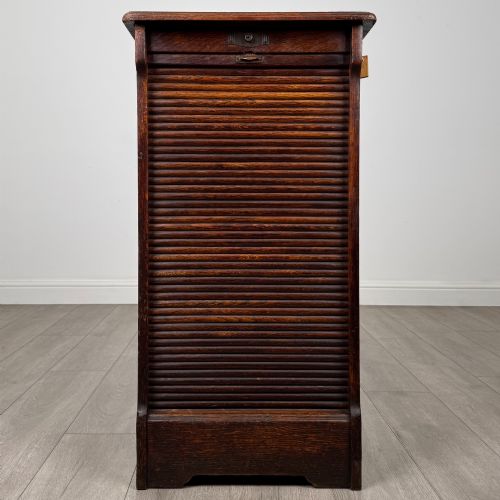
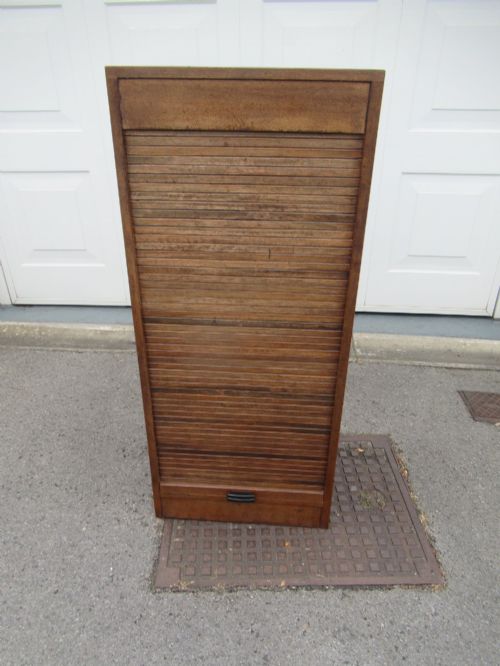
Functional metal and brass hardware, including handles, label holders, and locking mechanisms, secured documents and facilitated retrieval. Sliding tambour slats glued to canvas backings allowed flexible closure on compact office cabinets.
Some nineteenth-century filing systems utilised spring-loaded letter clips so papers stayed anchored while office clerks rushed between desks.
Judging the quality of office furniture
Superior items display careful timber selection, such as figured mahogany or quarter-sawn oak, matched symmetrically across drawer fronts and doors. Finer examples integrate sophisticated patent mechanisms, smooth-sliding tambour tracks, and well-fitted internal pigeonholes.
Robust joinery, including dovetailed drawer boxes and solid backboards, separates workshop-made pieces from standard mass-produced utilitarian furniture. Original brass hardware and patinated finishes complete the presentation of high-grade institutional storage.
The Brown Wooden Office Storage Glossary
- Tambour
- A flexible sliding door formed from narrow strips of wood affixed to a canvas backing. This mechanism allows the door to curve around a track and conceal office filing compartments.
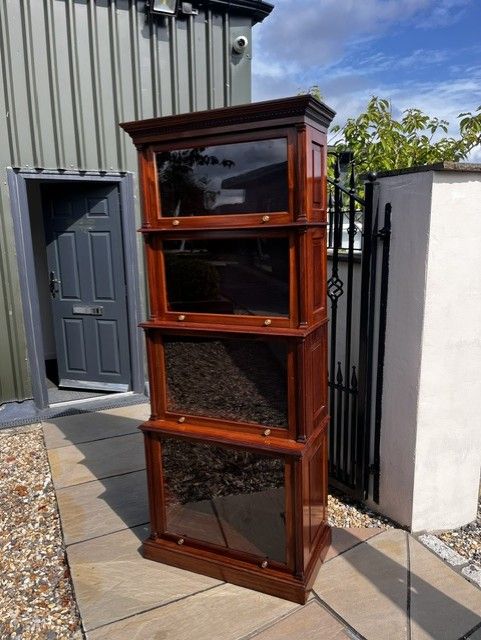
- Barrister stacking bookcase
- A modular bookcase featuring individual glazed shelves that lift and slide inward to allow access to books. This design enabled offices to expand their library capacity vertically.
- Pigeonhole
- A small, open compartment within a desk organiser or cabinet designed for sorting letters and documents. These compartments formed the basis of early administrative filing systems.
- Military cabinet
- A sturdy piece of storage furniture constructed for transport, typically featuring recessed brass carrying handles and robust locking mechanisms. These units prioritised durability in demanding environments.
- Desk tidy
- A small tabletop wooden accessory designed to hold stationery, books, and correspondence. They keep daily working surfaces organised.
Brown Wooden Office Storage: Frequently Asked Questions
How do I date an oak filing cabinet?
Examine the timber selection, hardware style, and construction methods used in the interior drawers. Edwardian and early twentieth-century pieces often feature exposed dovetailed joints and patinated brass label holders.
Patent markings and manufacturer stamps inside the cabinet also provide precise chronological reference points for dating the piece.
Are tambour doors difficult to repair?
Tambour doors rely on flexible canvas backings and wooden slats that run along recessed wooden tracks. Over time, dust accumulation or dried adhesive can cause the slats to bind.
Gentle cleaning of the tracks and application of suitable lubricant usually restores smooth operation without major intervention.
Can I use an antique filing cabinet daily?
These cabinets were originally engineered for rigorous commercial and institutional administration. Solid hardwoods and dovetailed drawers ensure they withstand contemporary office use.
Modern paper sizes generally fit into historical drawer dimensions, though measuring internal clearances before storing modern folders is advisable.
What is the difference between an office cupboard and a bookcase?
Office cupboards feature enclosed wooden doors designed to conceal files and stationery out of sight. Bookcases typically present open shelves or glazed doors intended for displaying bound volumes.
Many period pieces combine both functions with lower cupboards beneath upper shelving sections.