



Brown Wooden Music Cabinet
A brown wooden music cabinet is a dedicated piece for storing scores and sheets, offering neat interior drawers or shelves inside periods from the nineteenth century onward.
Brown Wooden Music Cabinet
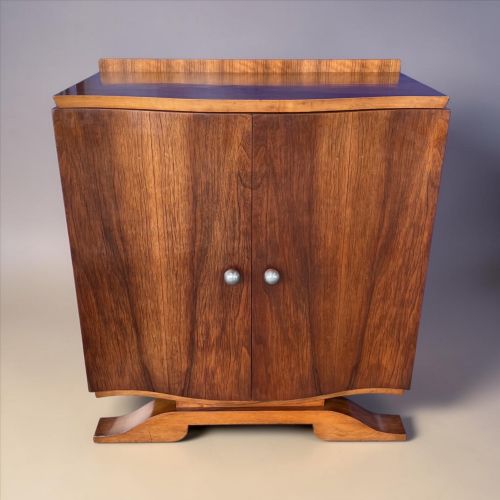
When you search for a brown wooden music cabinet, you find specialised storage pieces designed to keep sheet music, folios, and scores organised. The pieces appearing here span the Victorian, Edwardian, and Art Deco eras, alongside earlier Regency designs and mid-nineteenth century iterations.
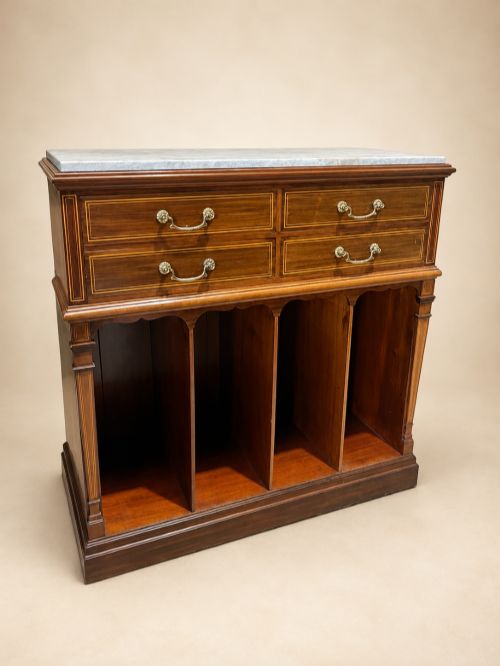
Beyond standard upright music cabinets, the selection includes related forms such as side cabinets, folio cabinets, and duet stools with internal compartments. These objects reflect domestic musical habits of the nineteenth and early twentieth centuries when home piano playing was widespread.
How they were made
The construction relies heavily on traditional cabinet timbers, principally mahogany, walnut, burr walnut, and oak, occasionally featuring exotic woods like gonçalo alves. Makers utilised sturdy joinery to build tall, slender carcasses capable of holding heavy paper scores without warping.
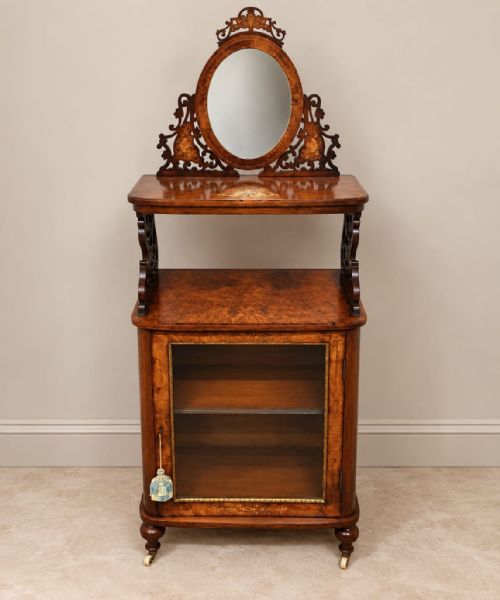
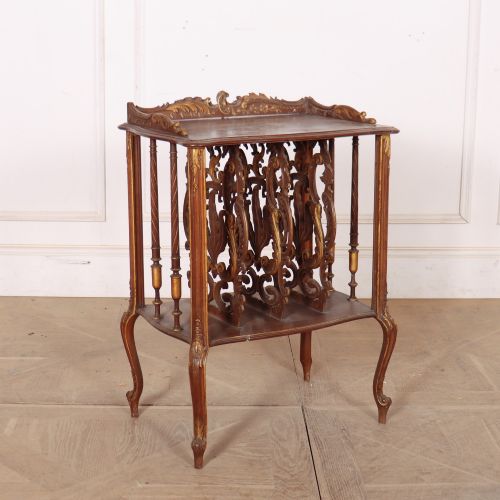
Surface decoration often incorporates marquetry inlay, contrasting stringing, and French carving, particularly in French Art Nouveau and Sheraton Revival styles. Hardware is predominantly brass, appearing on drop handles, drawer pulls, and fall-front mechanisms, sometimes paired with glass doors or mirrored panels.
Some Edwardian music cabinets drop their secrets forward with ingenious spring-loaded fall fronts that fan out like a polite deck of cards.
What varies in quality
Quality in these cabinets rests upon the choice of timber and the precision of the cabinetmaker's joinery. Superior examples employ highly figured veneers such as burr walnut or carefully selected mahogany grain, balanced with crisp marquetry rather than stamped decoration.
The interior engineering distinguishes finer pieces, seen in smooth-running drawers, robust drop-front mechanisms, and original brass fittings that operate without binding. The proportion of the piece, whether a slim Edwardian upright or a substantial Victorian side cabinet, dictates its architectural balance.
The Brown Wooden Music Cabinet Glossary
- Canterbury
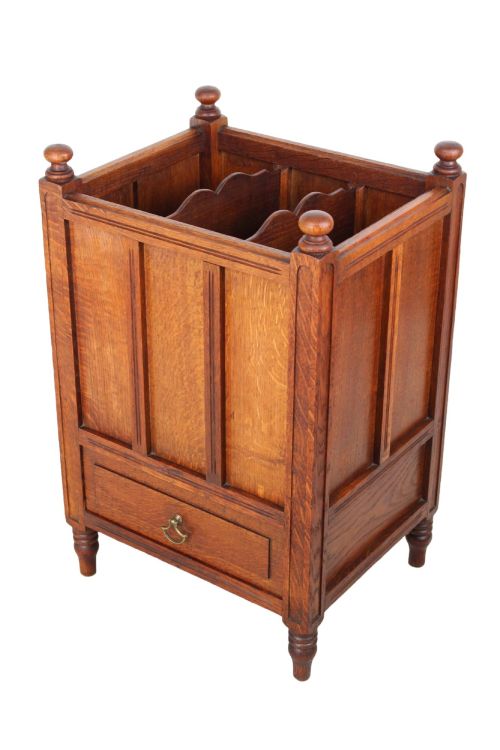
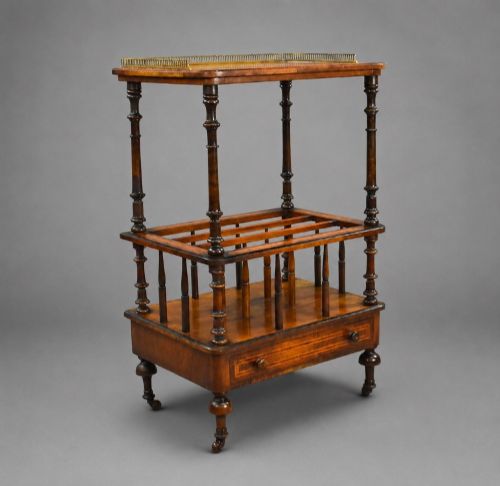
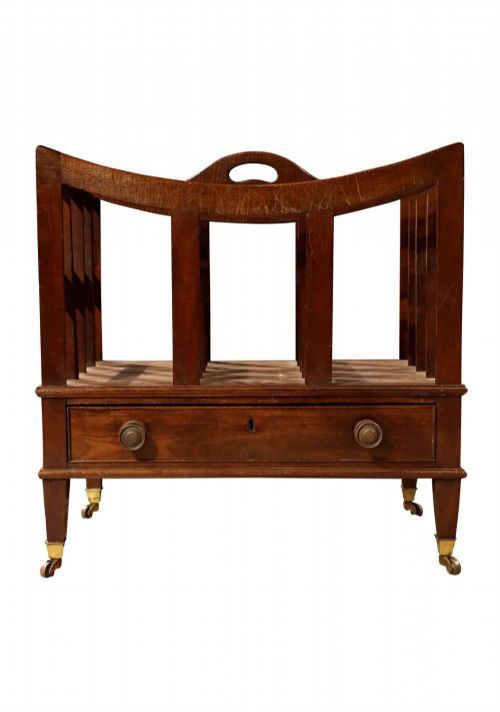
- A low stand with vertical partitions designed for holding sheet music, folios, or books. It frequently sits on castors and often includes a single drawer beneath the partitions.
- Marquetry
- The art of forming decorative patterns on a wooden carcass by fitting together small pieces of different veneers. This technique defines many Edwardian and late nineteenth-century musical storage pieces.
- Folio cabinet
- A tall cabinet specifically proportioned to hold large paper portfolios and unbound music sheets flat. These pieces often feature shallow, wide internal shelves or drop-down fronts.
- Etagere
- An open piece of furniture with multiple tiers used for displaying or holding small items. The nineteenth-century examples on this page bring slender vertical display space to domestic interiors.
- Stringing
- Thin lines of contrasting timber inlaid into the surface of a cabinet to form geometric borders. It is a hallmark of Sheraton Revival and Edwardian marquetry work.
Brown Wooden Music Cabinet: Frequently Asked Questions
What is a music cabinet used for?
These cabinets were originally built to store sheet music, folios, and bound songbooks near a piano or music room. The shallow internal drawers and vertical compartments kept fragile paper scores flat and sorted.
Today, they serve the exact same organisational purpose while functioning as compact side tables, hallway storage, or bedside units in modern homes.
How do I date a music cabinet?
Dating relies on identifying the prevailing style, timber choices, and hardware construction methods present in the piece. Victorian examples often feature solid mahogany or heavy figured walnut with deep hand-carved details.
Edwardian versions tend to be lighter in proportion, frequently incorporating delicate marquetry inlay, satinwood stringing, and slender cabriole or tapered legs.
What is the difference between a cabinet and a canterbury?
A music cabinet is an enclosed upright piece of furniture featuring doors, drop-front panels, or multiple internal drawers. It hides the sheet music completely from view.
A canterbury is typically an open-framed stand featuring vertical wooden slats or partitions at the top, allowing sheet music to rest upright and remain visible.
Are these cabinets suitable for modern homes?
Their compact footprints and vertical proportions make them exceptionally well-suited for smaller rooms, hallways, and apartments. The internal drawers provide practical concealed storage for papers, cables, and small items.
The rich tones of mahogany, walnut, and oak add warmth to contemporary interiors while providing functional surface space on top.