
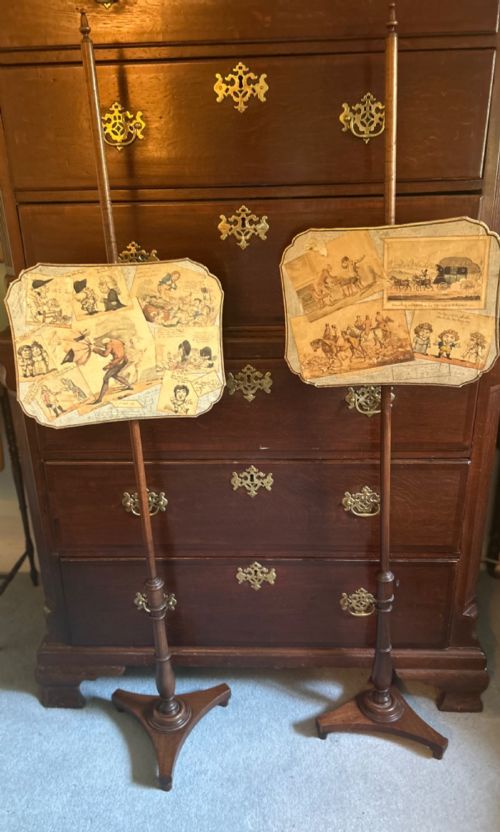
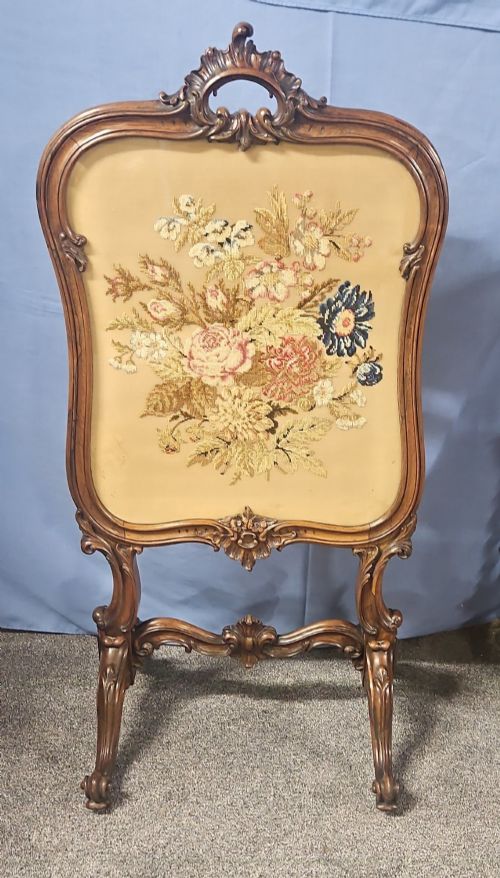


Brown Wooden Hearth Screen
A brown wooden hearth screen guards against the direct glare of an open fire while adding a layer of texture to a room.
Brown Wooden Hearth Screen
A brown wooden hearth screen is a protective accessory designed to shield the face from radiant heat or to conceal an unlit grate during warmer months. These pieces serve as a practical division between the living space and the fireplace.
Buyers encountering this group will most frequently find examples dating from the nineteenth century, alongside earlier Georgian iterations and select twentieth-century pieces. The forms range from standing pole screens to folding panels and static frames.
Makers utilised various timber species, pairing the wooden frames with decorative infills such as needlework, tapestry, prints, or glass. The resulting objects combine functional utility with the decorative tastes of their respective periods.
How they were made
The primary construction relies on traditional cabinet-making timbers, notably mahogany, walnut, oak, and exotic hardwoods. Craftsmen shaped these materials into sturdy upright supports, folding leaves, and adjustable poles.
Many frames incorporate textile panels, featuring woolwork, needlepoint, embroidery, or satirical prints set beneath glass. Carved detailing frequently defines the wooden surrounds, particularly in Victorian Rococo Revival and Black Forest examples.
The listings span the nineteenth century, Georgian, Regency, and Victorian periods, alongside early twentieth-century examples.
What varies in quality
Distinctions in quality often rest upon the execution of the woodwork and the finesse of the integrated textile or decorative panel. Finer pieces demonstrate precise joinery, thoughtful carving, and textiles that retain their original colour and tension.
The complexity of the form also influences the standing of a piece, such as multi-leaved pull-out designs or adjustable pole mechanisms. Simpler static screens contrast with elaborate carved variants that reflect the specific aesthetic ambitions of periods like the Georgian and Victorian eras.
The Brown Wooden Hearth Screen Glossary
- Pole screen
- A type of fire screen featuring a vertical wooden pole upon which an adjustable panel slides to block radiant heat. These items allowed sitters to alter the height of the shield according to their seating position.
- Needlework
- Decorative stitching applied to canvas or fabric, frequently seen mounted within the wooden frames of nineteenth-century pieces. This term encompasses woolwork, tapestry, and detailed embroidery.
- Baronial
- A descriptive style associated with heavy, carved wooden furniture popular during the nineteenth century. Such items often feature robust mouldings and dark timber tones.
- George III
- A period spanning the later eighteenth century known for refined cabinet-making and classical proportions. Pieces from this era often display elegant woodwork and restrained ornamentation.
Brown Wooden Hearth Screen: Frequently Asked Questions
How were these screens used?
These screens were placed near fireplaces to protect the face of a person from the intense heat of an open coal or wood fire. They also served to hide an empty hearth during the summer months.
In addition to temperature control, adjustable pole screens allowed occupants to redirect the shield as the sun moved across a room or as seating arrangements changed.
Where should I place a screen?
A hearth screen works effectively near an active fireplace or positioned in a corner to break up large wall spaces. They also function well as decorative room dividers in larger reception rooms.
Care should be taken to keep wooden frames and textile panels away from direct, continuous sources of intense heat to protect the materials.
How do I care for the wood and textiles?
Dust the wooden frames regularly with a soft, dry cloth to prevent the buildup of grime on carved surfaces. Avoid harsh chemical polishes that can damage older finishes.
Protect any fabric, needlework, or paper inserts from direct sunlight to prevent the fading of wools and printed elements over time.
What periods do these pieces span?
The selection includes items ranging from the Georgian and Regency eras through to the Victorian period and into the early twentieth century. Each era brought distinct stylistic preferences in timber selection and decorative panels.
Victorian pieces frequently display heavier carving and walnut construction, while Georgian examples often favour mahogany and lighter proportions.