



Brown Wooden Closet
These brown wooden closet examples deliver proper storage and period character, bringing traditional timber presence straight into a modern bedroom.
Brown Wooden Closet
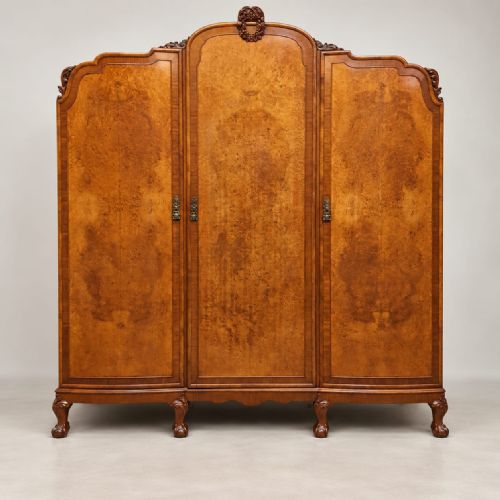
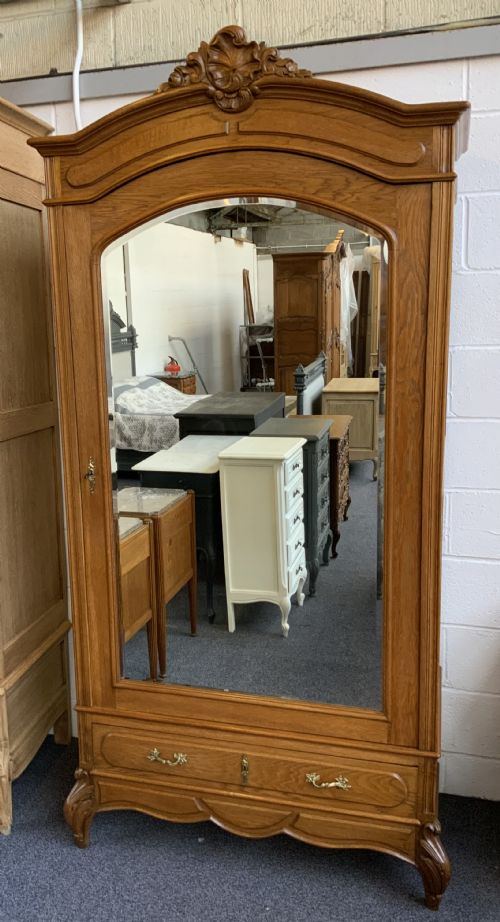
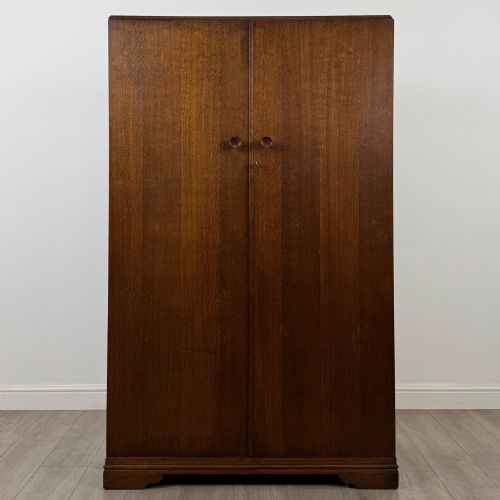
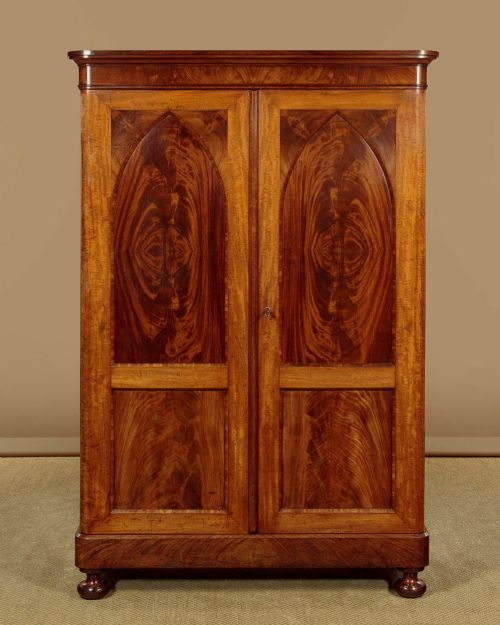
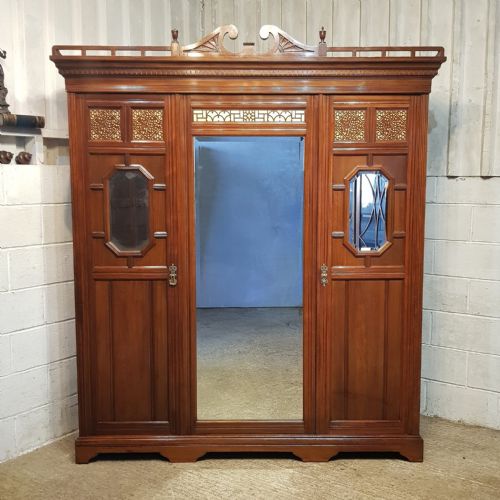
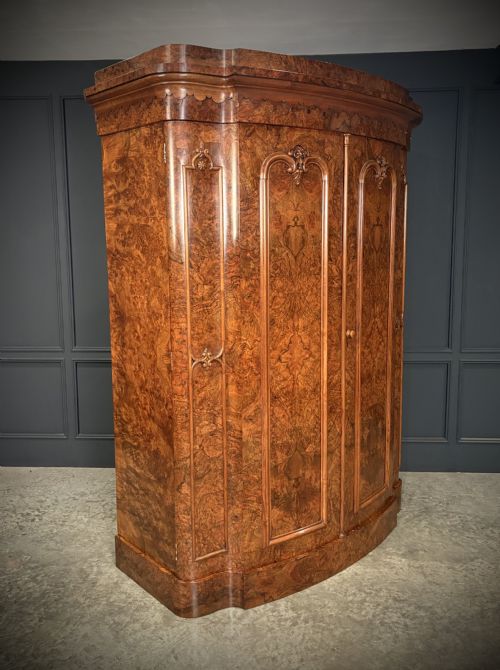
A brown wooden closet spans substantial wardrobes, single armoires, and individual cabinet doors from the eighteenth century to the mid-twentieth century. The term covers large triple wardrobes in rich walnut, compact mahogany pieces, and fitted oak designs intended to anchor a bedroom.
Most pieces you encounter on this page date from the Victorian and Edwardian eras, alongside items from the 1920s and 1930s. Styles range from French provincial and Louis XVI to Arts and Crafts and Art Deco, offering varied timber grains and cornice profiles.
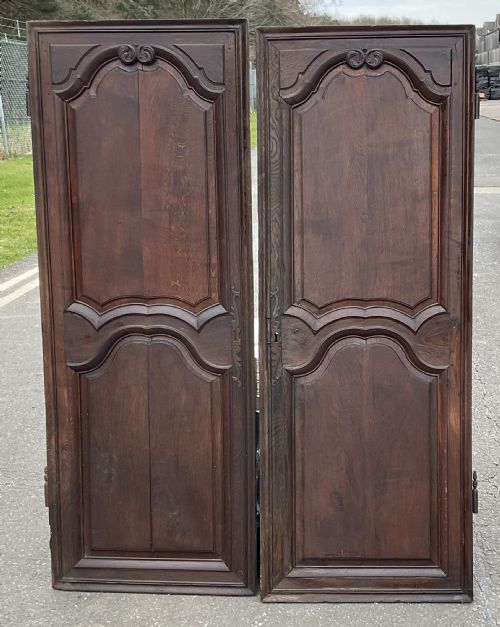
Forms include bow front walnut carcases, carved oak single doors, and tall flame mahogany veneers. You also find architectural elements like paired eighteenth-century walnut doors sold separately for interior projects.
Materials and construction
Makers built these carcases using solid hardwoods such as oak, mahogany, and walnut, often applying burr walnut or flame mahogany veneers across the main surfaces to showcase complex grain patterns. Brass fittings and glass panels appear regularly as functional and decorative accents.
Construction techniques combine traditional joinery with hand-carved details, particularly evident in French armoires and Arts and Crafts pieces. Cabinetmakers selected timbers for durability and visual depth, finishing them to highlight the natural tones of the wood.
Brown Wooden Closet Retail Price Guide 2026
Typical asking prices for brown wooden closet among the pieces listed under this phrase on Sellingantiques today, from the lower quarter to the upper quarter. They describe what is for sale here now, not the wider market.
Some nineteenth-century wardrobes retain the faint scent of cedar wood linings added to deter moths from woollens.
Assessing quality and finish
Quality rests in the selection of timber veneers and the crispness of hand-carved details rather than mere size. Superior pieces display book-matched burr walnut or flame mahogany that flows naturally across doors and panels.
Construction depth dictates lasting value, seen in heavy brass hardware, stable frame-and-panel doors, and well-fitted internal drawers. Pieces retaining their original period polish and structural integrity stand apart from altered examples.
The Brown Wooden Closet Glossary
- Armoire
- A tall cupboard or wardrobe, traditionally of French origin, with hinged doors enclosing hanging space or shelves. These pieces often feature prominent cornices and panelled doors.
- Burr walnut
- A highly figured timber veneer taken from the warted growths on walnut trees. It creates intricate, swirling patterns across large surfaces.
- Flame mahogany
- A veneer cut from the fork of a mahogany tree where the grain twists to resemble flickering flames. It provides a striking, chatoyant surface on Victorian and Edwardian furniture.
- Arts and Crafts
- A design movement valuing handcraftsmanship, simple construction, and natural materials over mass production. Pieces in this style emphasise honest joinery and vernacular oak timbers.
- Cornice
- The decorative moulding crowning the top of a wardrobe or cabinet. It frames the upper edge and balances the proportions of tall storage furniture.
Brown Wooden Closet: Frequently Asked Questions
How do I date a wooden wardrobe?
Examine the timber species, construction methods, and hardware style to establish the period. Victorian and Edwardian pieces often display machine-planed internals alongside hand-finished mouldings.
Earlier examples from the eighteenth century utilise pegged joinery and hand-sawn panels, whereas 1920s and Art Deco versions introduce streamlined veneers and minimal ornamentation.
Can these wardrobes be dismantled for moving?
Many larger triple wardrobes and armoires were constructed to be taken apart for transport. Pegged frames and knock-down bolt systems allowed historical cabinetmakers to maneuver heavy carcases into upper rooms.
Check the internal corners and cornices for original fixing bolts and slots that indicate modular assembly.
What is the difference between an armoire and a wardrobe?
An armoire traditionally refers to a continental European freestanding cupboard with single or double doors. They frequently exhibit regional French provincial carving or Louis XVI symmetry.
Wardrobes often denote British designs that evolved into larger multi-door configurations with central mirrored panels or fitted interior drawers by the Victorian era.
How should I maintain wooden surfaces?
Keep wooden furniture away from direct heat sources and strong sunlight to prevent the timber and veneers from drying out or splitting. Dust regularly with a soft, dry cloth.
Apply a traditional beeswax polish sparingly to nourish the polish and maintain the natural lustre of walnut, mahogany, and oak.