



Brown Wooden Cart
A brown wooden cart serves drinks and afternoon tea, bringing mobility and period character to a room.
Brown Wooden Cart
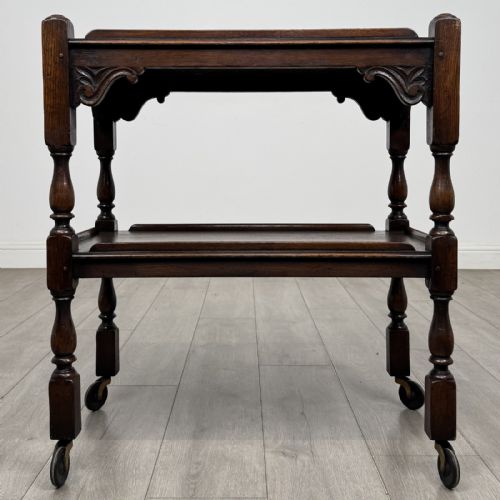
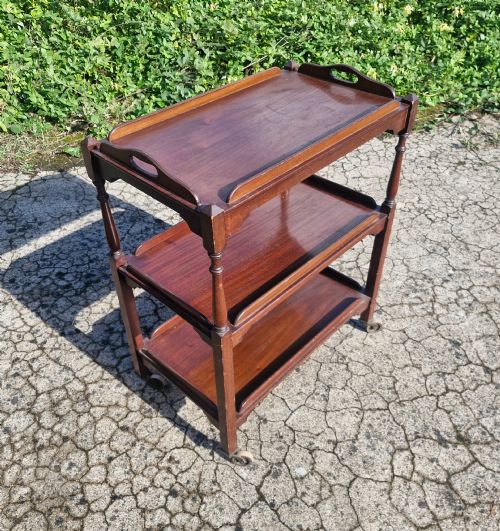
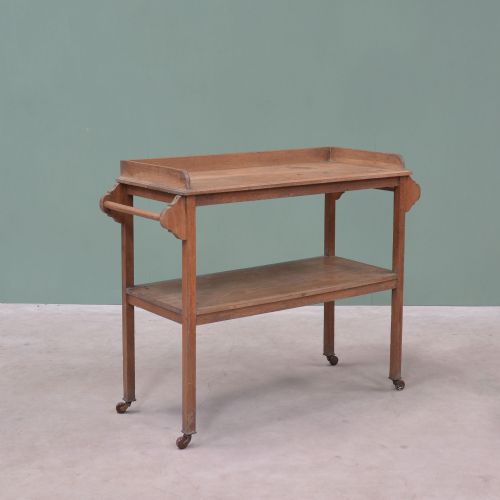
A brown wooden cart most frequently takes the form of a tea trolley, serving trolley, or drinks cart designed for domestic use. These pieces function as mobile surfaces for serving food, beverages, or holding serving trays during social gatherings.
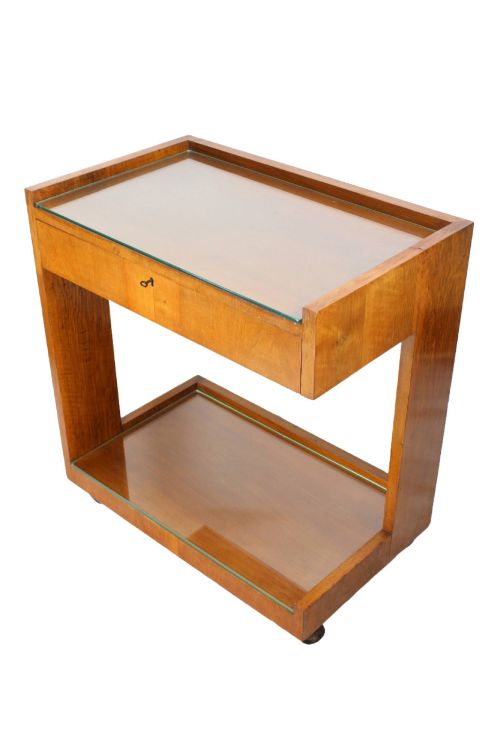
The pieces on this page span several periods, from George III examples through Victorian and Edwardian items up to Art Deco and mid-century designs. Walnut and mahogany tea trolleys with removable trays dominate the selection, alongside oak pieces featuring wheels and drop leaves.
How they were made
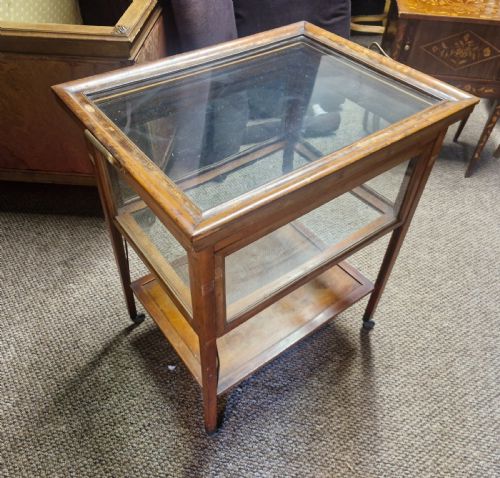
Cabinet makers utilised hardwoods such as mahogany, oak, walnut, and beech to construct the frames and tiers of these trolleys. Selected pieces incorporate brass hardware, glass panels, and inlaid details to accentuate the wood grain.
Construction techniques include drop leaves, folding tops, and removable carrying trays that double as serving implements. Wheels or castors allow the heavy wooden frames to move smoothly across floor surfaces.
Brown Wooden Cart Retail Price Guide 2026
Typical asking prices for brown wooden cart among the pieces listed under this phrase on Sellingantiques today, from the lower quarter to the upper quarter. They describe what is for sale here now, not the wider market.
The listings feature wooden carts and trolleys made from mahogany, oak, walnut, and beech across periods from George III to Art Deco.
What varies in quality
Quality depends upon the choice of timber and the precision of the cabinet work, such as figured walnut veneers or inlaid mahogany. Superior examples display careful joinery on tier supports, drop-leaf mechanisms, and the fitting of removable trays.
The sophistication of the design dictates the overall standing of a piece, separating utilitarian oak trolleys from streamlined Art Deco walnut bar carts and finely detailed Edwardian serving furniture.
Lusty of Leicester
The Brown Wooden Cart Glossary
- Drop leaf
- A tabletop with hinged flaps that fold down to save space when not in use. These flaps extend the surface area quickly for serving tea or drinks.
- Removable tray
- A top section designed to lift off the main frame and function independently as a serving tray. This feature allows hosts to carry items away from the trolley.
- Dumb waiter
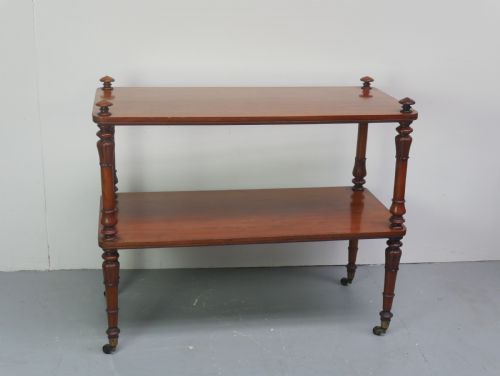
- A multi-tiered piece of dining furniture used to hold dishes and serving items without requiring servant attendance. Victorian examples often feature three distinct tiers.
- Barley twist
- A decorative woodworking technique where the timber is turned into a spiral shape resembling twisted barley sugar. This detail appears frequently on oak supports.
- Castor
- A small wheel mounted on a swivel attached to the base of the cart legs. Castors permit easy mobility across rooms.
Brown Wooden Cart: Frequently Asked Questions
What is a brown wooden cart used for?
These pieces serve primarily as mobile tables for afternoon tea, cocktails, and dinner service. They allow hosts to transport food and drinks between rooms with ease.
Beyond entertaining, they function as display surfaces for household items or as permanent side tables in a living space.
How do I identify an Edwardian tea trolley?
Edwardian tea trolleys often feature lighter mahogany or oak construction, sometimes with inlaid decoration and folding tops. They typically date from the early twentieth century.
Many incorporate removable trays and tiered shelving designed to hold afternoon tea porcelain securely during transport.
What is the difference between a tea trolley and a bar cart?
Tea trolleys generally date from the Edwardian and early twentieth-century periods, constructed in oak or mahogany with drop leaves and wooden wheels. They emphasise formal afternoon hospitality.
Bar carts frequently adopt Art Deco styling, utilising walnut, glass, and streamline forms specifically for holding glassware and liquor bottles.
How do I care for a wooden serving cart?
Protect the wooden surfaces from moisture by using coasters and trays for wet glasses and teapots. Regular dusting preserves the finish of the timber.
Periodically check the castors and joints to ensure the wheels move freely and the frame remains stable during movement.