





Brown Wooden Bar Cart
A brown wooden bar cart brings instant character to a room, offering a practical surface for glassware and bottles that moves wherever the conversation goes.
Brown Wooden Bar Cart
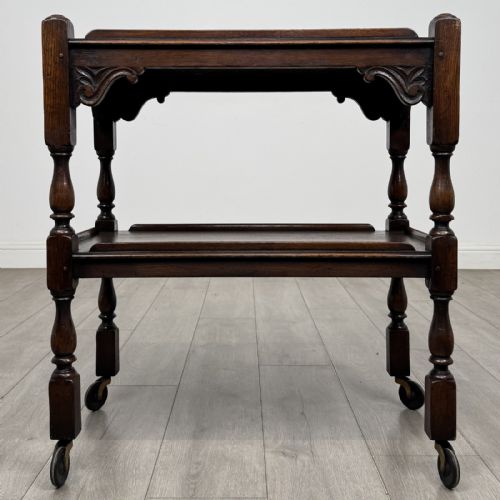
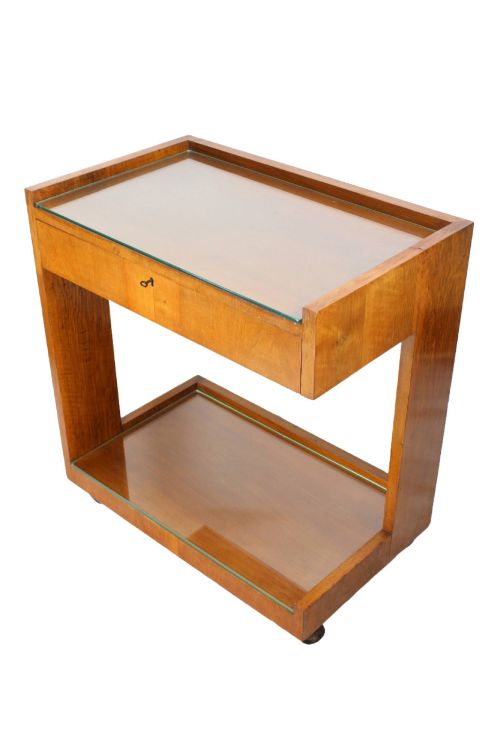
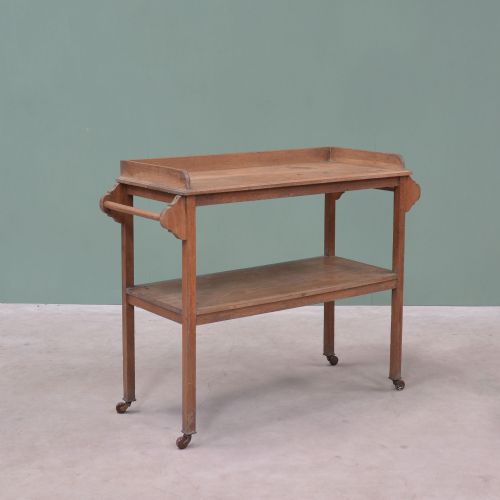
When you search for a brown wooden bar cart, you encounter a variety of practical serving pieces designed to transport drinks and refreshments from room to room. These range from Edwardian tea trolleys and folding tables to Art Deco circular bar carts and George III mahogany butlers trays on stands.
The most common examples on this page date from the early twentieth century, particularly the 1920s and 1930s, alongside Edwardian designs. They frequently feature multiple tiers, removable trays, and wheels or castors for easy movement during entertaining.
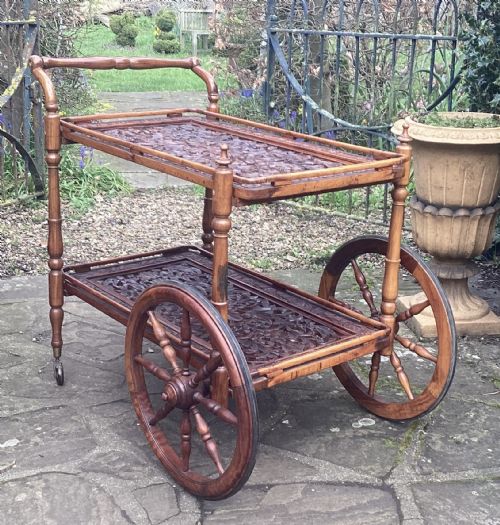
Origins vary across English pieces in walnut and mahogany, alongside oak tea trolleys and occasional international examples such as Anglo-Indian carved hardwood and cane bound beech. Their forms span simple two-tier shelving units to clever dropleaf tables and serving card combinations.
How they were made
Cabinet makers utilised solid timbers such as mahogany, oak, and walnut, often enhanced with decorative veneer and figural grain patterns. Inlaid details, carved wooden motifs, and polished finishes define the construction of these entertaining pieces.
Metal components play a crucial role in their functionality, with brass castors, handles, and silver-plated galleries fitted to secure glassware during transit. Some twentieth-century examples also incorporate plywood panels and glass inserts for durable serving surfaces.
Brown Wooden Bar Cart Retail Price Guide 2026
Typical asking prices for brown wooden bar cart among the pieces listed under this phrase on Sellingantiques today, from the lower quarter to the upper quarter. They describe what is for sale here now, not the wider market.
Some tea trolleys doubled as card tables with baize surfaces, ready to transition from afternoon tea straight to an evening game of bridge.
What varies in quality
The sophistication of the timber selection and decorative detail sets the standard for these serving pieces. Figured walnut veneers, intricate inlay work, and hand-carved elements distinguish finer examples from utilitarian tea trolleys.
Mechanical ingenuity and hardware finish also determine worth, seen in the smooth action of folding tops, dropleaf mechanisms, and removable trays. Robust construction of the wheels and joints ensures a piece performs its mobile function with stability.
Lusty of Leicester
The Brown Wooden Bar Cart Glossary
- Castor
- A small wheel mounted on a swivel at the base of a leg, allowing the trolley to roll smoothly across floors. They are essential for mobile serving pieces.
- Dropleaf
- A table or trolley top with hinged flaps that fold down to save space or lift up to extend the surface area. This mechanism provides flexible sizing for entertaining.
- Tier
- A horizontal shelf or level on a trolley, allowing for stacked storage and display of drinks, glassware, and tea sets. Most examples feature two or three levels.
- Veneer
- A thin slice of decorative wood glued over a base timber to provide an attractive grain pattern, particularly popular in Art Deco furniture design.
Brown Wooden Bar Cart: Frequently Asked Questions
What is the difference between a tea trolley and a bar cart?
Tea trolleys typically date from the Edwardian period and 1920s, designed originally for afternoon tea service with folding tops or removable trays. Bar carts often lean towards Art Deco designs with circular frames and specific storage for bottles and glassware.
Both serve a similar mobile function, though bar carts generally project a more dedicated entertaining aesthetic while tea trolleys emphasise domestic versatility.
How do I care for a wooden bar cart?
Protect the polished wooden surfaces from moisture and heat by using coasters and trays for drinks. Regular dusting with a soft cloth and occasional application of appropriate furniture wax keeps the timber nourished.
Check the brass castors and tightening joints periodically to ensure the trolley remains stable and mobile.
Can I use an antique trolley for everyday serving?
Most of these pieces were built for practical domestic use and remain sturdy enough for modern entertaining. Ensuring the wheels roll freely and the shelves are secure will prevent accidents with glassware.
Treating older mechanisms with care during folding or lifting trays preserves the structure for daily enjoyment.