




Brown Wood Wainscot Chair
A brown wood wainscot chair is a panelled wooden seat that brings grounded historical presence to a room.
Brown Wood Wainscot Chair
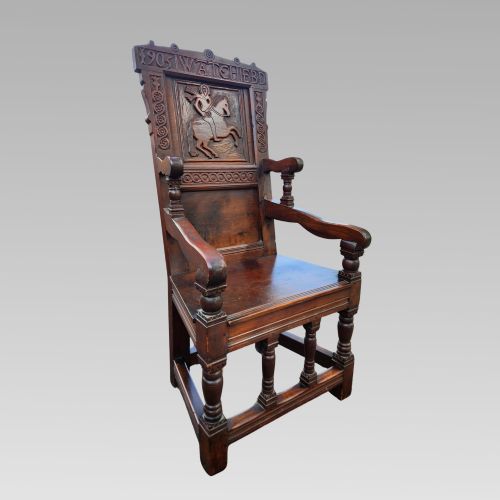
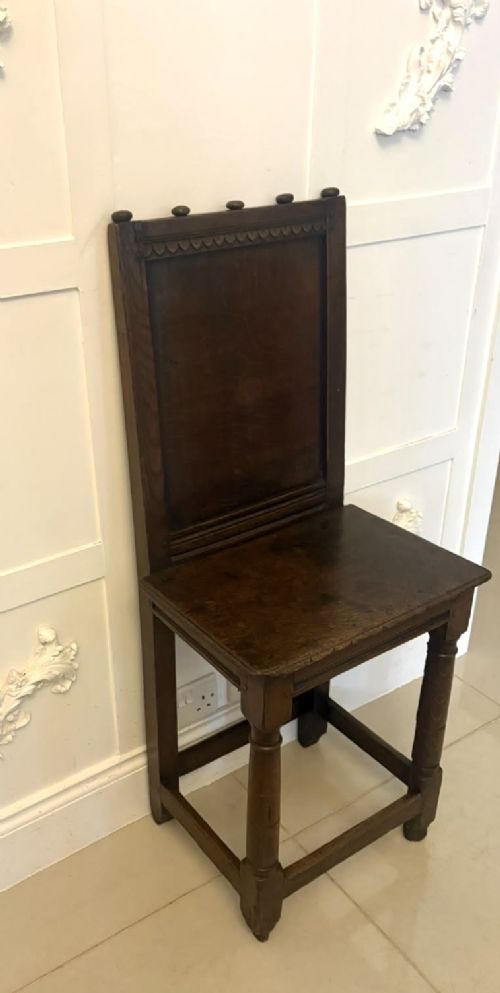
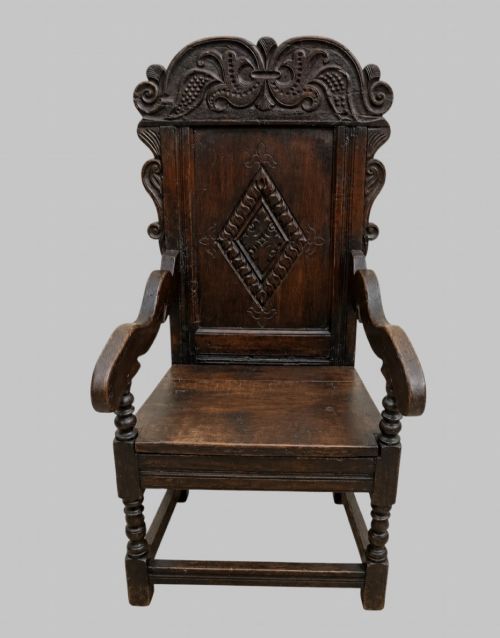
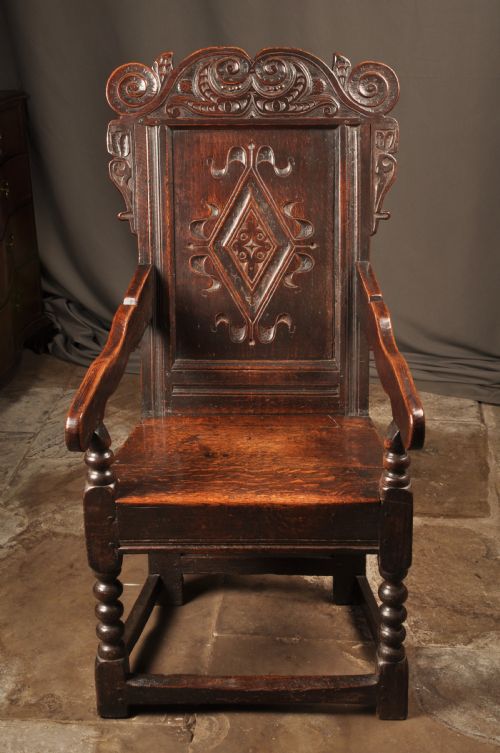
A brown wood wainscot chair is a sturdy timber seat defined by its panelled back, offering a solid architectural presence that anchors a room. The selections on this page span several centuries, reaching from authentic seventeenth-century examples to later revivals from the nineteenth and early twentieth centuries.
Most pieces encountered here take the form of armchairs or side chairs built for halls and domestic spaces. They draw upon Jacobean, Tudor, and Gothic Revival styles, utilising traditional joinery to create substantial furniture that has endured for generations.
Regional variations appear across the selection, including Welsh armchairs and Yorkshire pieces alongside regional English and Spanish revival forms. Buyers frequently encounter oak as the primary timber, often displaying the natural grain and deep patination accumulated over centuries of use.
How they were made
The construction of a brown wood wainscot chair relies heavily on solid oak timber worked with traditional mortise and tenon joinery. Woodworkers built the panelled backs and sturdy frames to withstand heavy daily use without modern metal fasteners.
Decoration on these chairs typically involves hand carving directly into the timber, producing geometric patterns, foliate motifs, or crest rails. Some later or alternate examples incorporate leather elements secured with metal studs along the seat or back.
Brown Wood Wainscot Chair Retail Price Guide 2026
Typical asking prices for brown wood wainscot chair among the pieces listed under this phrase on Sellingantiques today, from the lower quarter to the upper quarter. They describe what is for sale here now, not the wider market.
Correction chairs appear among the selections, reminding us that historical seating sometimes served entirely disciplinary purposes.
What varies in quality
Quality in a brown wood wainscot chair rests largely on the crispness of the original timber carving and the integrity of the frame construction. Pieces retain greater appeal when the oak shows deep, honest patination rather than over-restored surfaces.
The proportion and balance of the panelled back relative to the arm supports and legs determine the visual success of the piece. Authentic seventeenth-century examples differ fundamentally in construction rhythm from the later 1920 and 1930 revivals.
The Brown Wood Wainscot Chair Glossary
- Wainscot chair
- A wooden armchair characterised by a panelled back and a solid wooden seat, traditionally originating in the sixteenth and seventeenth centuries. This form developed from timber wall panelling.
- Jacobean
- A style of British design associated with the reign of James I, marked by heavy proportions and geometric carved decoration. This aesthetic heavily influences seventeenth-century furniture.
- Patina
- The surface sheen and colour developed by aged wood over years of handling, exposure, and polishing. A rich patina indicates age and regular care.
- Mortise and tenon
- A traditional woodworking joint where a protruding peg fits snugly into a corresponding cavity to lock timbers together securely without nails. This technique defines sturdy period furniture.
Brown Wood Wainscot Chair: Frequently Asked Questions
What is a wainscot chair?
A wainscot chair is a heavy wooden seat featuring a panelled back, originally constructed when wood panelling was common in fine homes.
Over time, these chairs moved from principal rooms into halls and chambers, serving as principal seats for the head of a household.
How old are these chairs?
The pieces available range from authentic seventeenth-century examples to revival pieces made during the nineteenth and early twentieth centuries.
Revival pieces from the 1920 and 1930 eras often emulate earlier Tudor and Jacobean styles using traditional oak construction methods.
Are these chairs comfortable?
These are solid timber chairs designed for upright posture rather than relaxed lounging. Some variations include leather elements or loose cushions to soften the wooden seat.
Their sturdy armrests and high backs offer a supportive, commanding sit suited to a study or hallway.
How do I care for oak furniture?
Oak furniture benefits from regular dusting with a dry cloth and occasional application of appropriate natural wax to nourish the grain. Keeping the timber away from direct heat sources prevents the wood from drying out.
Gentle maintenance preserves the natural patination built up over centuries of existence.