

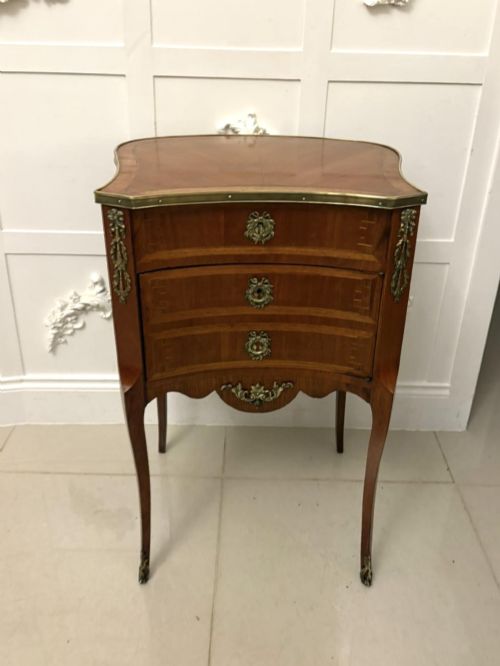
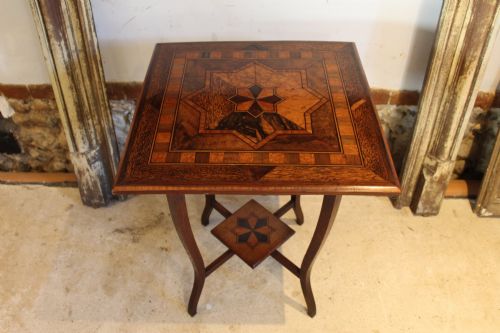
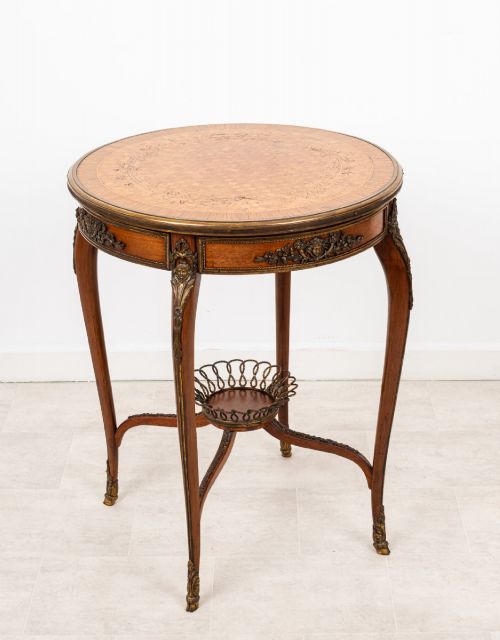
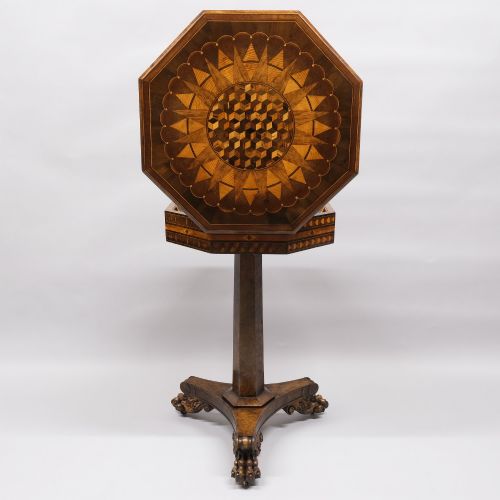
Brown Wood Parquetry Table
A brown wood parquetry table brings geometric precision to a room, using small wood veneers arranged in repeating patterns.
Brown Wood Parquetry Table
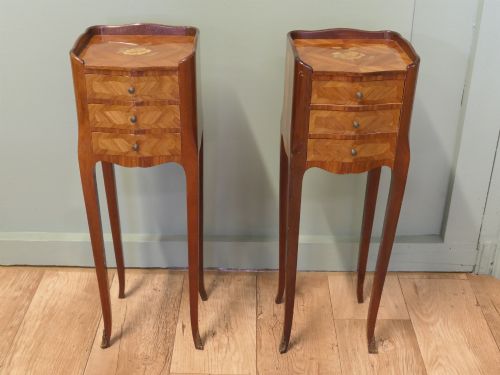
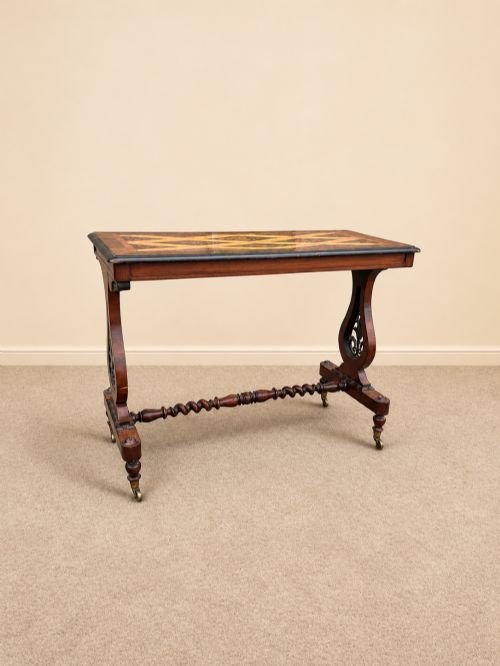
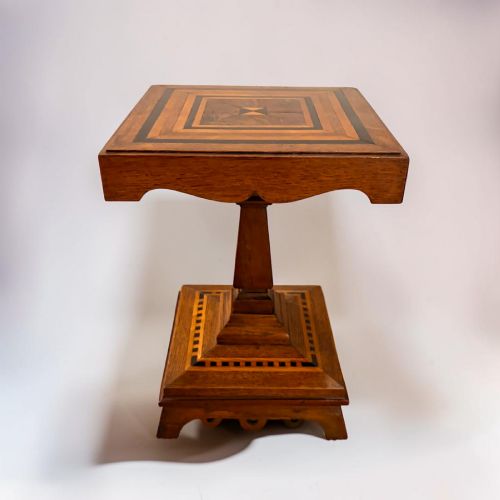
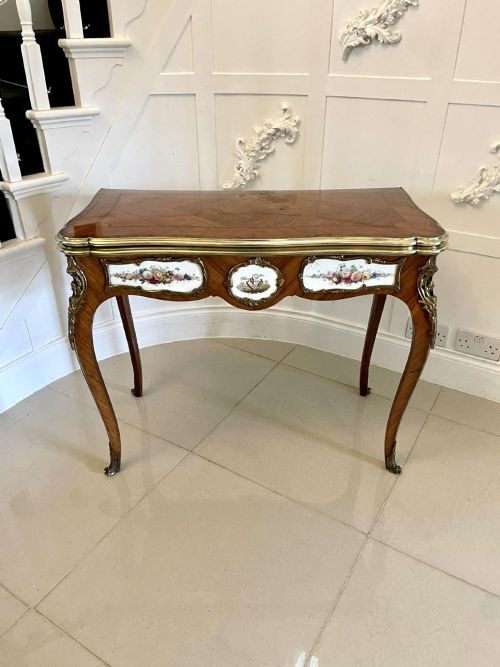
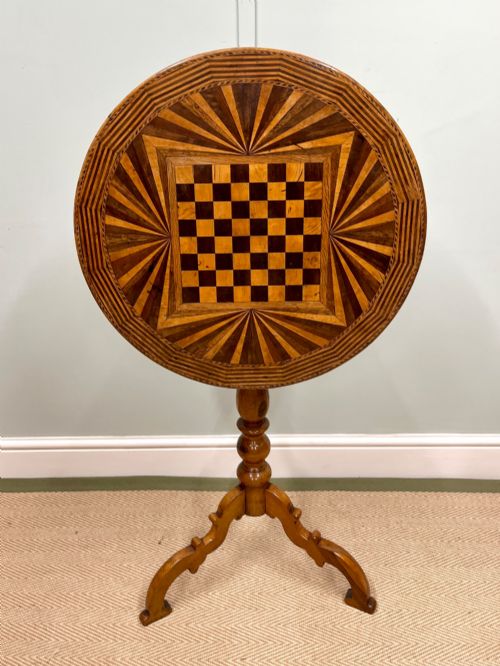
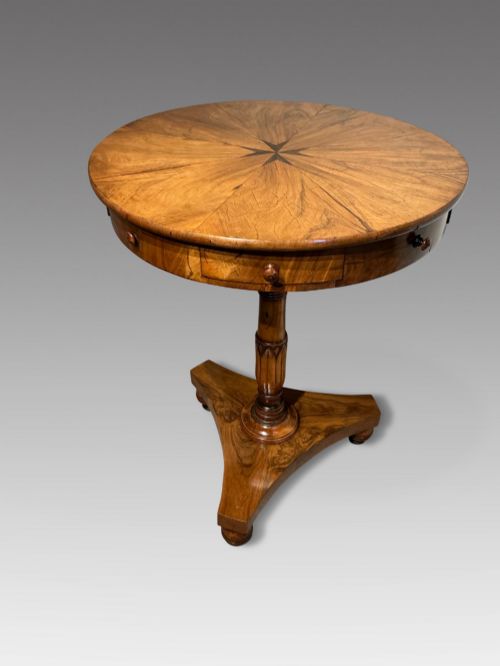
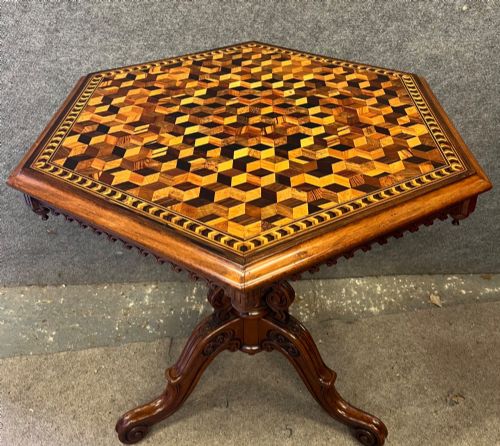
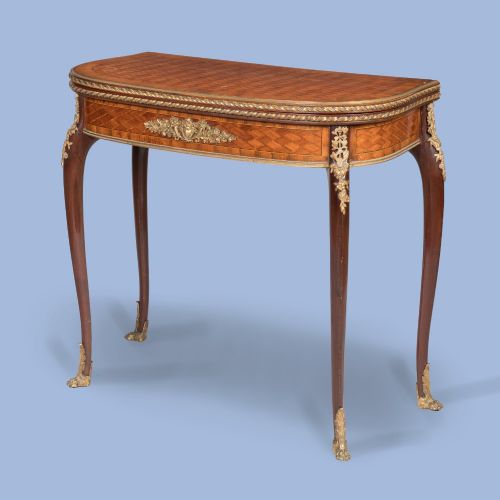
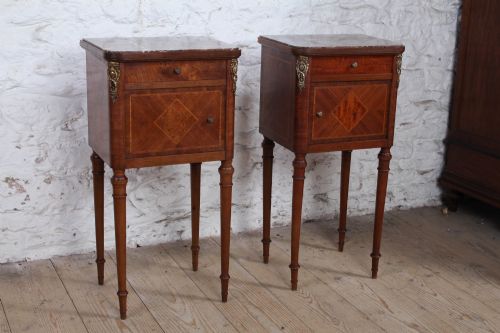
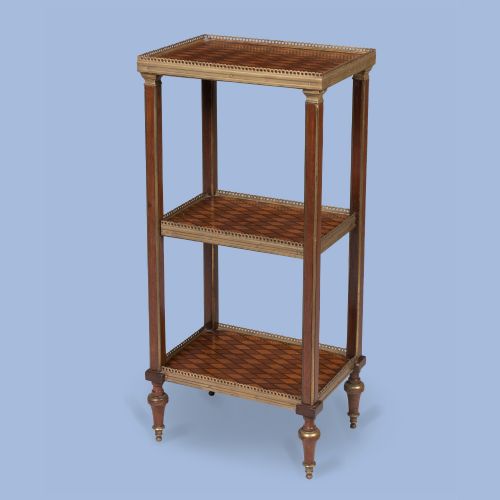
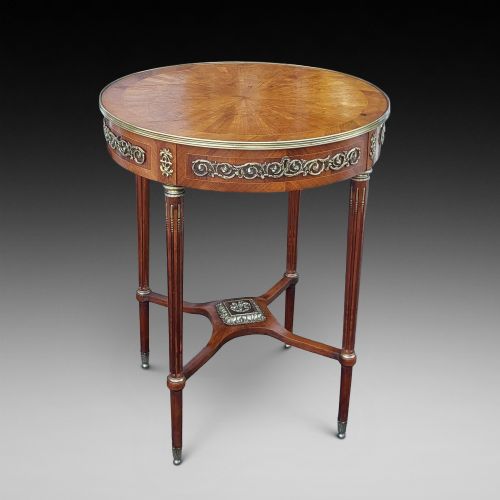
A brown wood parquetry table displays geometric wood veneer compositions arranged across the top surface. These pieces range from compact bedside cabinets and occasional tables to larger card, games, and centre tables.
The selections on this page draw heavily from nineteenth-century French workshops, Victorian English parlours, and broader continental traditions. Side tables and coffee tables predominate, alongside specialised work tables and folding card tables.
How They Were Made
Craftsmen cut thin veneers of kingwood, walnut, tulipwood, rosewood, and fruitwood, fitting the grain sections tightly together to form geometric cubes, stars, and lozenges. These decorative surfaces were then glued to a sturdier secondary timber base.
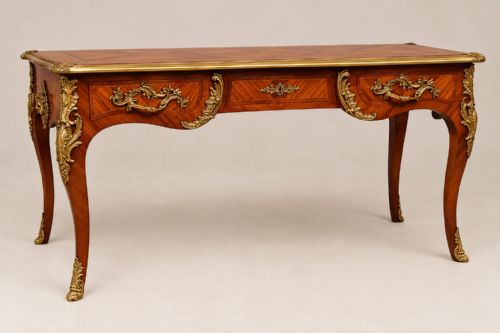
Many examples incorporate cast or chased ormolu mounts, brass banding, and marble tops to accentuate the borders. Specialised tables often conceal folding mechanisms, chess boards, or backgammon layouts beneath the parquetry lid.
Brown Wood Parquetry Table Retail Price Guide 2026
Typical asking prices for brown wood parquetry table among the pieces listed under this phrase on Sellingantiques today, from the lower quarter to the upper quarter. They describe what is for sale here now, not the wider market.
Listings span from the seventeenth century through the 1930s, featuring walnut, kingwood, and ormolu mounts across diverse European and colonial origins.
What Varies In Quality
Quality rests upon the precision of the geometric veneer joints and the stability of the timber underneath. Finer examples maintain tight, flush intersections between individual wood pieces without visible gaps or excessive filler.
The distinction also lies in the selection of contrasting timbers and the crispness of any applied ormolu or bronze mounts. Superior pieces show deliberate grain matching and substantial bronze castings rather than lighter, stamped metal substitutes.
Ralph Turnbull·François Linke·G T Morant·Maison Mottheau
The Brown Wood Parquetry Table Glossary
- Parquetry
- Geometric mosaic woodwork formed by fitting small wooden veneers together to create patterns like cubes or herringbone. It differs from marquetry, which forms pictorial scenes rather than repeating geometric designs.
- Ormolu
- Gilded bronze mounts applied to the edges, legs, and corners of furniture. This decorative technique protects vulnerable timber edges and adds metallic contrast.
- Kingwood
- A dense, richly figured tropical timber used extensively in seventeenth and eighteenth-century cabinet making. Its dark grain and warm brown tones provide strong visual contrast in parquetry patterns.
- Veneer
- A thin slice of decorative wood glued over a secondary, more stable base timber. This method allows cabinet makers to display expensive grain patterns without building entire structures from solid exotic woods.
Brown Wood Parquetry Table: Frequently Asked Questions
How do I clean a parquetry top?
Dust the surface regularly with a soft, dry cloth to prevent particles from settling into the veneer joints. Avoid excess moisture or harsh chemical polishes that can degrade the historic adhesives.
Apply a traditional beeswax conditioner occasionally to nourish the wood and maintain a gentle sheen. Buff the wax thoroughly after application to protect the timber without building up a sticky residue.
Can I use these tables daily?
These tables function well for everyday placement in sitting rooms and hallways, provided they avoid direct sunlight and intense heat sources. Protect the wood surfaces with coasters or mats beneath cups and heavy items.
Keep them away from rapid temperature shifts, such as direct radiator heat or damp environments, which cause the wood veneers to lift or crack. Gentle, careful use preserves the delicate geometric patterns.
What is the difference between parquetry and marquetry?
Parquetry relies strictly on geometric shapes like cubes, triangles, and diamonds to build repeating mathematical patterns. It emphasises the natural grain and contrast of different woods across a structured surface.
Marquetry employs similar wood veneers to create pictorial compositions, depicting flowers, landscapes, or scrolling foliage. While both techniques appear on fine tables, parquetry remains focused on abstract geometry.
How do I spot a later reproduction?
Examine the underside and interior construction for modern machine marks, contemporary screws, and synthetic glues. Older tables display hand-cut joinery, aged secondary timbers, and natural wear patterns.
Inspect the consistency of the veneer work and the ageing of the timber beneath the finish. Modern reproductions often lack the subtle tonal shifts and natural shrinkage found in nineteenth-century surfaces.