




Brown Wood Netsuke Carving
These brown wood netsuke carvings are miniature sculptural toggles from Japan, prized for their intricate detail and tactile qualities.
Brown Wood Netsuke Carving
When you search for brown wood netsuke carving, you encounter traditional Japanese miniature sculptures and toggles spanning the nineteenth century, including the Edo and Meiji periods.
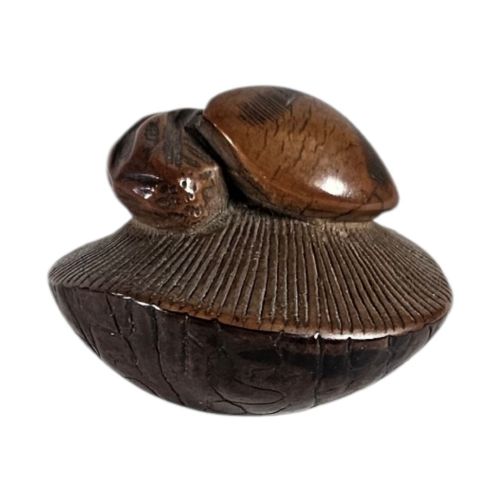
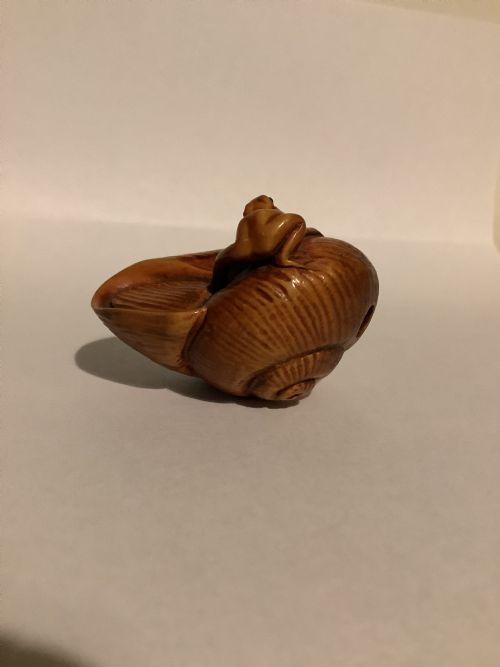
The selections on this page feature boxwood and other carved woods shaped into diverse subjects such as snails on mushrooms, wise men on horses, toads, frogs, rabbits, and clusters of nuts.
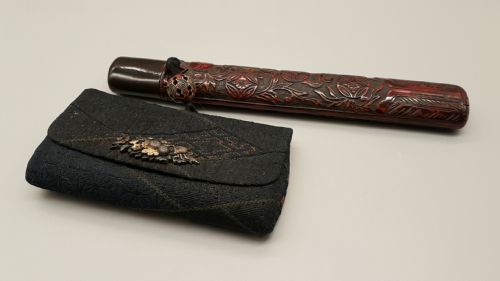
Many of these objects serve practical traditional functions as part of smoking accessories, such as tobacco boxes, pouches, and pipe cases with attached ojime beads.
Materials and carving techniques
Carvers predominantly utilise boxwood and various exotic woods, taking advantage of the material's grain to achieve smooth surfaces and crisp details.
Artisans employ manual carving tools to create naturalistic forms, occasionally incorporating signed elements and signatures from makers such as Tomochika and Masayuki.
Additional materials like horn, silk, lacquer, metal, and mother-of-pearl appear alongside the primary wood constructions in related smoking ensembles.
A young boy sits comfortably atop a carved wooden ram, sharing space on this page with a rather thoughtful toad.
Understanding quality in carving
The distinction between tiers rests upon the precision of the carver's hand and the liveliness of the subject matter, ranging from rigid depictions to fluid, naturalistic figures.
Signatures by recognised carvers elevate certain pieces, demonstrating superior mastery over the wood grain and depth of relief.
The tactile appeal and smoothness acquired through age and handling also define the better examples within the selection.
Tomochika·Masayuki
The Brown Wood Netsuke Carving Glossary
- Netsuke
- A small carved toggle used in traditional Japanese dress to secure suspended pouches and containers to the sash. They are typically perforated for the passage of a cord.
- Okimono
- A standalone Japanese decorative figurine designed for display on a shelf or in an alcove rather than for fastening to clothing. These sculptures share similar subjects and carving techniques with netsuke.
- Sashi netsuke
- A long, slender form of toggle designed to slide down behind the obi sash rather than being secured with a cord. They often accompany pipe cases.
- Ojime
- A small bead positioned on the cord between a netsuke and a pouch, serving to keep the container closed. They are frequently carved from matching or complementary materials.
- Edo Period
- A historical epoch in Japan spanning from sixteen-out-of-ten to eighteen-sixty-eight, characterised by peace and the flourishing of urban arts. Many listed works date from the latter decades of this era.
Brown Wood Netsuke Carving: Frequently Asked Questions
How were these carvings used?
Owners threaded cords through these wooden toggles to secure tobacco pouches, medicine boxes, or pipe cases to their sashes. The toggle rested atop the fabric while the container hung below.
They also function purely as decorative okimono sculptures meant for tabletop display.
How do I date a wooden netsuke?
Dating relies on stylistic markers associated with the Edo and Meiji periods of Japanese history, alongside nineteenth-century construction methods. Signatures from historical carvers provide further chronological clues.
Material patination and the wear patterns from handling also indicate age.
What subjects are common in these carvings?
Carvers frequently depicted animals such as frogs, toads, rabbits, and rodents, alongside nuts, mushrooms, and figures like Daruma or wise men on horses. These motifs draw from Japanese folklore, nature, and daily life.
Many pieces capture animals in dynamic or humorous poses.