




Brown Wood Inlaid Commode
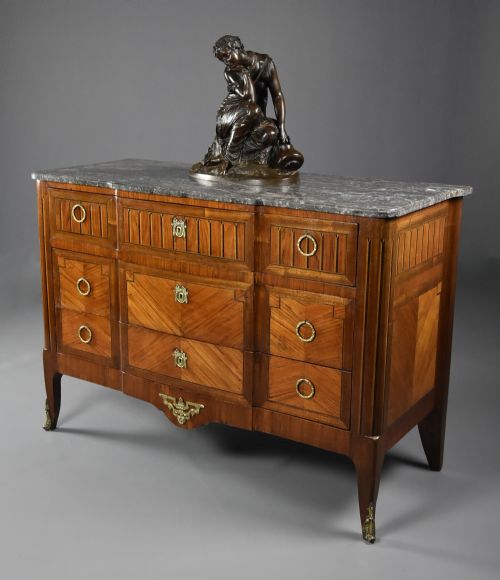
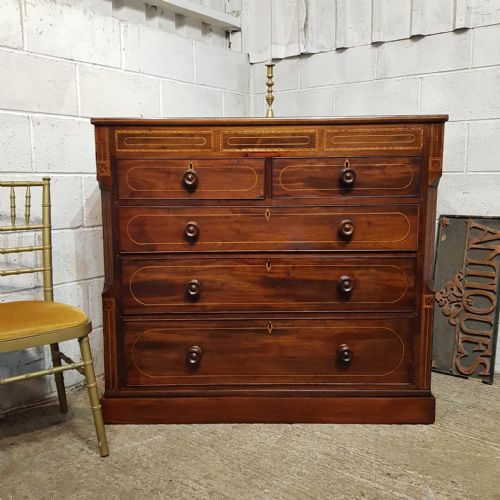
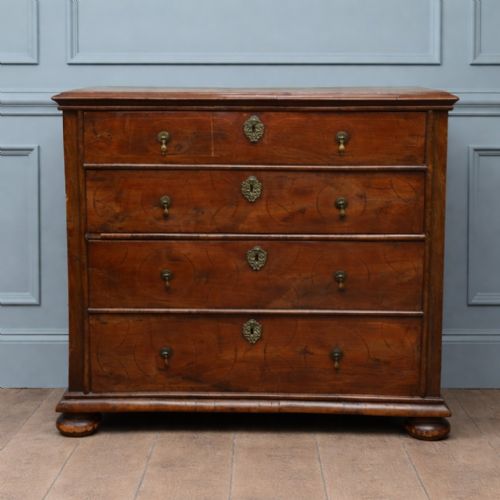
These brown wood inlaid commode pieces bring centuries of cabinet-making skill into a room, offering practical storage alongside rich surface detail.
Brown Wood Inlaid Commode
Makers utilised various timbers such as satinwood, fruitwood, and tulipwood to build these storage items. Regional variations include Dutch, French, and Italian examples alongside British pieces.
Materials and construction methods
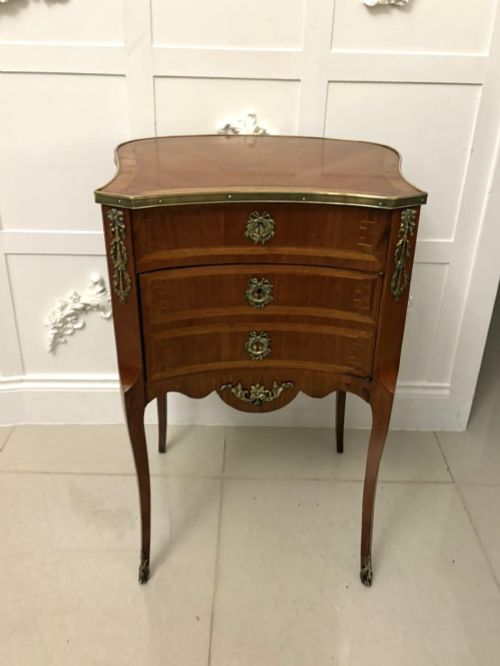
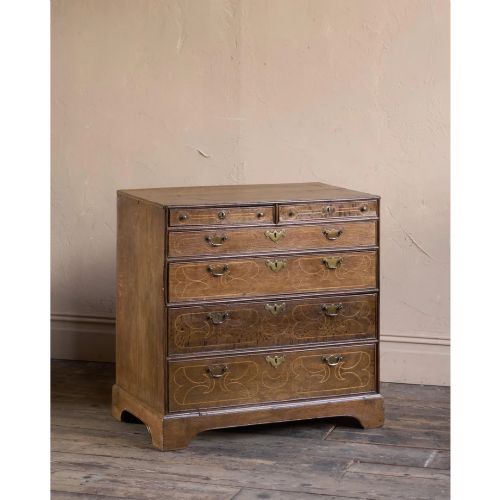
Cabinet-makers constructed carcasses using solid foundational timbers like mahogany, oak, and walnut. Artisans then applied boxwood inlay, marquetry, and wood veneers to decorate the exterior surfaces.
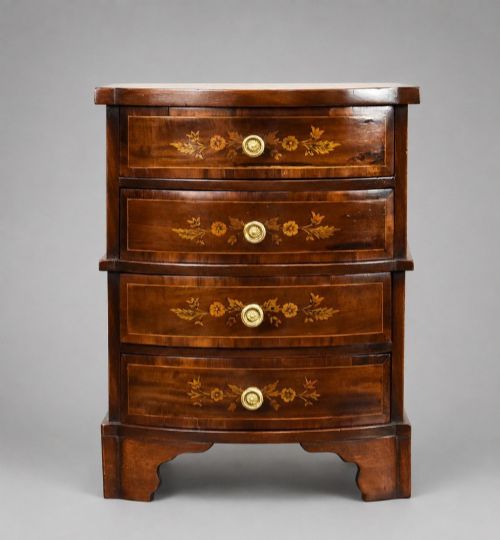
Detailed floral marquetry and contrasting stringing define the decorative schemes found across these periods. Selected pieces incorporate marble tops alongside the primary wooden structures.
Several pieces are small enough to sit on a desk yet contain fully functioning miniature drawers.
Assessing quality in construction and surface
Depth and precision of the wood inlay distinguish finer pieces from standard production. Crispness in the marquetry floral patterns and clean timber matching indicate superior workshop execution.
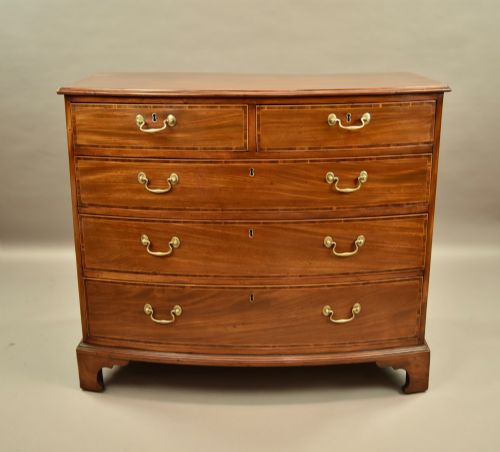
Gradation in timber selection, from burr elm and burr yew to standard mahogany, alters the visual weight of each cabinet. Original brass hardware and intact structural joinery complete the higher tier of examples.
The Brown Wood Inlaid Commode Glossary
- Marquetry
- Decorative patterns created by fitting thin pieces of wood veneer onto a structural surface. This technique produces detailed pictorial or floral designs.
- Serpentine front
- A furniture front characterised by a convex centre flanked by concave curves. This shape requires advanced woodworking skill to execute properly.
- Oyster veneer
- Cross-sections sliced from small branches or roots to form circular or oval patterns resembling oyster shells. Cabinet-makers used this technique during the late 17th century.
- Demi-lune
- Half-moon shaped furniture designed to stand flush against a wall. These pieces often function as side cabinets or commodes.
- Breakfront
- A cabinet facade where the central section projects forward from the flanking outer sections. This architectural arrangement creates depth and shadow.
Brown Wood Inlaid Commode: Frequently Asked Questions
How do I date a brown wood inlaid commode?
Dating relies on timber choices, construction techniques, and prevailing stylistic details. Examining the drawer linings and secondary woods provides further clues regarding age.
Periods span from 17th-century William and Mary designs to Edwardian interpretations. Comparing hardware fixings and veneer methods helps narrow down the exact decade of manufacture.
Where should I place a commode at home?
These pieces suit living rooms, hallways, and bedrooms as functional storage surfaces. Their compact footprints allow them to fit easily against empty wall spaces.
Pairing a bedside cabinet next to a low bed maintains proportion within a bedroom. Larger serpentine chests work well as principal focal points in reception rooms.
What is the difference between a commode and a chest of drawers?
A commode typically refers to a low, ornate cabinet with drawers or doors, often originating from continental traditions. A chest of drawers serves a more straightforward storage purpose.
British examples often blend these terms, applying commode to finer pieces featuring marquetry and marble tops. Both provide similar internal storage capacity despite stylistic distinctions.
How do I care for antique wood inlay?
Protect inlaid surfaces by avoiding direct sunlight and maintaining stable room humidity. Natural wax applications preserve the moisture balance of the timber and veneer.
Dust regularly with a dry cloth rather than using chemical polishes. Careful handling prevents moisture damage to delicate boxwood and fruitwood details.