

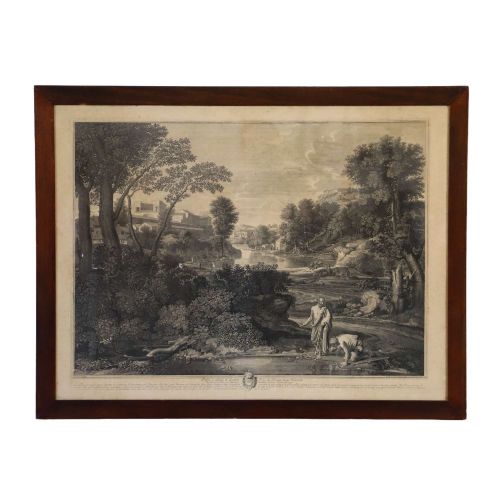
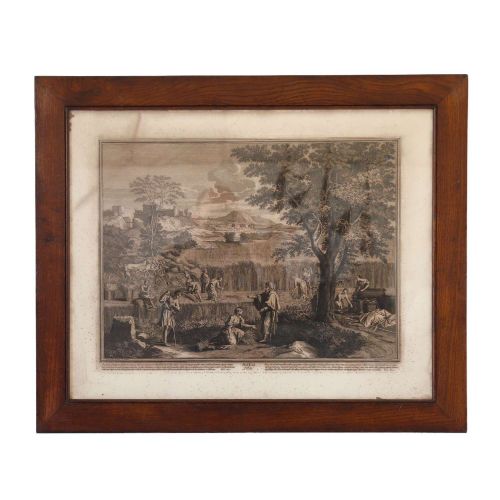


Brown Wood Framed Etching
These brown wood framed etching selections bring together centuries of printed art preserved beneath glass.
Brown Wood Framed Etching
When you search for brown wood framed etching, you are looking at works on paper housed in wooden surrounds spanning several eras. The pieces listed on this page include formats such as framed prints, wall art, and specific engravings depicting classical subjects, botanical studies, and architectural details.
The objects on this page stretch from the seventeenth century through the eighteenth and nineteenth centuries, including the Regency and Victorian periods. You will encounter French classical compositions, baroque influences, and natural history illustrations within traditional frames.
Makers and artists represented in these listings include Étienne Baudet, Nicolas Poussin, John Curtis, Alessandro Mocchetti, Ottaviani, Raphael, David Wilkie, and R.P. Phillimore. These creators produced works ranging from landscape scenes to detailed anatomical figures and architectural copper engravings.
Materials and construction
The physical objects rely on paper as the primary support for ink, etching, and watercolour mediums. Artisans used copper plates and engraving techniques to transfer detailed lines before colouring by hand in sets such as the Regency botanical prints.
Protective glass covers the paper surfaces while framing elements incorporate wood, gold leaf, maple, and mahogany. These traditional materials provide structural support and enclose the prints for wall display.
Brown Wood Framed Etching Retail Price Guide 2026
Typical asking prices for brown wood framed etching among the pieces listed under this phrase on Sellingantiques today, from the lower quarter to the upper quarter. They describe what is for sale here now, not the wider market.
Listings feature paper, glass, wood, gold leaf, maple, watercolour, ink, and mahogany across the seventeenth, eighteenth, and nineteenth centuries.
Assessing quality in prints and frames
Quality rests upon the crispness of the original impression on paper and the preservation of hand-tinted details. Impressions taken early from copper plates show finer lines than those pulled after extensive use.
The integrity of the surrounding wood frame and the quality of materials like maple, mahogany, and gold leaf contribute to the overall character of the piece. Original frames that match the period of the print elevate the object's historical cohesion.
Étienne Baudet·John Curtis·Alessandro Mocchetti·David Wilkie·R.P. Phillimore
The Brown Wood Framed Etching Glossary
- Etching
- A printmaking process where acid bites into unprotected areas of a metal plate to create lines that hold ink. This technique allows for fine, flowing lines similar to a pen drawing.
- Engraving
- A method where an artist cuts lines directly into a metal plate with a sharp tool called a burin. The resulting prints display sharp, clean lines and exact detail.
- Regency
- A period in British history dating from the early nineteenth century associated with specific neoclassical design aesthetics. Items from this era often feature refined classical motifs.
- Copper plate
- A flat sheet of copper used by printmakers to engrave or etch an image before transferring it to paper. These plates wear down over time, making early impressions distinct.
- Hand tinted
- The process of applying watercolour or other pigments by hand to a printed monochrome image. This adds colour to botanical and illustrative works.
Brown Wood Framed Etching: Frequently Asked Questions
What is a brown wood framed etching?
A brown wood framed etching is a print on paper set within a wooden border, often dating from past centuries.
These pieces combine historic printmaking techniques with traditional framing materials like mahogany or maple.
How do I identify the period?
Periods are identified through stylistic cues, artist signatures, and framing materials characteristic of eras like the eighteenth or nineteenth century.
Subjects such as neoclassical figures or Victorian natural history also point to specific historical decades.
Were these pieces hand coloured?
Some prints, particularly botanical and natural history sets from the nineteenth century, received hand-applied watercolour tints.
This technique enhanced the visual detail of plants, insects, and anatomical illustrations.
How should I display wall art?
These framed prints require placement away from direct sunlight to protect the paper and ink from fading.
Displaying them on interior walls preserves the wood frames and the glass covering the delicate engravings.