

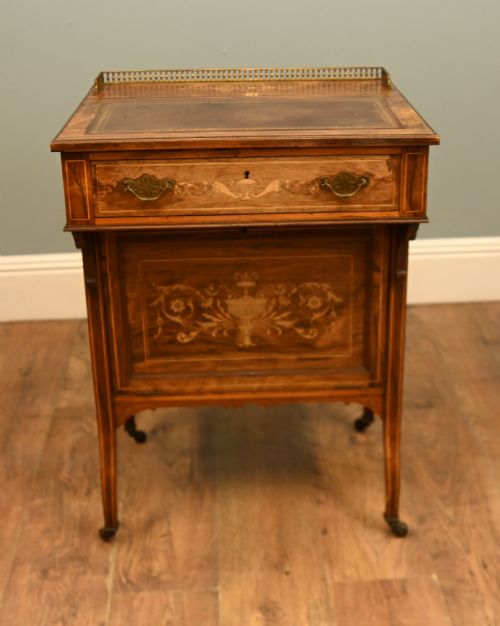
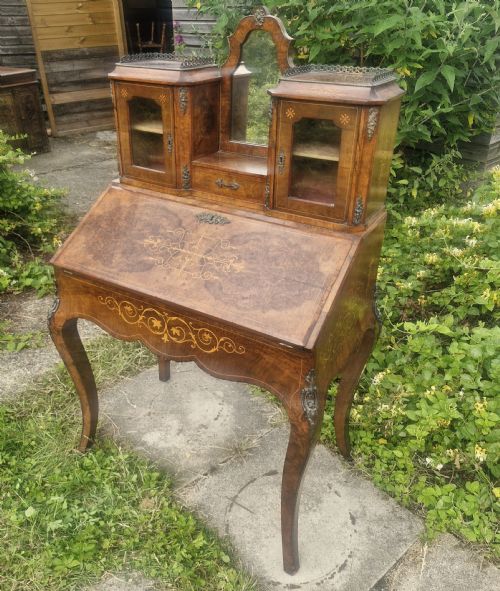


Brown Wood Escritoire
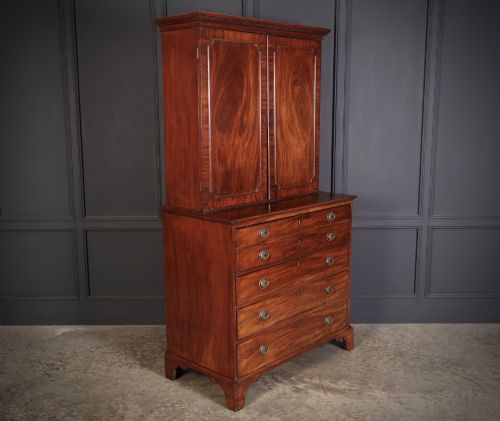
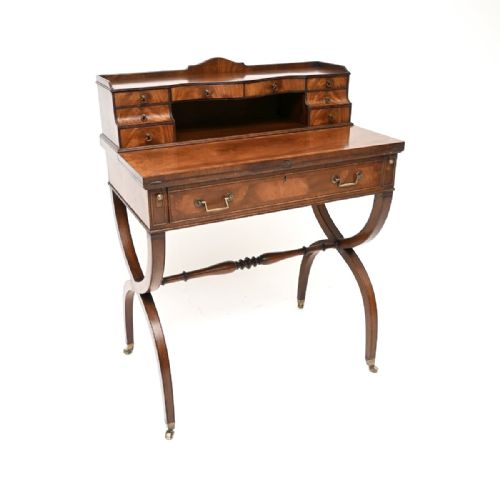
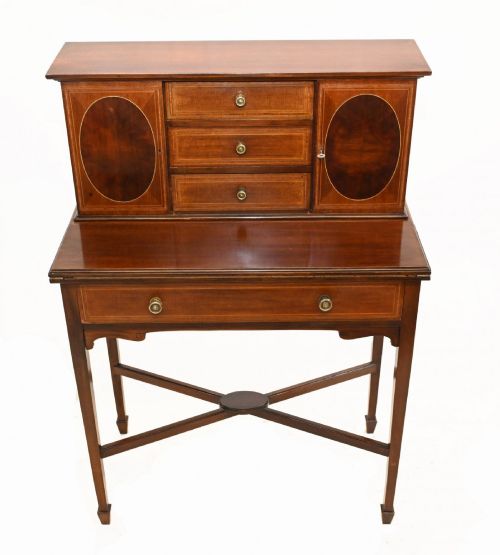
These brown wood escritoire pieces are fall-front writing cabinets and desks that bring handsome hidden storage and practical work surfaces into a study.
Brown Wood Escritoire
A brown wood escritoire is a compact writing cabinet or desk designed for correspondence and paper storage. The selections gathered here span the 18th century, Victorian, Edwardian, and Biedermeier periods.
Origins stretch from British workshops to continental Europe and Japan, showing diverse regional interpretations of the writing cabinet form.
How they were made
Cabinet makers utilised dense hardwoods such as mahogany and walnut as the primary structural foundations for these writing desks. These timbers were selected for their deep grain and durability.
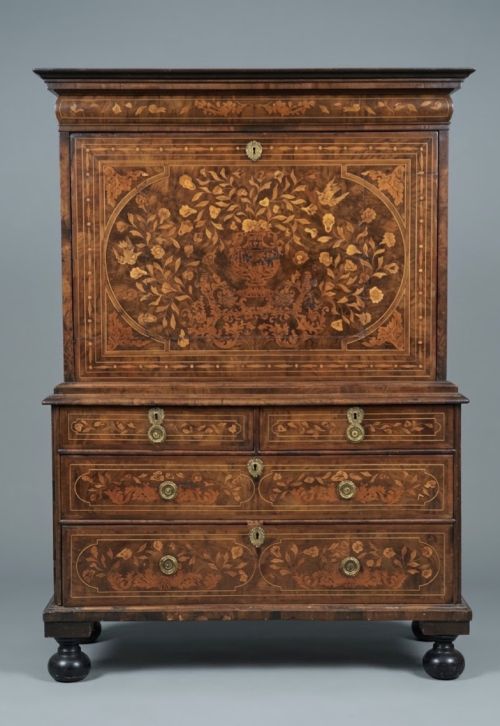
Surface decoration frequently involves contrasting veneers like boxwood and satinwood, alongside intricate marquetry and inlaid brass details. Leather writing inserts provide a functional surface within the fall-front compartments.
Brown Wood Escritoire Retail Price Guide 2026
Typical asking prices for brown wood escritoire among the pieces listed under this phrase on Sellingantiques today, from the lower quarter to the upper quarter. They describe what is for sale here now, not the wider market.
What varies in quality
The sophistication of the internal stationery fittings and secret drawers dictates the refinement of an escritoire. Elaborate cabinet work within the fall-front marks out the more ambitious pieces.
The precision of the timber matching and the subtlety of the marquetry or stringing define the visual success of the exterior. Master cabinet makers achieved seamless integration of moving cylinders and drop leaves.
Gregory & Co. of London
The Brown Wood Escritoire Glossary
- Escritoire
- A writing cabinet featuring a sloping or vertical fall-front panel that conceals small drawers and pigeonholes. It serves both decorative and practical uses in a traditional room.
- Cylinder desk
- A desk fitted with a quarter-circle rotating wooden shutter that covers the writing surface and internal compartments. When closed, it presents a smooth curved profile.
- Marquetry
- Decorative veneer work arranged in pictorial or geometric patterns using various coloured woods. Craftsmen cut thin slices of timber to fit together precisely.
- Bonheur du jour
- A light lady's writing desk featuring a small cabinet or set of shelves upon the upper surface. This French form gained popularity during the Victorian era.
Brown Wood Escritoire: Frequently Asked Questions
What is an escritoire?
An escritoire is a dedicated writing cabinet featuring a fall-front or dropping flap that conceals internal compartments for letters and stationery.
They provide a compact workspace that can be neatly closed away when correspondence is finished.
How do I use one today?
These pieces function well as laptop desks or traditional writing tables in a study or living room.
The internal drawers and pigeonholes offer convenient storage for modern stationery and small accessories.
How do I tell periods apart?
Eighteenth-century examples often display simpler architectural lines or rich Georgian mahogany, while Victorian pieces lean towards heavier walnut and elaborate fitted interiors.
Edwardian and later variations tend to be lighter in scale, sometimes incorporating delicate boxwood stringing and marquetry.
What woods were used?
Makers relied heavily on mahogany and walnut for the main body of these desks, providing a stable and handsome dark timber.
Boxwood, satinwood, and various exotic veneers were added to create contrasting highlights and decorative panels.