

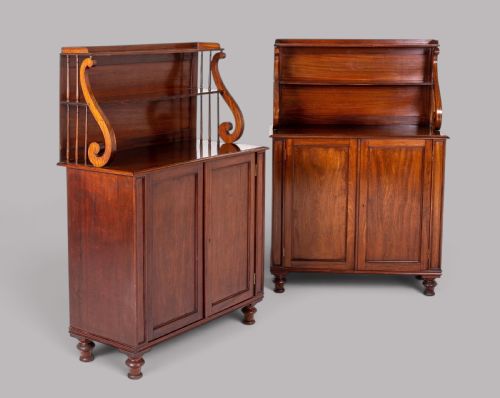
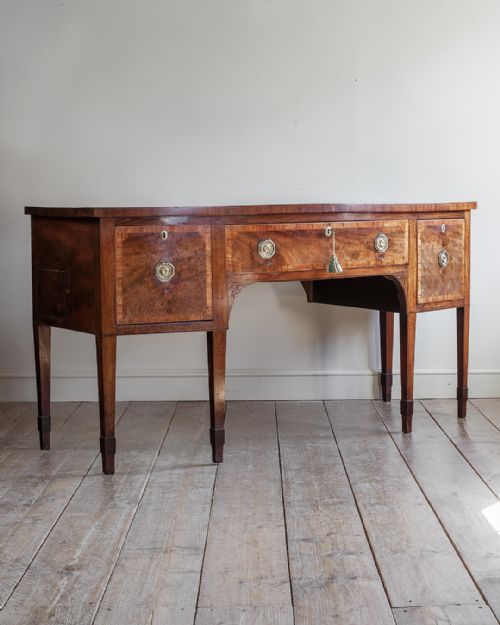
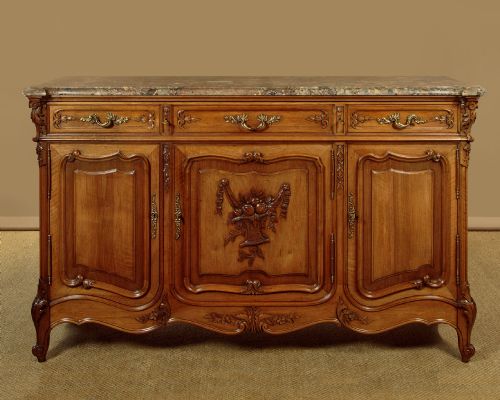
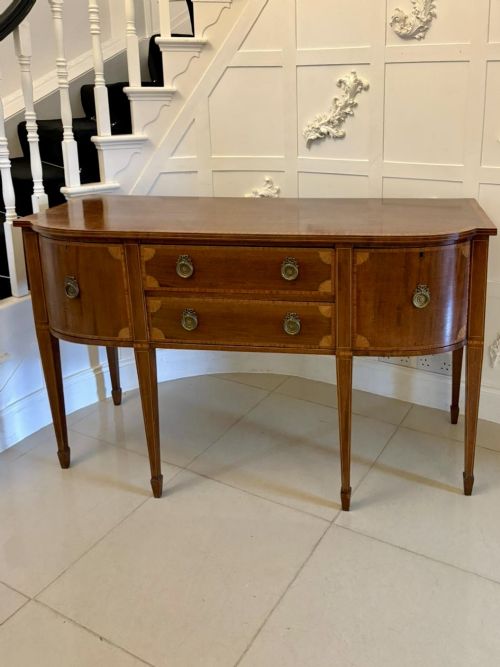
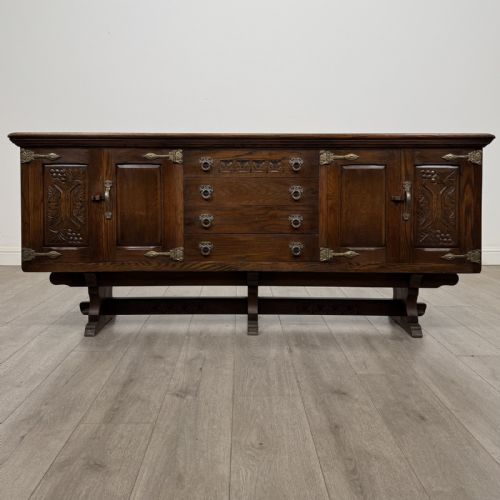
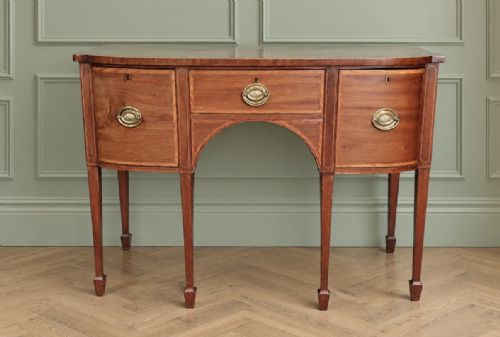
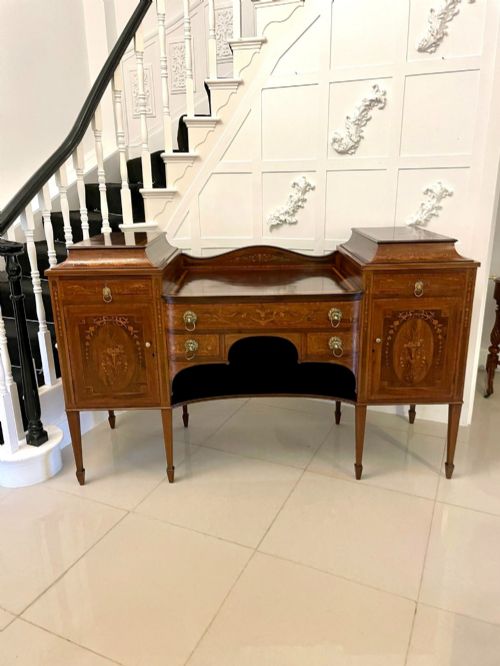
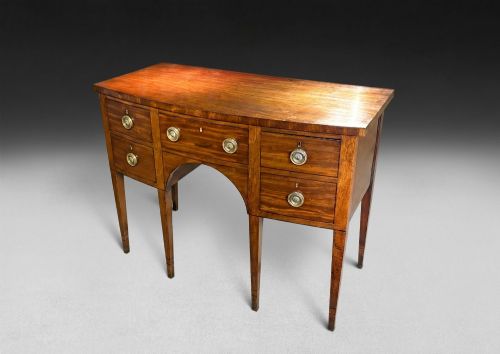
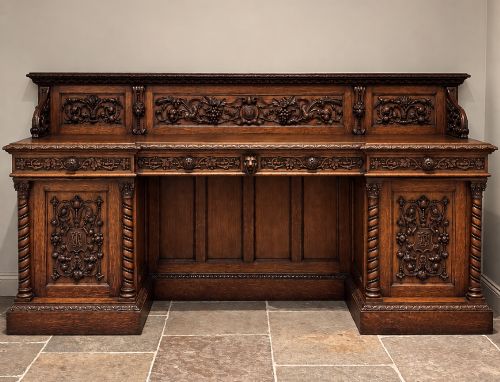
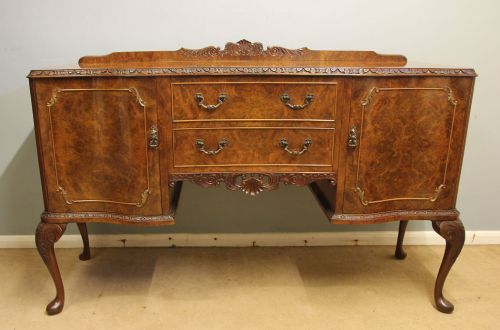

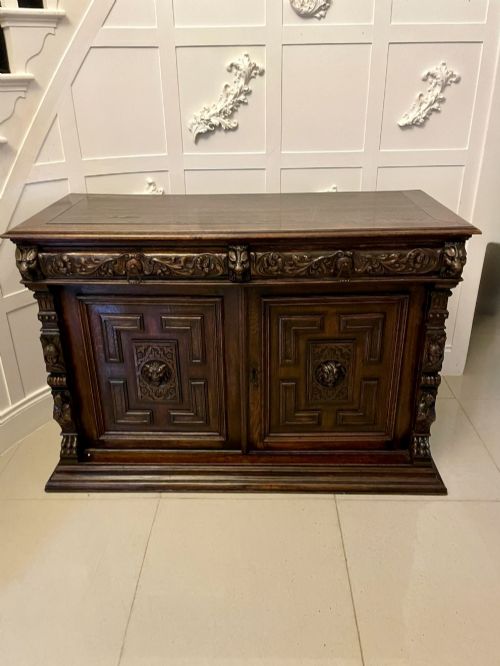
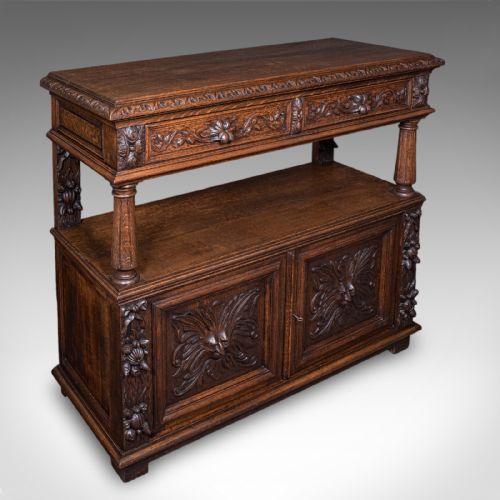
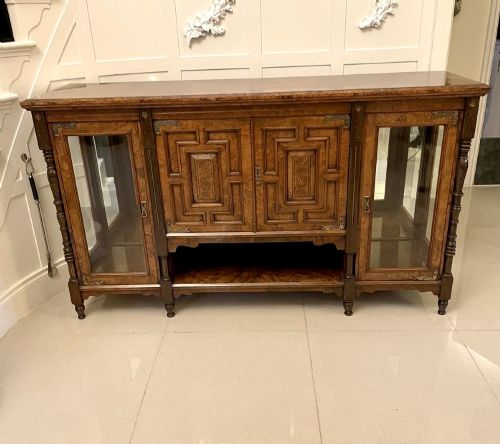
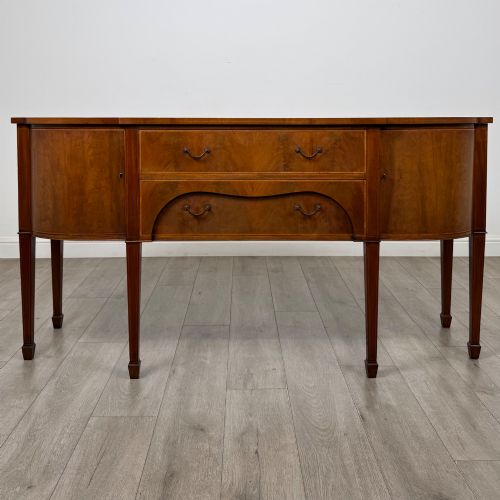
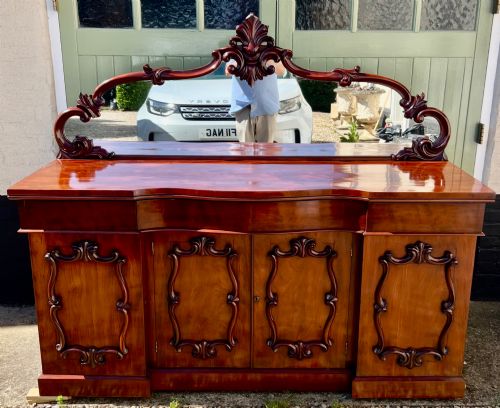
Brown Wood Dining Cabinet
A brown wood dining cabinet brings timeless timber grain and practical storage to the room where meals are shared.
Brown Wood Dining Cabinet
A brown wood dining cabinet typically takes the form of a sideboard, buffet, server, or credenza designed for the dining room. These pieces provide surface space for serving food and concealed storage for tableware, linens, and bottles.
The selections available span several centuries of British and continental design, ranging from Georgian and Regency formal lines to Victorian carved oak and Edwardian inlaid mahogany. Sideboards and dressers dominate the offerings, built primarily from figured mahogany, burr walnut, and solid oak.
Makers and workshops utilised distinct regional traits, such as Scottish flame mahogany stage-backs and English bow-front profiles. Buyers encounter both grand proportions intended for formal dining halls and petite chiffoniers suited to modest spaces.
Craftsmanship and timber selection
The division between standard storage and superior examples rests upon the choice of timber and the precision of the cabinet work. Finely figured flame mahogany veneers and intricate marquetry inlay demand exceptional skill from the maker, elevating the visual weight of a sideboard.
Structural integrity reveals itself in the dovetail joinery of drawers and the matching of wood grain across multiple cabinet doors. Pieces featuring harmonious proportions, original brass fittings, and crisp carving distinguish themselves from later or more utilitarian reproductions.
Brown Wood Dining Cabinet Retail Price Guide 2026
Typical asking prices for brown wood dining cabinet among the pieces listed under this phrase on Sellingantiques today, from the lower quarter to the upper quarter. They describe what is for sale here now, not the wider market.
Listings feature woods including mahogany, burr walnut, satinwood, and oak across Georgian, Victorian, and Edwardian periods.
Hewetsons London·Whytock and Reid of Edinburgh
The Brown Wood Dining Cabinet Glossary
- Sideboard
- A dining room storage piece fitted with cupboards and drawers for holding plates, cutlery, and glassware. It evolved significantly through the Georgian and Victorian periods.
- Bow front
- A cabinet front curved outward in a convex shape, frequently seen on Georgian and Edwardian mahogany sideboards. This contour softens the rectangular profile of the furniture.
- Crossbanding
- A border veneer applied around the edges of a tabletop or drawer front with the grain running perpendicular to the main panel. It creates a neat visual frame.
- Marquetry
- Decorative patterns formed by fitting together thin slices of various coloured woods into a veneer. It is often found on Edwardian and Georgian formal furniture.
- Chiffonier
- A compact sideboard or low cabinet equipped with shelves and enclosed storage. Victorian examples are often petite in scale.
Brown Wood Dining Cabinet: Frequently Asked Questions
What is a brown wood dining cabinet used for?
These cabinets serve as practical storage units in dining spaces, holding tableware, table linens, and serving dishes within enclosed cupboards and drawers.
The flat top surface provides a convenient staging area for serving food and displaying decorative objects during meals.
How do I distinguish Georgian from Victorian pieces?
Georgian pieces often display restrained elegance, featuring straight or bow-front profiles with subtle mahogany veneers and fine string inlay.
Victorian examples tend to be heavier in scale, utilising dark oak or burr walnut with deeper carving, paneling, and more robust structural bases.
How should I care for antique wood surfaces?
Maintain the timber by keeping the cabinet away from direct heat sources and strong sunlight, which can dry out veneer and fade polish.
Apply a traditional beeswax polish occasionally to nourish the grain and protect the finish from moisture and everyday wear.
Where does the term sideboard come from?
The sideboard developed in the eighteenth century when dining rooms became dedicated spaces for entertaining guests away from the main kitchen.
Designers like Sheraton transformed simple serving tables into sophisticated cabinetry fitted with drawers and pedestals for dining essentials.