

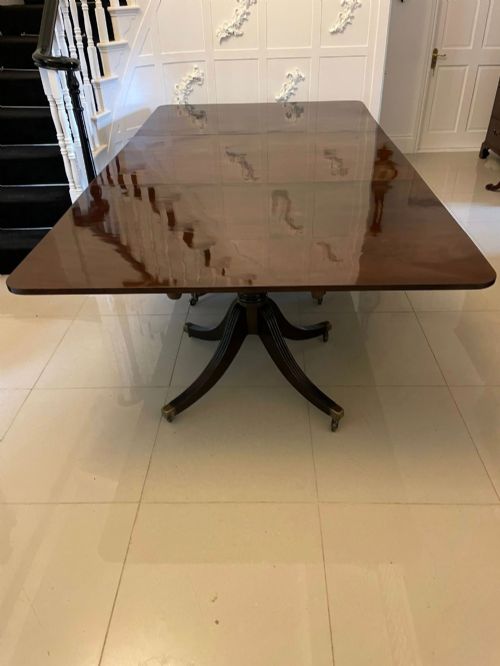
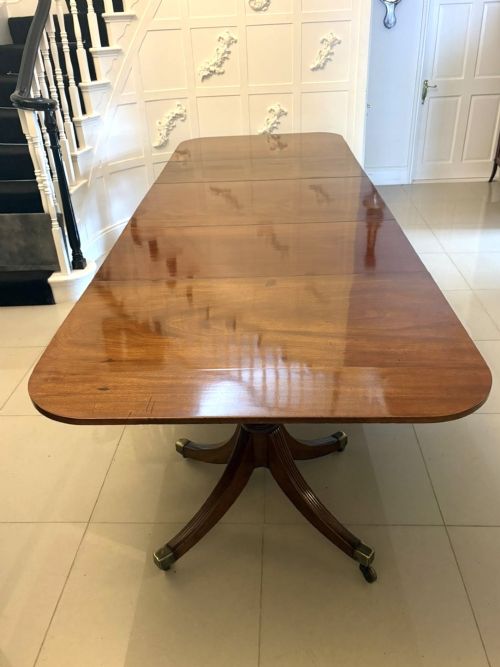
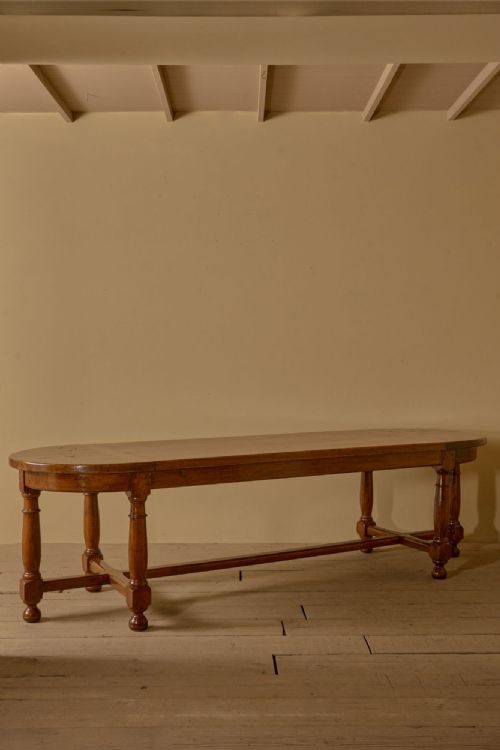
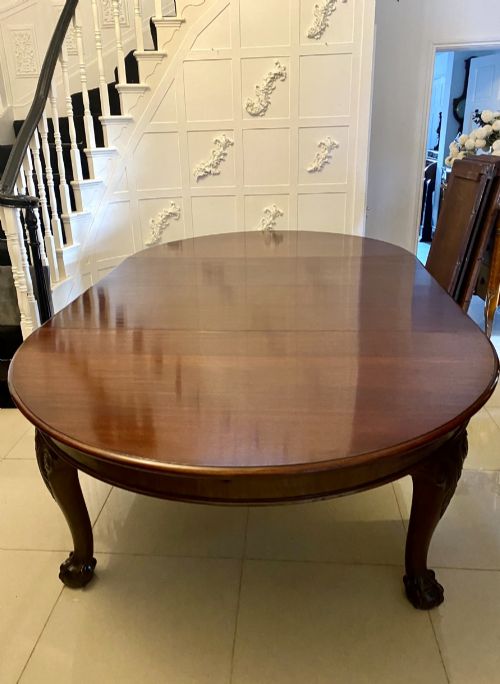
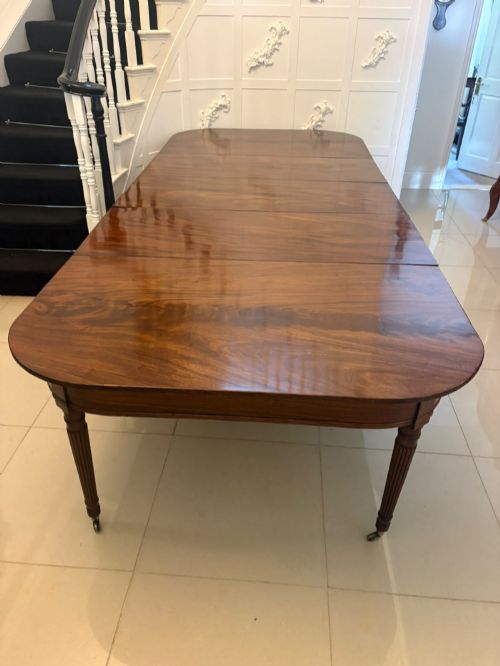
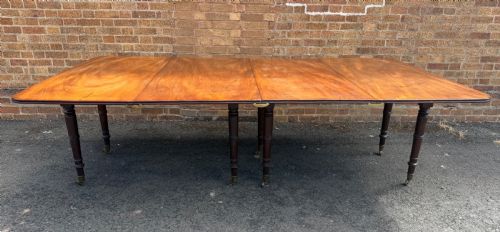


Brown Wood Banqueting Table
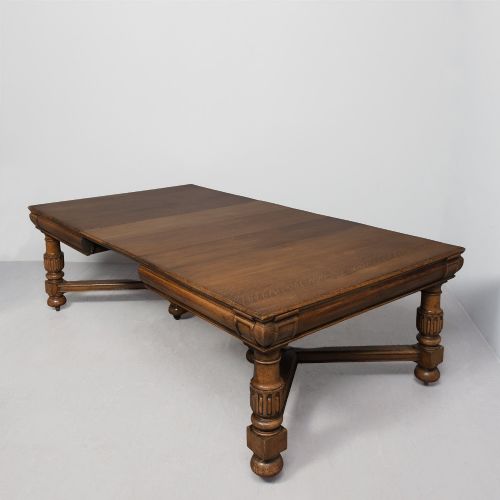
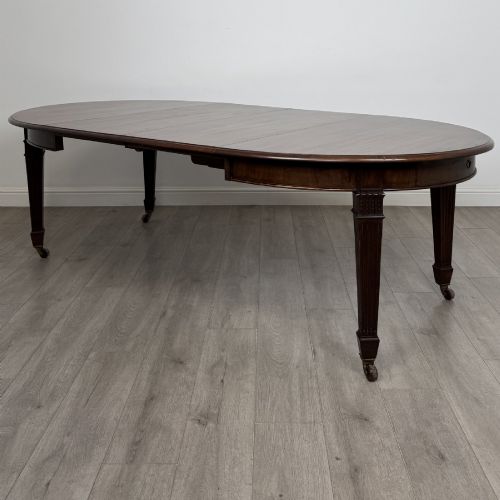
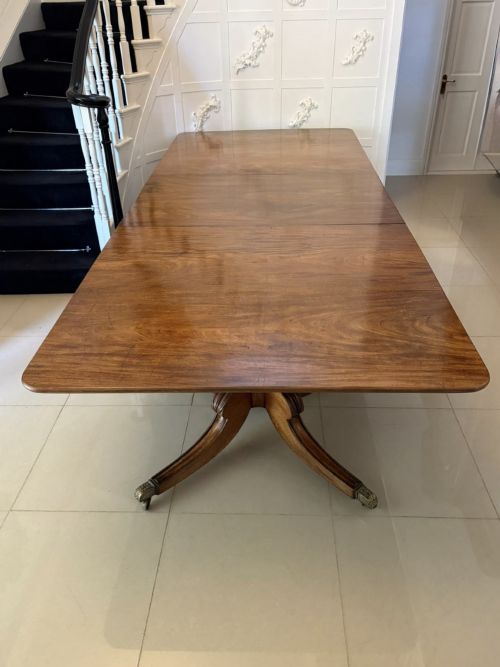
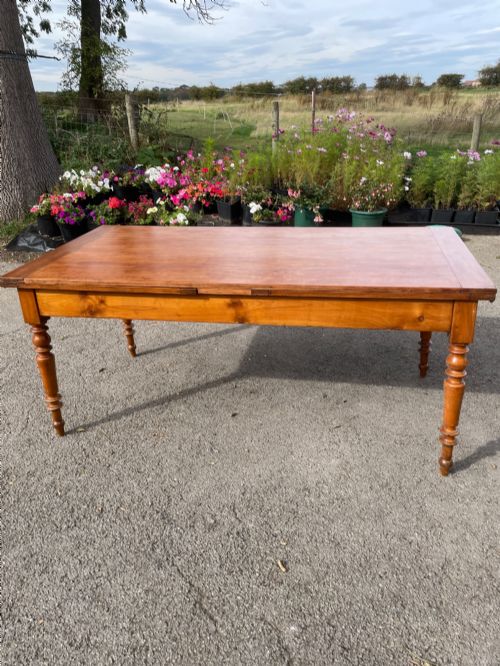
A brown wood banqueting table provides seating for large gatherings using solid timber construction.
Brown Wood Banqueting Table
When searching for a brown wood banqueting table, a buyer finds large dining furniture designed to host many people. These pieces accommodate families and guests for meals and meetings in traditional reception spaces.
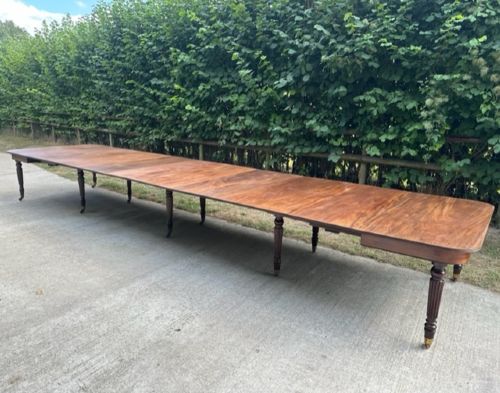
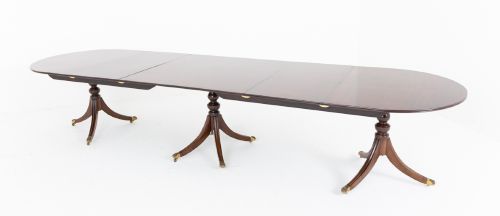
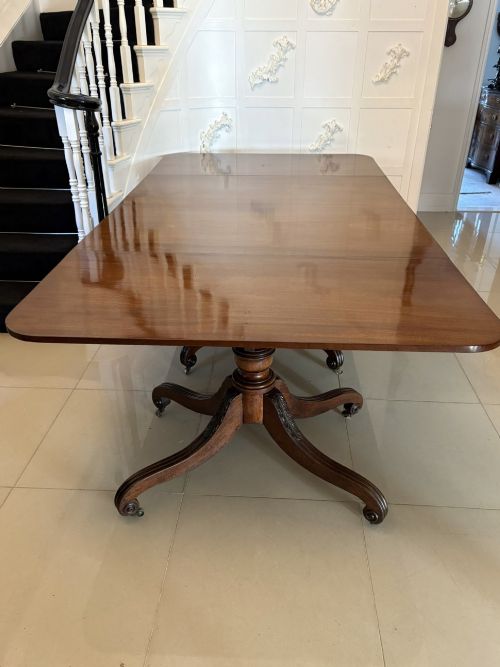
The most common examples on this page are multi-pedestal or extending tables dating from the Georgian, Regency, William IV and Victorian periods. They take many guests, often seating twelve or more individuals using additional leaves.
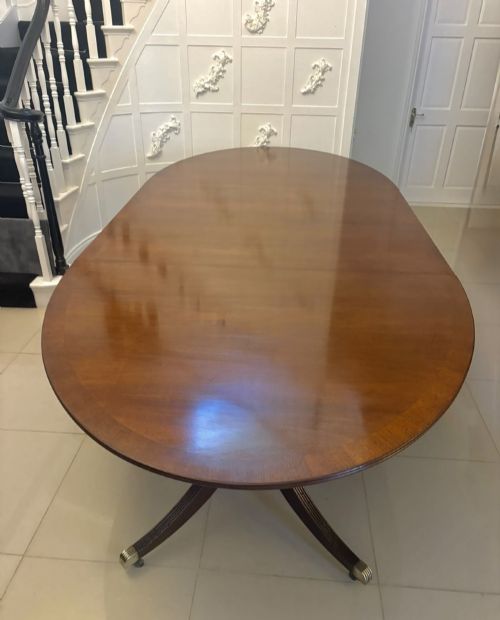
Makers such as Maple & Co and Gillows shaped these forms, alongside workshops producing George III and Queen Anne revival styles. Their designs range from twin pedestal frames to massive extending dining tables with numerous legs.
How They Were Made
Cabinet makers built these tables using dense timbers like mahogany, walnut, burr walnut and rosewood, frequently selecting figured or flame veneer for the top surfaces. Secondary woods provided structural support beneath the polished exteriors.
Extending mechanisms utilised internal screw actions, pull-out rails and drop-in leaves to alter the length of the top. Pedestal bases rested on brass castors, whilst certain tables incorporated bronze feet or ceramic components for mobility and weight distribution.
Brown Wood Banqueting Table Retail Price Guide 2026
Typical asking prices for brown wood banqueting table among the pieces listed under this phrase on Sellingantiques today, from the lower quarter to the upper quarter. They describe what is for sale here now, not the wider market.
One exceptional Victorian ships refectory dining table comes complete with bronze feet and a Crown Estate stamp.
What Varies in Quality
The selection of timber grain defines the visual appeal, with figured mahogany and flame veneers commanding greater attention than plain boards. Workshops applied careful polishes that brought out the natural depth of the wood.
Construction methods range from simple frames to complex metamorphic actions and heavy pillar supports. Tables attributed to prominent makers exhibit superior joinery and balanced proportions across multiple pedestals.
Maple & Co·Gillows·Waring and Gillow
The Brown Wood Banqueting Table Glossary
- Pedestal
- A central column support resting on legs, carrying the weight of the table top. Multiple pedestals allow very long tables to remain stable.
- Leaf
- A removable section of timber inserted into the centre of an extending table to increase its length. Tables often accommodate two, three or four leaves.
- Flame mahogany
- Timber cut from the fork of the mahogany tree, producing a distinctive flickering flame pattern. Cabinet makers used this for prominent surfaces.
- Imperial action
- A mechanical extending system that allows the table frame to open smoothly while supporting multiple leaves. It was often employed by Gillows.
- Castor
- A small wheel attached to the foot of a table leg to aid movement. These were frequently made of brass.
Brown Wood Banqueting Table: Frequently Asked Questions
How many people do these seat?
These large dining tables generally accommodate twelve to twenty guests when fully extended with leaves in place. Their proportions suit spacious dining rooms and formal halls.
Shorter twin pedestal versions seat fewer people for everyday family dining.
How do extending leaves work?
Extending mechanisms rely on wooden runners or internal screw actions that pull apart to create a gap in the centre. Drop-in leaves slide into this space to lengthen the top.
Support legs or central pillars prevent the middle sections from sagging under weight.
Which woods are most common?
Mahogany forms the primary material for the majority of these dining tables, often showing figured, flame or Cuban variations. Walnut, burr walnut and rosewood appear in select examples.
Secondary timbers such as oak provide hidden structural support inside the frames.
How do I identify a Regency table?
Regency tables date from the early nineteenth century and typically display restrained designs with pedestal bases. They often feature mahogany timber and brass castors.
Attributions to makers like Gillows help pinpoint specific workshops from this era.