
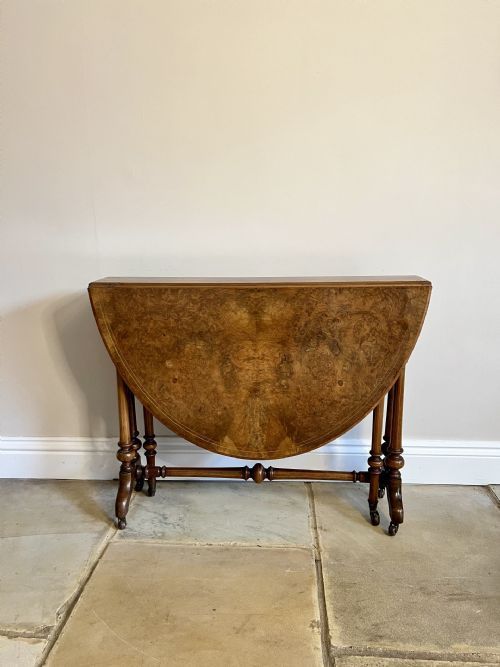


Brown Walnut Sutherland Table
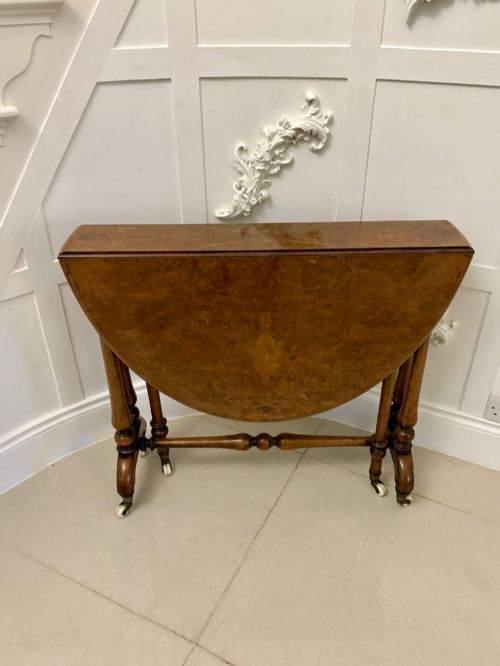
A brown walnut sutherland table combines ingenious folding leaves with compact nineteenth-century proportion.
Brown Walnut Sutherland Table
A brown walnut sutherland table is a specialised form of drop-leaf table designed to save space while offering a large surface when fully extended. These pieces appear predominantly from the Victorian and Edwardian periods, stretching from eighteen fifty into the early twentieth century.
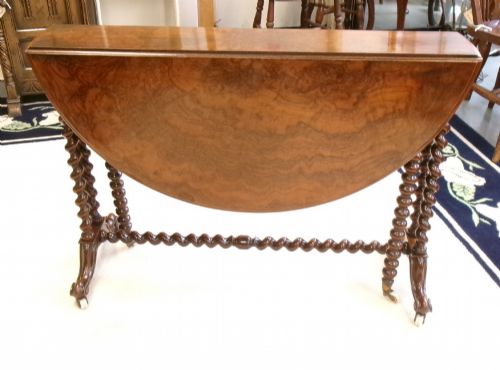
The form relies on narrow drop leaves supported by swinging gate legs that fold flat against a slender central frame. On this page, buyers encounter various formats including small baby versions, oval coffee tables, and double tea tables.
Most examples originate from nineteenth-century British workshops utilising rich timber figure. The search phrase brown walnut sutherland table directs attention towards compact occasional furniture that fits easily beside seating.
How they were made
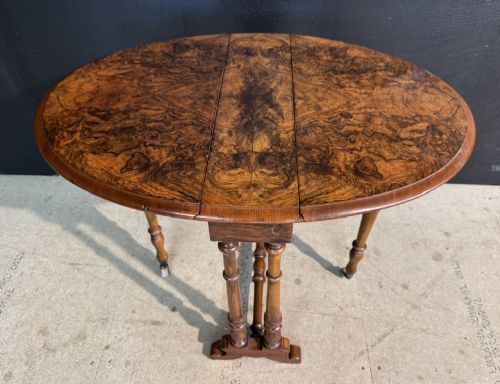
Cabinet makers constructed these tables primarily using solid walnut and decorative burr walnut veneers selected for their swirling grain patterns. Timber inlay, boxwood lines, and floral marquetry often embellish the top surfaces.
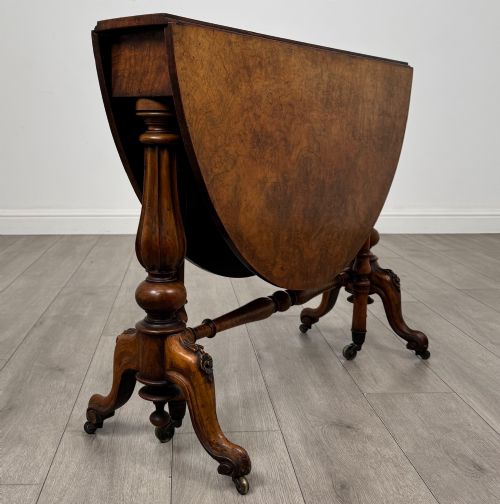
Structural stability depends on precise hinge work and pivoting gate legs that must bear the weight of the dropping flaps. Metal fittings like brass castors appear on the feet of certain examples to ease movement across carpets.
Makers utilised traditional joinery for the underframes, combining turned legs with stretcher supports. The drop flaps are hinged carefully to ensure a level surface when raised.
Listings feature walnut timber alongside brass components and boxwood inlay across Victorian and Edwardian periods.
What varies in quality
The choice of timber veneer dictates much of the visual appeal, with heavily figured burr walnut commanding greater interest than plain timber. Finely cut marquetry and wood inlay display superior craftsmanship compared to simpler surfaces.
Proportion and scale also separate standard pieces from miniature or baby versions designed for tighter spaces. The rigidity of the gate-leg mechanism when extended indicates the original build standard.
Morison of Edinburgh
The Brown Walnut Sutherland Table Glossary
- Sutherland table
- A narrow drop-leaf table with hinged flaps supported by swinging gate legs. This design allows the entire piece to fold flat for storage against a wall.
- Burr walnut
- A prized timber harvested from the gnarled growths on walnut trees. It creates intricate, swirling patterns across table tops.
- Drop flap
- A hinged section of the tabletop that lowers when not in use. It enables the furniture to transform from a slim console to a wider surface.
- Marquetry
- Decorative woodwork where pieces of various coloured veneers are fitted into a ground. Floral motifs often adorn the tops of these tables.
- Gate leg
- A hinged leg that swings outward to support a folding leaf. This mechanism provides sturdy support beneath the extended flaps.
Brown Walnut Sutherland Table: Frequently Asked Questions
How do you fold a sutherland table?
Lift each drop leaf upwards until the surface rests flat and horizontal. Swing the gate legs outward from the central frame until they lock firmly beneath the extended flaps to provide steady support.
To close the table, swing the gate legs back inward toward the middle stretcher. Lower each drop leaf gently downward so the entire unit rests in its narrow, folded position.
What is a baby sutherland table?
A baby sutherland table is a smaller, more compact version of the standard nineteenth-century design. These pieces were built with reduced dimensions for tight spaces or occasional use beside low seating.
Despite their smaller scale, they retain the characteristic folding leaves and swinging gate legs of their larger counterparts. They frequently appear in burr walnut with oval or canted corners.
Were sutherland tables used for tea?
These tables served primarily as afternoon tea tables in Victorian and Edwardian drawing rooms. Their folding design allowed servants to bring the table into a room folded and expand it when needed.
Double sutherland tables offered extra surface area for serving refreshments to guests. When tea concluded, the leaves dropped down to clear the floor space.
How do I date a walnut sutherland table?
Dating relies on examining the timber preparation, turnings, and overall stylistic markers from the Victorian or Edwardian eras. Pieces from eighteen fifty to eighteen eighty often feature rich burr walnut veneers and elaborate marquetry inlay.
Later Edwardian examples tend toward lighter framing and subtle inlay work around the edges. Hardware like brass castors also helps place the piece within its nineteenth or early twentieth-century context.