
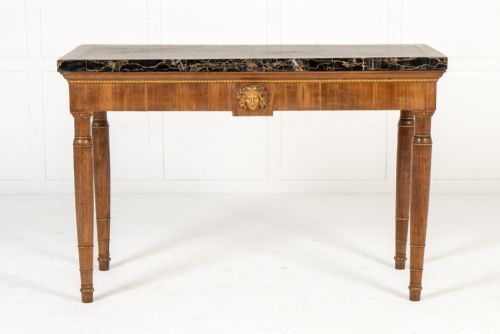

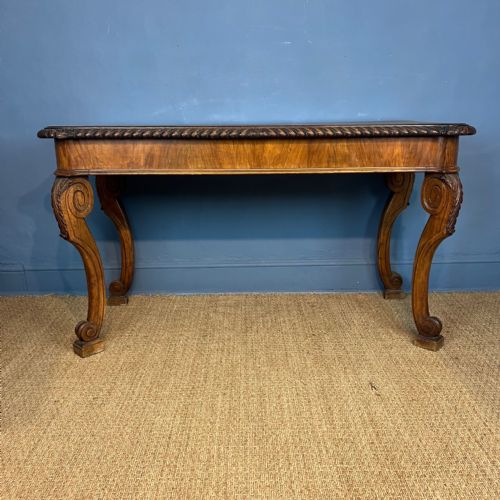


Brown Walnut Pier Table
A brown walnut pier table brings architectural presence and rich grain to a hall, bridging practical surface space with classical style.
Brown Walnut Pier Table
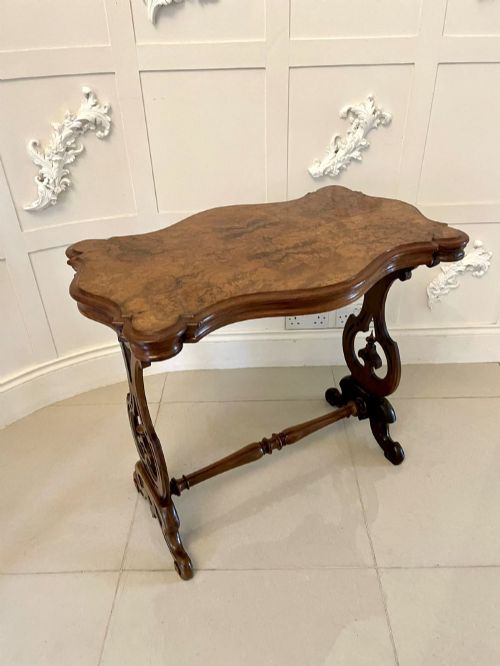
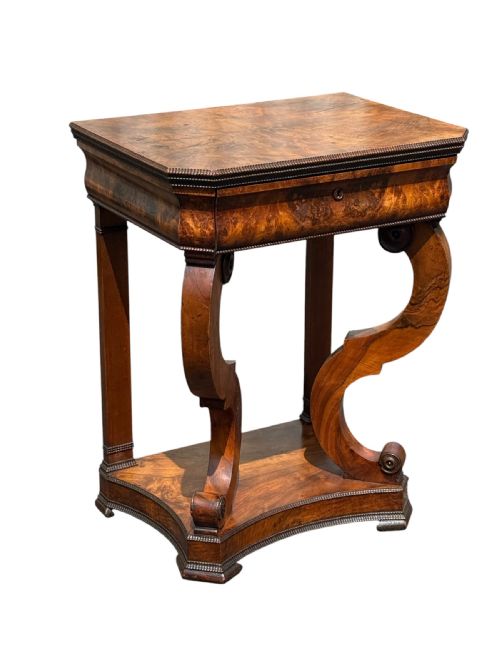
When you search for a brown walnut pier table, you encounter console tables, side tables, and console tables with matching mirrors designed to stand against a wall, typically between windows. These pieces emerge chiefly from the eighteenth and nineteenth centuries, taking forms influenced by Victorian, William IV, French Empire, and Italian Neoclassical tastes.
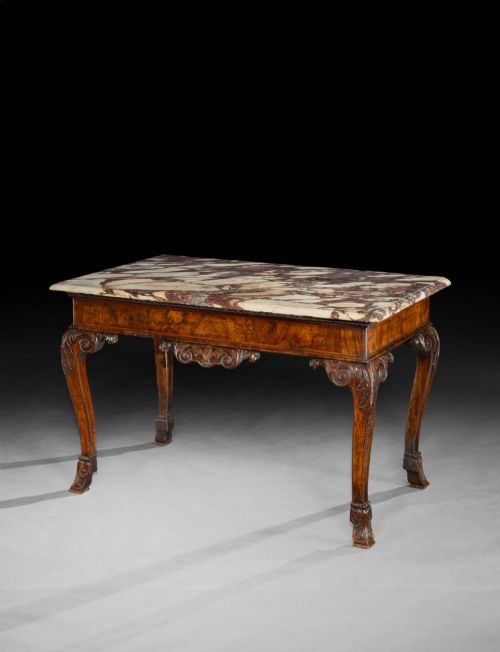
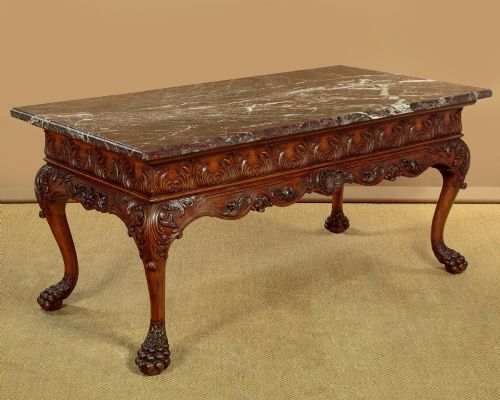
The selections span simple side tables alongside grander pieces featuring marble tops and integrated mirrors. Craftsmanship ranges from early English and French examples to Italian console tables exhibiting serpentine fronts and intricate carving.
How they were made
Cabinet makers utilised solid walnut and figured burr walnut veneers over secondary timbers, often incorporating marquetry and intricate inlay to highlight the natural grain. Surface decoration frequently included carved detailing, parcel-gilt highlights, and applied ormolu mounts.
Many iterations incorporate heavy marble slabs inset into the timber frame, while others pair the timber base with glass components or brass fittings to complete the design.
Listings feature walnut, burr walnut, marble, and ormolu across styles spanning Victorian, William IV, and Italian Neoclassical periods.
What varies in quality
The standard of a brown walnut pier table rests on the depth of the timber figuring and the precision of the cabinet work, particularly in the handling of burr veneers and marquetry patterns. Finer pieces demonstrate superior integration between the wooden base and added elements like marble tops or carved ornamentation.
Proportion and stylistic consistency also dictate the tier of the piece, separating standard utility furniture from sophisticated examples designed for formal reception rooms.
Epstein and Co
The Brown Walnut Pier Table Glossary
- Pier table
- A table designed to stand against a wall, traditionally placed in the architectural pier space between windows beneath a mirror.
- Burr walnut
- A specialised wood cut from walnut tree growths, prized for its swirling, highly figured grain patterns on tabletops and cabinets.
- Ormolu
- Gilded bronze ornamentation applied to furniture, frequently seen in French and revival pieces of the nineteenth century.
- Serpentine
- A furniture front or tabletop curved in a convex-concave-convex wave shape, commonly found on eighteenth and early twentieth-century Italian consoles.
- Marquetry
- Decorative veneer work arranged in geometric or pictorial patterns across the surface of the timber.
Brown Walnut Pier Table: Frequently Asked Questions
Where should I place a pier table?
These tables suit hallways, drawing rooms, or transitional spaces where wall space allows for a statement piece without obstructing heavy traffic. They traditionally anchor the wall between two windows, often paired with a matching hanging mirror.
Because their depths are generally narrower than standard dining or centre tables, they fit well into compact areas while providing a surface for lamps or decorative objects.
How do I care for walnut and marble?
Walnut benefits from occasional polishing with suitable natural waxes to maintain the lustre of the grain and prevent the timber from drying out. Avoid placing tables in direct sunlight or near heat sources to protect the wood and veneer.
Marble tops require simple wiping with a damp cloth and mild soap, avoiding acidic cleaners that can etch the polished stone surface.
Are these tables sturdy enough for daily use?
Period console and pier tables are generally robust, though their stability often depends on whether they are secured to the wall. Many tall console designs and pier tables were originally built to rely partly on wall fixings or integrated mirror frames for complete stability.
Lighter side tables and centre tables stand independently, making them versatile for relocation around the home.
How do I identify the period of a table?
Dating relies on observing construction methods, timber selection, and stylistic cues such as the carved motifs of George II revivals or the clean lines of French Empire and Biedermeier pieces. Hardware, secondary woods, and the presence of hand-cut joints provide further clues to age.
Comparing the decorative vocabulary, such as Rococo curves or Neoclassical symmetry, helps align the piece with its era of manufacture.