
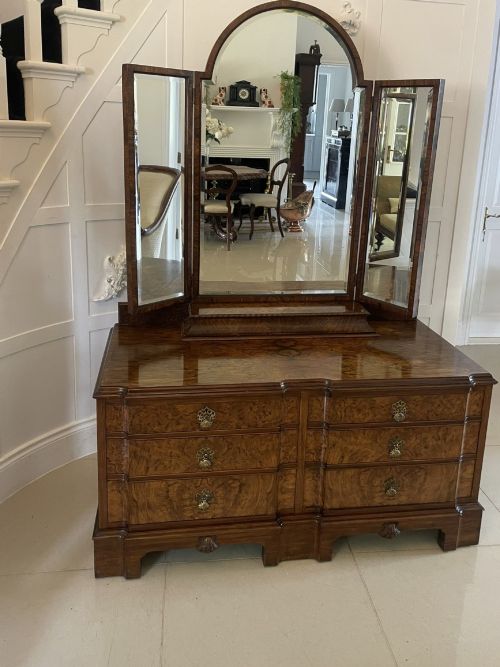
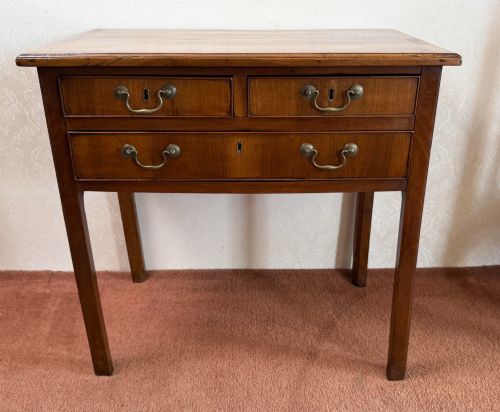
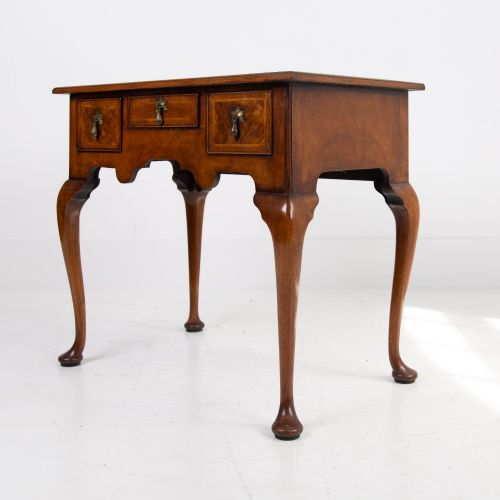
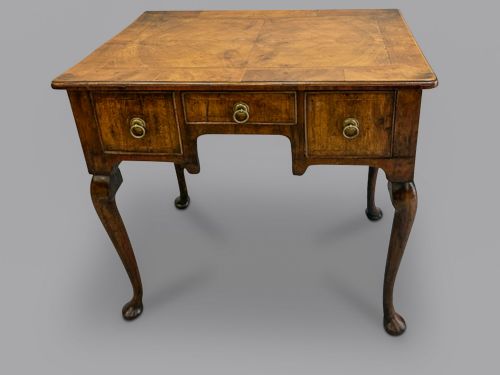
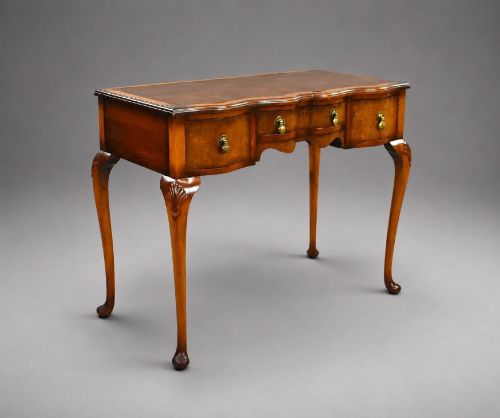
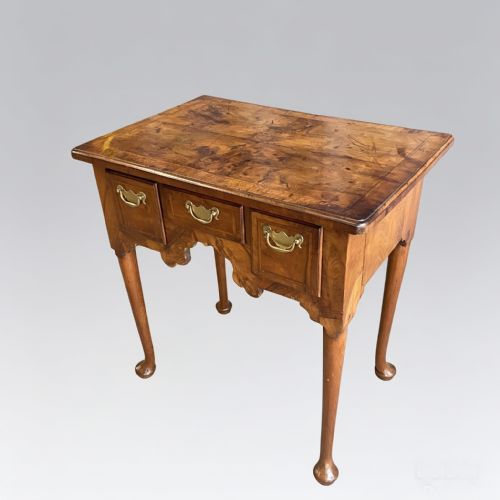
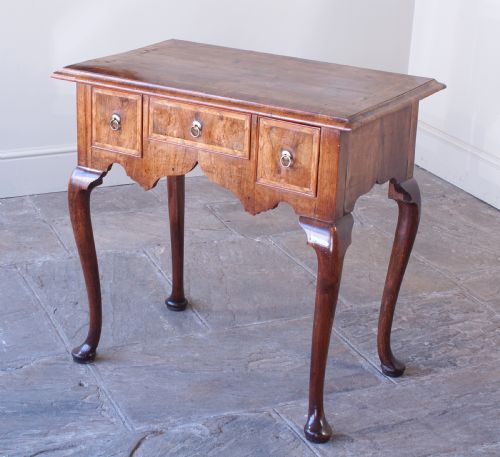
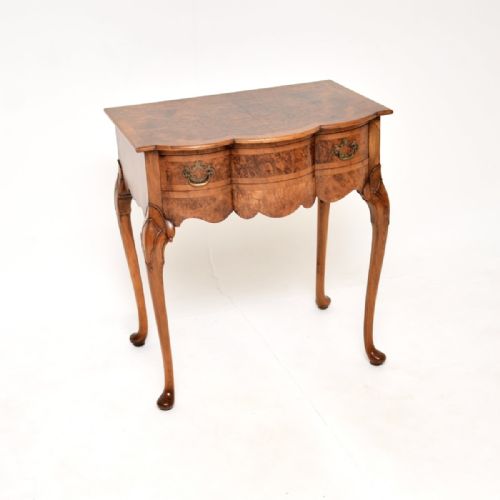
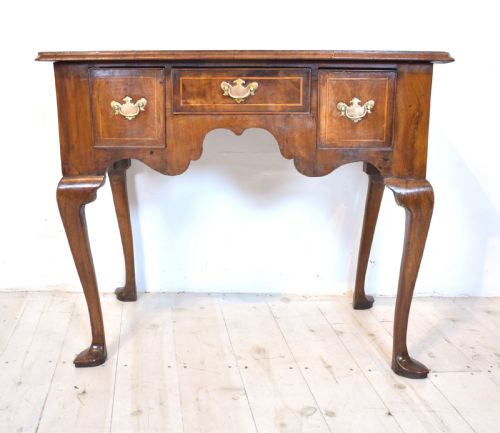


Brown Walnut Lowboy Table
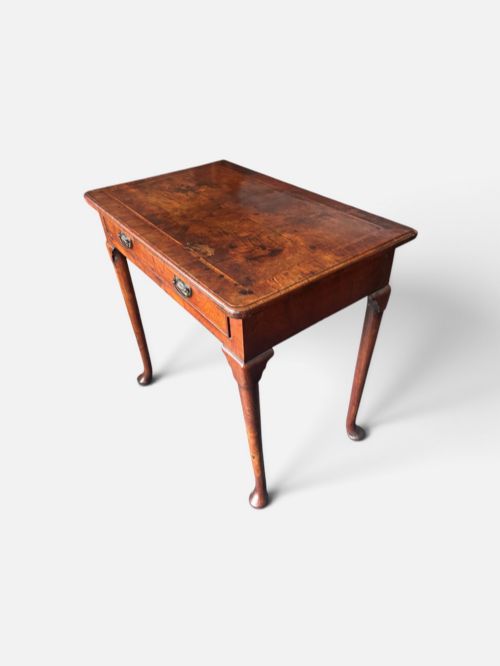
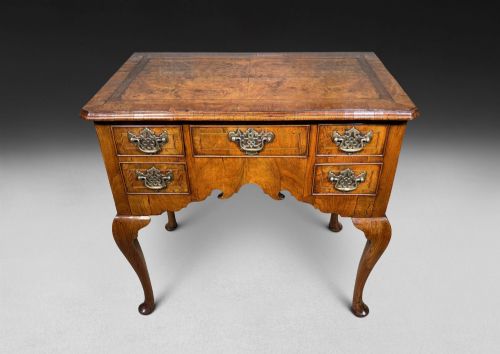
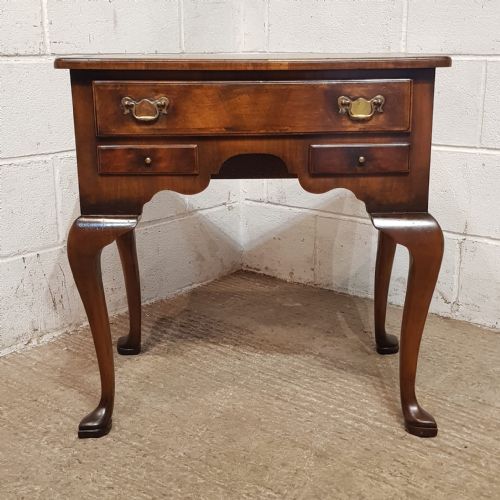
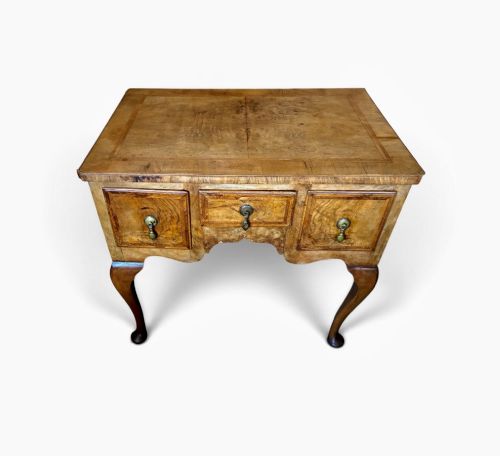
A brown walnut lowboy table offers a compact surface with integrated drawers, combining period proportion with domestic utility.
Brown Walnut Lowboy Table
A brown walnut lowboy table is a low, multi-drawer dressing or side table that sits comfortably in a hallway, bedroom, or reception room. The pieces grouped under this search phrase span centuries of cabinet-making, from authentic 18th-century examples to later 20th-century revivals.
You are most likely to meet pieces originating from the Georgian era or the 1920s revival period. These variations share a low stance, typically featuring a configuration of two or three drawers beneath a rectangular top.
While primarily categorised as lowboys or side tables, related forms appearing under this description include dressing tables, writing desks, and console tables. Their shared function is to provide surface space and discreet storage without overwhelming a compact interior.
How they were made
Cabinet-makers relied on walnut and burr walnut veneer, frequently laid over secondary timbers to create rich, figured surfaces. Decorative techniques such as feather banding and marquetry inlay appear on selected pieces to accentuate drawer fronts and table tops.
Structural elements commonly incorporate fruitwood alongside walnut, while hardware typically consists of brass drop handles and backplates. Secondary materials like mirror glass and leather appear selectively on pieces adapted for dressing or writing purposes.
Listings under this phrase combine 18th-century Georgian originals with 1920s Queen Anne revival interpretations, utilising walnut, burr walnut, and brass.
What varies in quality
The distinction between ordinary and exceptional pieces rests primarily on the choice of timber and the dexterity of the grain matching. Burr walnut veneer with high figuring and well-executed feather banding elevates an example above plain, flat-grained surfaces.
Construction details, particularly the hand-cut dovetailing of the drawers and the crispness of the cabriole leg profile, determine the overall integrity of the piece. Period execution displays organic tool marks and timber shrinkage consistent with age, whereas later revivals reflect the precision of 20th-century workshops.
The Brown Walnut Lowboy Table Glossary
- Lowboy
- A small table with drawers, standing on relatively tall legs, commonly used as a dressing table or side table in the 18th century.
- Feather banding
- A decorative inlay technique using small strips of veneer arranged in a herringbone pattern around the perimeter of a drawer front or top.
- Cabriole leg
- A furniture leg that curves out in a convex arc at the knee and tapers inward in a concave arc at the ankle, ending in a pad or foot.
- Burr walnut
- A prized timber harvested from the wart-like growths on walnut trees, yielding intricate, swirling grain patterns highly valued for veneering.
- Marquetry
- The art of applying pieces of veneer to a structure to form decorative patterns, pictorial scenes, or floral motifs.
Brown Walnut Lowboy Table: Frequently Asked Questions
What room works best for a lowboy?
A lowboy suits a hallway as a console, a bedroom as a dressing table, or a living room as a side table. Its shallow depth ensures it occupies minimal floor space.
Because the height is lower than a standard desk, it functions comfortably for display lamps, correspondence, or small decorative objects.
How do I spot an 18th-century lowboy?
Authentic 18th-century pieces show hand-cut dovetails, timber shrinkage, and subtle asymmetries in the framing. The patination of the walnut develops a warm, deep glow over generations.
Revival pieces from the 1920s often feature more uniform timber selection, machine assistance in construction, and cleaner internal linings.
Can I use a lowboy as a desk?
Many lowboys feature kneehole spaces or drawer configurations suitable for writing. They function well for brief correspondence rather than prolonged daily computer work.
Ensure the internal clearance height accommodates your legs before using it regularly as a writing table.
What is the difference between a side table and a lowboy?
A side table simply provides a surface with or without drawers and can stand at various heights. A lowboy specifically refers to a low table built with a distinct tier of drawers.
Lowboys traditionally served personal grooming or dressing functions, whereas side tables served serving or display purposes.