



Brown Walnut Fireside Chairs
These brown walnut fireside chairs bring deep timber warmth and period comfort to a room.
Brown Walnut Fireside Chairs
Brown walnut fireside chairs comprise open armchairs, wing armchairs, and nursing chairs originating from periods spanning the eighteenth, nineteenth, and early twentieth centuries. These seating forms range from early Georgian and Queen Anne styles to Victorian and later revival interpretations.
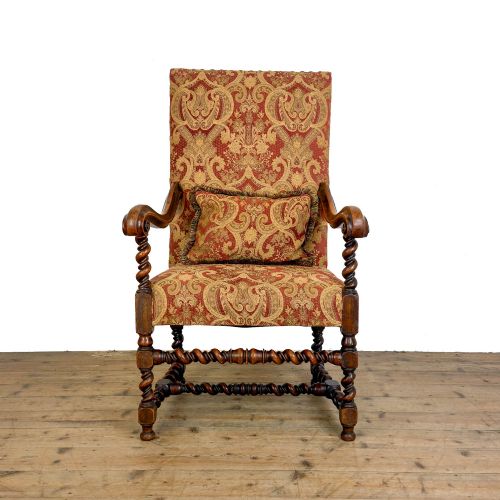
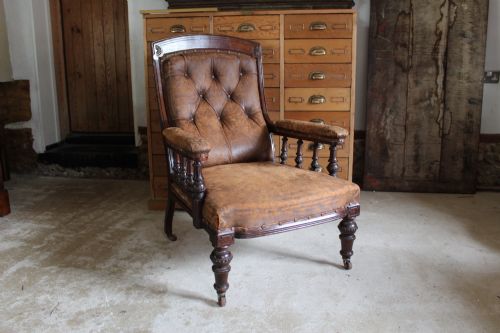
The most common examples encountered in this selection include Victorian and later twentieth-century armchairs and wingbacks utilising walnut frames. Buyers frequently find pieces finished with leather upholstery or traditional fabric coverings alongside frames displaying carved details or cabriole legs.
Construction and materials
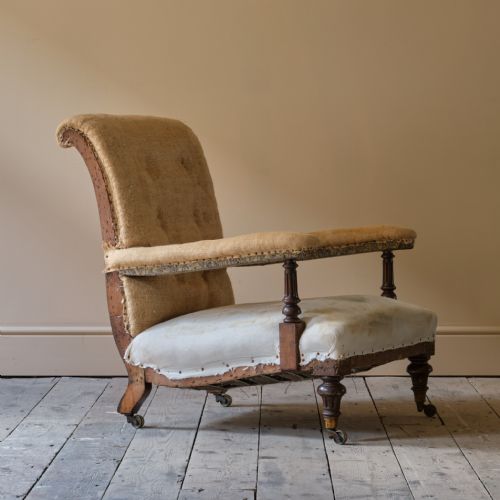
Makers shaped the structural framework predominantly from solid walnut, sometimes accentuating the timber grain with applied polish or carved embellishments. Additional components incorporated brass details, particularly on castors or feet, whilst upholstery foundations relied upon hessian, calico, and traditional textile stuffing.
Joinery methods varied according to the period, uniting structural members through traditional tenon and mortise joints or sturdy frame constructions designed to support padded seating. Leather and woven fabrics were secured to the timber carcasses using traditional tacking methods.
Listings span the eighteenth, nineteenth, and early twentieth centuries, featuring walnut, leather, brass, and oak.
Distinctions in quality
Quality rests upon the crispness of the timber carving and the architectural proportion of the walnut frame. Superior examples demonstrate refined cabriole legs, well-defined claw and ball feet, or harmonious stylistic proportions true to their historical inspiration.
The integrity of the structural timber and the execution of period upholstery styles also dictate standard variations across the range. Pieces retaining their original timber patination and substantial frame construction stand apart from heavily altered examples.
Thomas Sopwith of Newcastle
The Brown Walnut Fireside Chairs Glossary
- Cabriole leg
- A furniture leg that curves outward and then tapers inward, mimicking an animal's limb. This form appears frequently on eighteenth-century and revival seating.
- Wingback
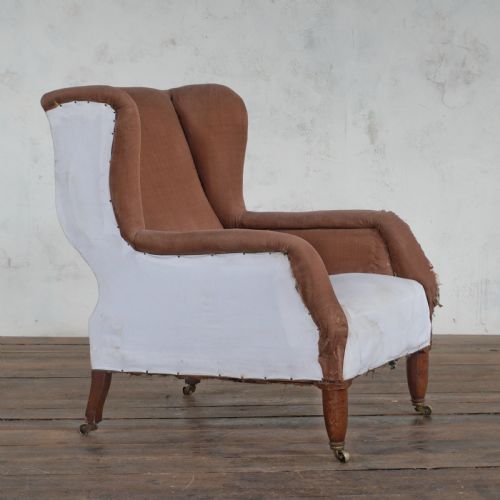
- An armchair featuring protective side panels attached to the arms and back to block draughts from the hearth. These chairs provide substantial upright support.
- Claw and ball foot
- A carved furniture foot depicting a bird's talon gripping a spherical object. This decorative detail is often found on prominent corner supports.
- Spoon back
- A padded chair back shaped in a concave contour resembling the bowl of a spoon. This profile became popular during the Victorian era for smaller seating.
Brown Walnut Fireside Chairs: Frequently Asked Questions
What defines a brown walnut fireside chair?
These seating pieces combine a visible walnut timber frame with comfortable upholstered elements designed for domestic hearths.
They encompass various historical styles from the eighteenth century onwards, including wingbacks and open armchairs.
How do I identify a Queen Anne style chair?
Queen Anne style examples typically feature curved lines, smooth walnut surfaces, and characteristic cabriole legs.
They often present restrained ornamentation that emphasises the natural grain and warmth of the timber.
Were these chairs used exclusively by the fireside?
Whilst many high-backed and wingback designs originated to keep draughts away from hearths, similar forms served bedrooms and parlours.
Smaller nursing chairs and low elbow chairs also functioned as versatile domestic seating.
What materials cover these chair frames?
Upholstery materials range from hand-coloured leather and buttoned textiles to traditional calico, hessian, and various woven fabrics.
Many older chairs have received subsequent re-upholstery over their original wooden foundations.