
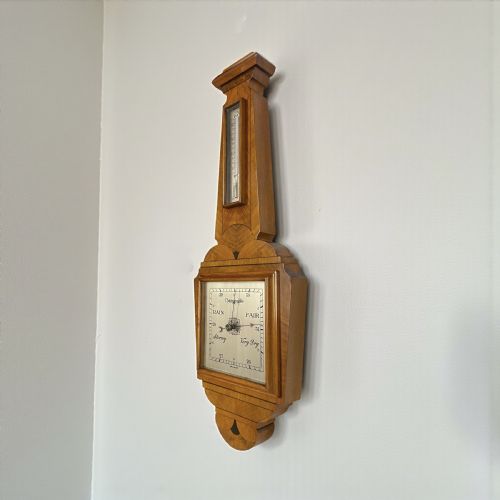
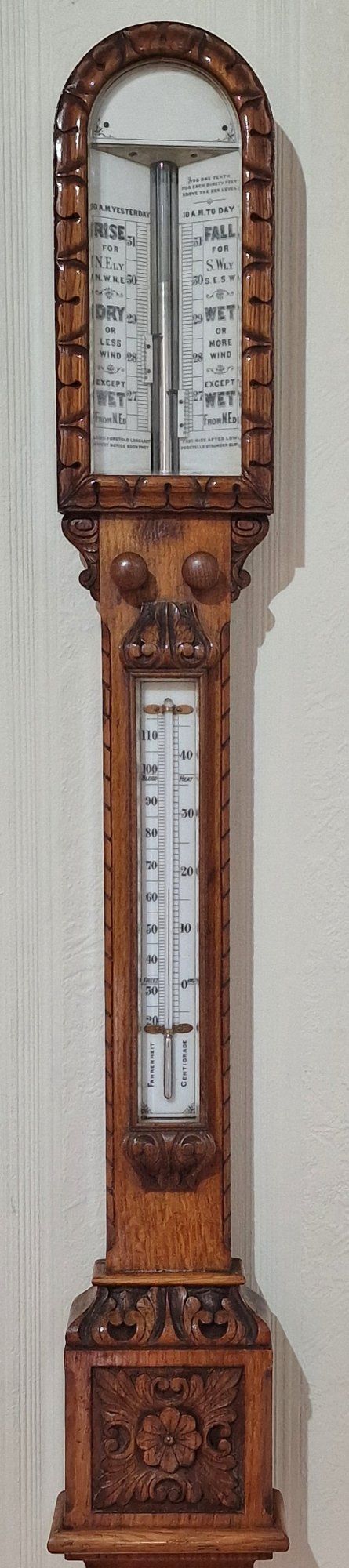
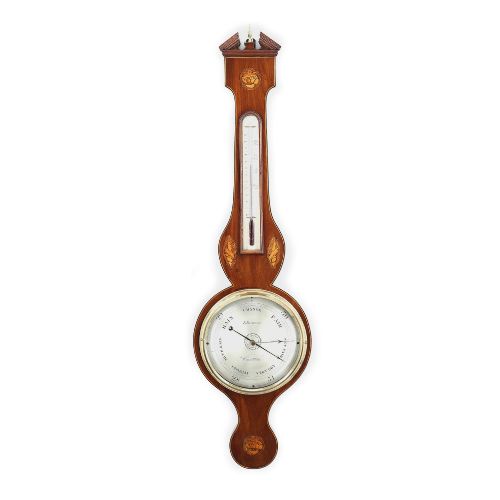

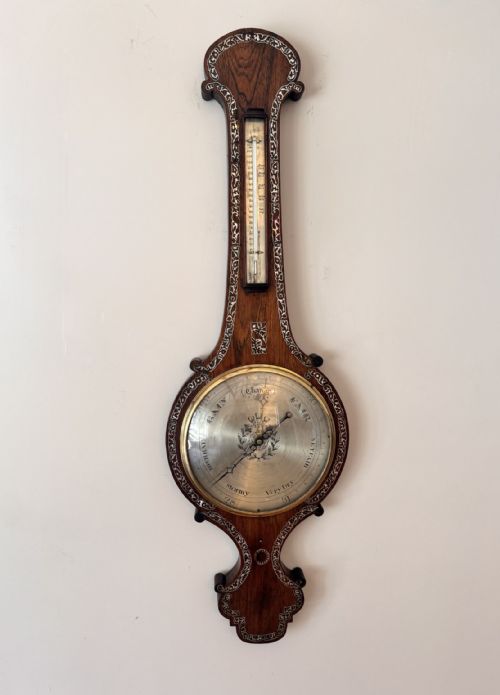


Brown Wall Barometer
A brown wall barometer is a domestic weather gauge housed in timber, prized for combining practical atmospheric tracking with rich period character.
Brown Wall Barometer
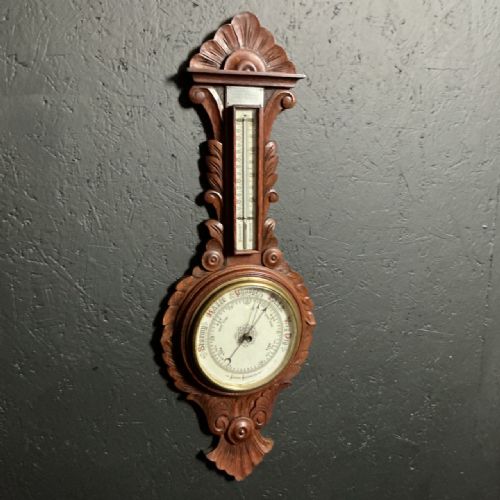
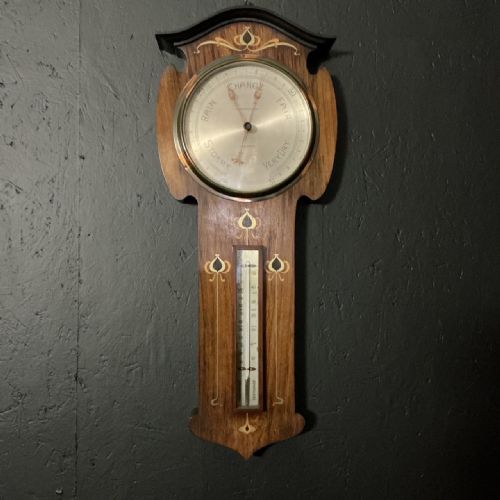
A brown wall barometer is a functional instrument designed to measure atmospheric pressure while serving as an interior feature. These pieces span the 18th century, Georgian, Victorian, and Edwardian eras, reflecting changing domestic tastes through distinct timber housings.
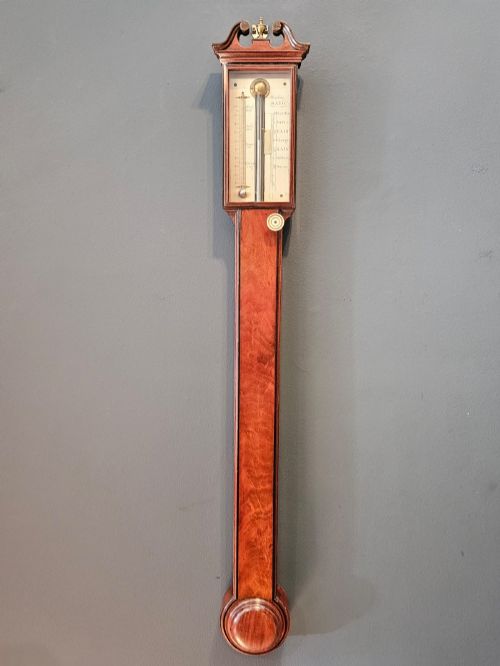
The version most commonly met on this page is the Victorian or 19th-century mahogany or oak banjo barometer, often incorporating a thermometer or hygrometer. Alongside these, stick barometers and wheel barometers appear frequently in rich dark woods.
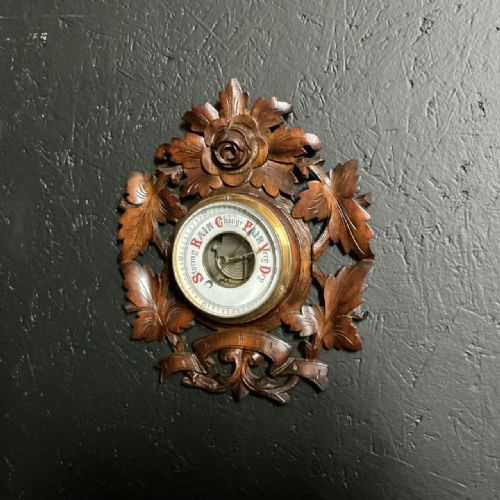
Origins range from provincial English makers in towns like Norwich and Cambridge to London instrument houses and continental Black Forest workshops. They suit spaces where traditional woodwork and mechanical dials anchor the room.
How they were made
Cases rely on traditional cabinet timbers such as mahogany, oak, walnut, and beechwood, shaped by turning, carving, and sometimes inlaying with mother of pearl or lighter woods. Black Forest examples exhibit deeply carved foliage and animal motifs in solid walnut or oak.
Internal mechanisms utilise brass fittings, glass tubes containing mercury or aneroid capsules, and bone or porcelain scales. Dials feature engraved or printed lettering protected beneath glazed bezels.
Several Victorian barometers were built specifically to commemorate the life of the Duke of Wellington or to track storms for Admiral Fitzroy.
What varies in quality
Quality rests in the crispness of the timber carving and the architectural proportion of the case. Finely figured mahogany veneers and detailed geometric or foliate carvings distinguish superior pieces from plain utilitarian examples.
The refinement of the brasswork, the legibility and engraving of the dial, and the presence of signed maker plates elevate certain instruments above standard production models.
B Besozzi of Weymouth·Negretti and Zambra·Molton of Norwich·Jenkins of Old Swindon·Maple and Co·Antoine Redier·L Casatelli of Liverpool·WE Pain of Cambridge·Alexander Adie·J Groce York·J Hicks of London
The Brown Wall Barometer Glossary
- Aneroid barometer
- A barometer that measures atmospheric pressure using a small, flexible metal box called an aneroid cell, which expands or contracts without the use of liquid mercury. This design allowed barometers to be made in more compact and varied domestic shapes.
- Stick barometer
- A tall, narrow instrument where the mercury column rises and falls in a straight vertical glass tube against a calibrated scale. These are prized for their clean lines and direct scientific appearance.
- Banjo barometer
- A household weather glass housed in a case shaped somewhat like a banjo, featuring a large circular dial at the base and a longer stem above. They often combine multiple meteorological instruments on the front panel.
- Wheel barometer
- An instrument that uses a float on the mercury surface connected to a pulley and a pointer needle on a circular dial. This mechanism translates minor vertical movements of mercury into a sweeping circular rotation.
- Admiral Fitzroy barometer
- A storm barometer developed in the 19th century that includes detailed instructions and multiple thermometer tubes alongside the main weather glass. They were intended to help mariners and farmers anticipate gales.
Brown Wall Barometer: Frequently Asked Questions
How do I read a stick barometer?
A stick barometer displays air pressure through the height of a mercury column in a vertical glass tube. Rising mercury generally indicates improving weather, while falling mercury points toward approaching storms or rain.
Matching the current reading against the fixed vernier scale allows you to track pressure changes over the course of a day. Many instruments include a sliding marker needle to record the previous reading for comparison.
What is the difference between aneroid and mercury barometers?
Mercury barometers rely on liquid metal responding directly to atmospheric weight inside an exposed glass tube. They represent the traditional scientific method of measurement used for centuries.
Aneroid barometers use a sealed internal metal chamber that flexes with pressure changes, driving a mechanical linkage to the dial. This enclosed system made barometers safer and easier to mount in decorative wall cases without spilling liquid.
Where should I hang a wall barometer?
Hang your barometer on an interior wall away from direct sunlight, central heating radiators, and draughty doorways. Rapid temperature fluctuations can interfere with the mechanical response and the timber case.
A sturdy fixing is essential, particularly for heavier carved oak or mahogany banjo cases that rely on secure wall brackets to support their weight safely.
How do I date an antique barometer?
Dating relies on the style of the timber case, the shape of the pediment, and the typography on the dial face. Georgian pieces often feature simple mahogany sticks or wheel shapes, while Victorian examples introduce heavier carvings and oak.
Signatures or maker names engraved on the dial or brass scale plates offer a direct link to recorded trade directories. Examining the construction methods inside the case also reveals the period of manufacture.