


Brown Velvet Sofa
A brown velvet sofa brings tactile warmth and deep period character to a room, offering rich texture through mahogany, walnut, and rosewood frames.
Brown Velvet Sofa
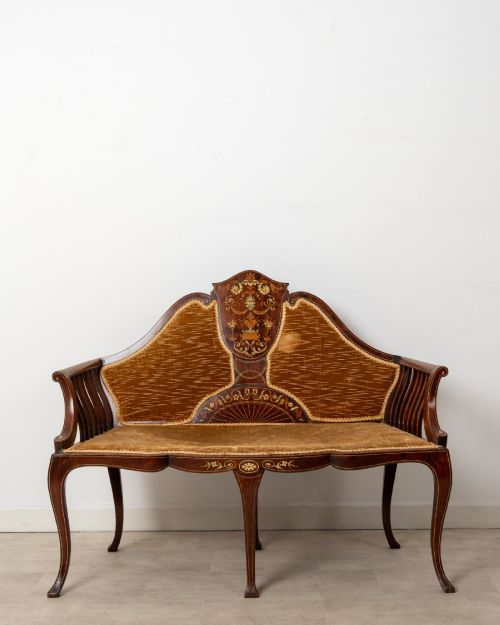
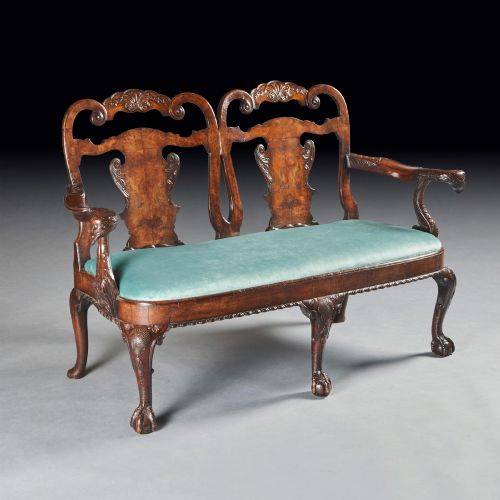
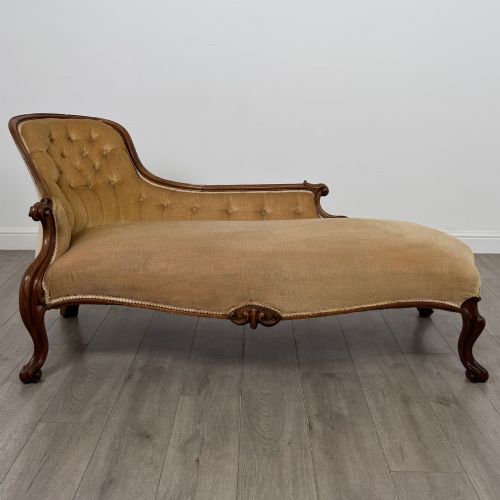
A brown velvet sofa encompasses a variety of seating forms from the nineteenth and early twentieth centuries, including settees, chaise longues, and banquette sofas. Buyers searching for a brown velvet sofa encounter Edwardian mahogany inlaid frames, Victorian rosewood couches, and late nineteenth-century walnut designs.
Origins vary across English and French workshops, utilising fine timbers paired with plush upholstery to create functional seating with strong decorative presence.
How they were made
Frames are constructed from dense hardwoods such as mahogany, walnut, and rosewood, frequently enhanced by satinwood inlay or intricate carved details. Master cabinetmakers shaped these timbers to support upholstered bodies and exposed show-wood rails.
Upholstery relies on traditional techniques, utilising supportive internal stuffing beneath velvet and leather textiles. Brass hardware and velvet trim often finish the edges of these substantial frames.
Drop ends allow afternoon loungers to adjust their resting angle without disturbing the symmetrical dignity of the salon.
What varies in quality
Quality rests in the crispness of the timber carving and the subtlety of wood grain, where finely figured rosewood or inlaid mahogany distinguishes superior examples. The architectural integrity of the frame and the harmonious balance of revival styling govern the visual weight of each piece.
Execution of secondary details, such as satinwood stringing and brass mounts, determines the level of refinement achieved by the maker.
James Shoolbred
The Brown Velvet Sofa Glossary
- Chaise longue
- An upholstered long chair designed for reclining, combining the functions of a chair and a day bed. These pieces often feature a single raised end and exposed wooden frames.
- Settee
- A long upholstered seat with a back and arms, designed to accommodate multiple people. They emerged in various period styles including Edwardian and Victorian iterations.
- Banquette sofa
- A long upholstered bench seat traditionally built for wall placement or central room division. Examples from the turn of the twentieth century occasionally incorporate contrasting trim.
- Satinwood inlay
- A decorative technique using light-figured wood veneer inserted into contrasting dark timber grounds. This ornamentation appears frequently on Edwardian salon furniture.
- Show-wood
- The exposed polished wooden sections of an upholstered frame, such as carved mahogany or walnut rails. The quality of this exposed timber defines the aesthetic standard of the seating.
Brown Velvet Sofa: Frequently Asked Questions
How do I date a brown velvet sofa?
Dating relies on identifying stylistic markers, timber choices, and construction methods associated with periods like the Victorian era, Edwardian period, or Regency years. Examining the underlying woodwork and upholstery substrate offers further chronological clues.
Cabinetmaking trends shifted from heavy carved rosewood in the mid-nineteenth century toward lighter inlaid mahogany and satinwood during the Edwardian period.
Are these sofas comfortable for daily use?
Many period pieces offer firm support derived from traditional horsehair and spring stuffing methods. Seat depths and back heights vary significantly between styles like chaise longues and drop-end settees.
Testing individual seating ensures the ergonomics align with personal comfort preferences for modern living spaces.
How do I care for antique velvet?
Velvet requires gentle brushing to maintain the pile and prevent crushing over time. Professional cleaning is recommended to preserve the integrity of vintage pile textiles.
Placing pieces away from direct sunlight protects both the deep brown dye and the underlying timber frame from fading.
What is the difference between a settee and a sofa?
Historically, settees featured fully upholstered backs and arms on wooden frames, often built for lighter salon use. Sofas traditionally offered larger proportions and heavier structural padding for general seating.
Over time, terminology overlapped as makers adapted forms to suit changing domestic fashions.