

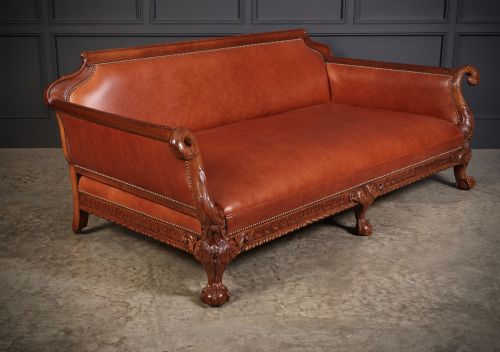
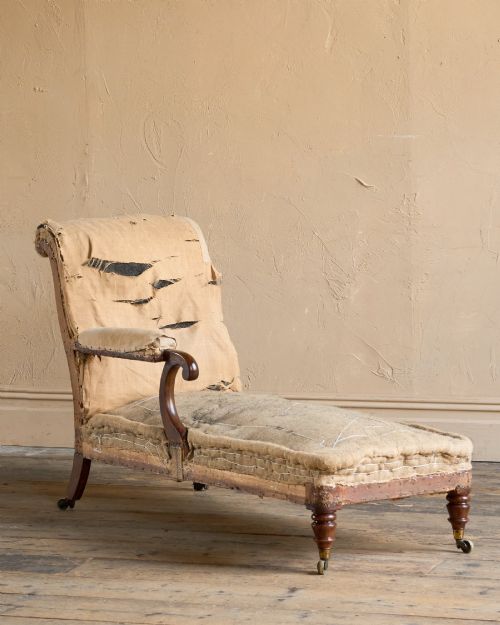
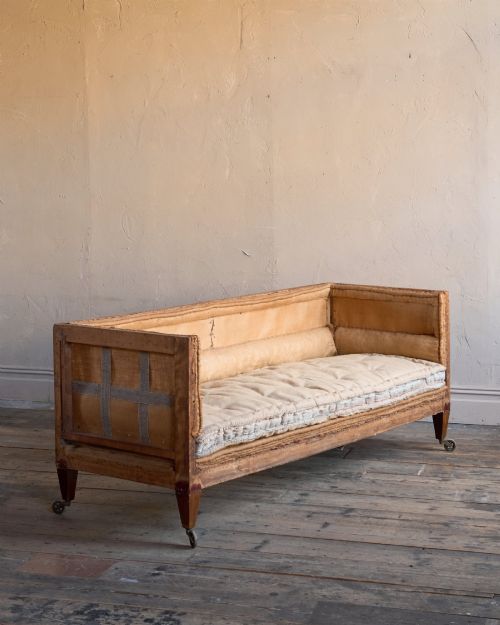
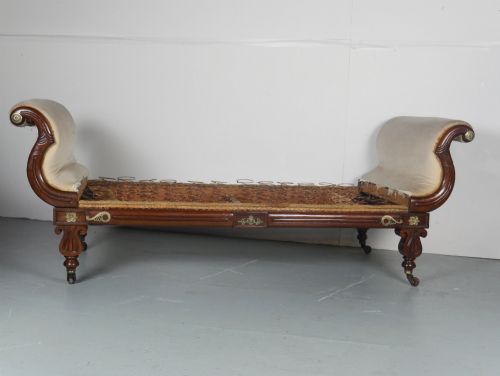
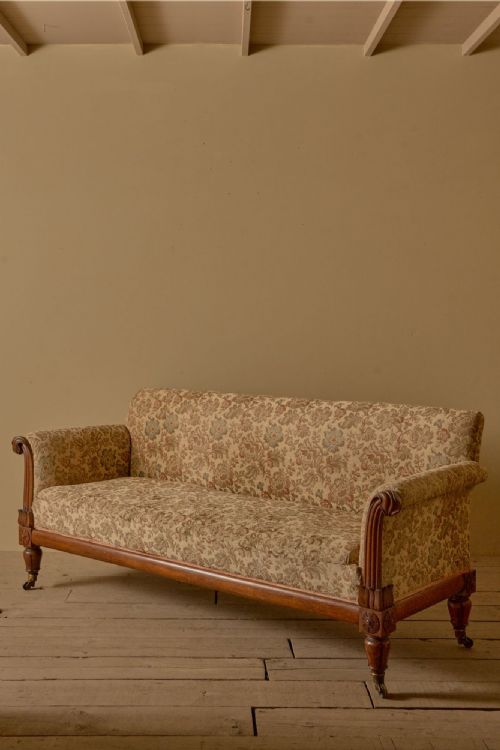
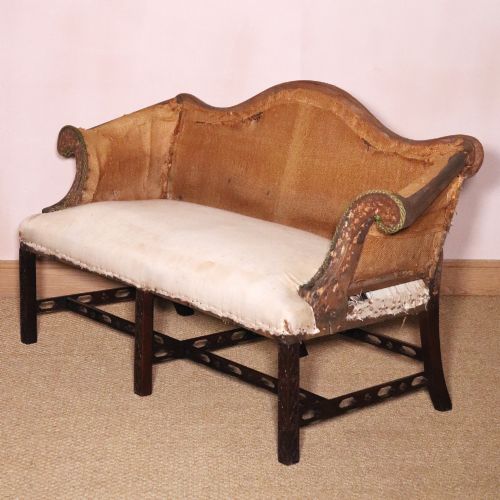
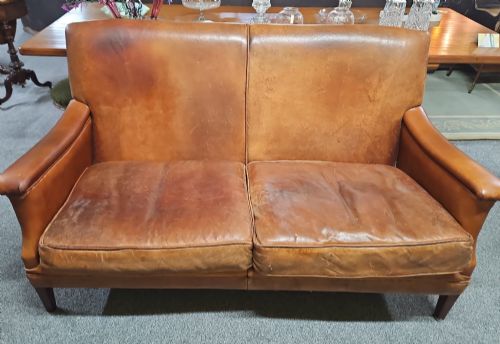
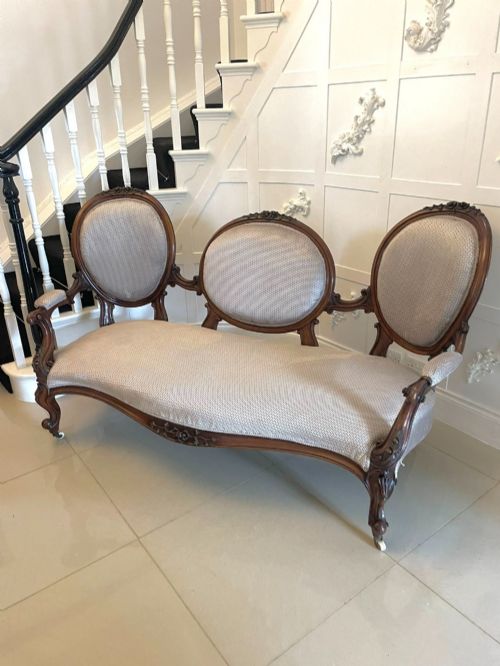


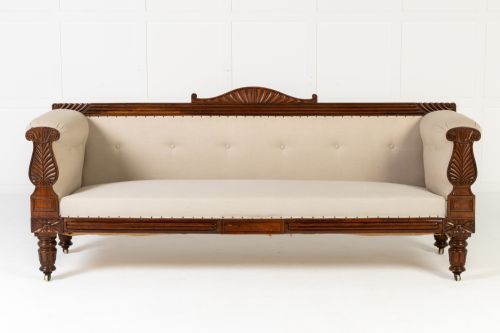

Brown Upholstered Couch
A brown upholstered couch brings heavy timber frames and deep textile coverings together, spanning Georgian elegance down to the 1930s.
Brown Upholstered Couch
A brown upholstered couch encompasses a wide group of antique seating forms, ranging from formal salon sofas to country house settees and long chaise longues. When you search for a brown upholstered couch, you meet timber frames paired with tactile fabric coverings across multiple centuries.
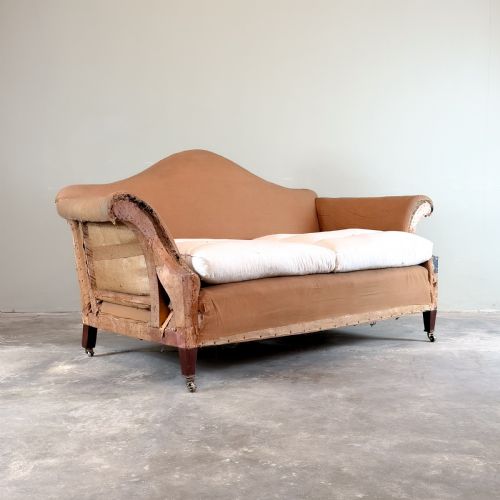
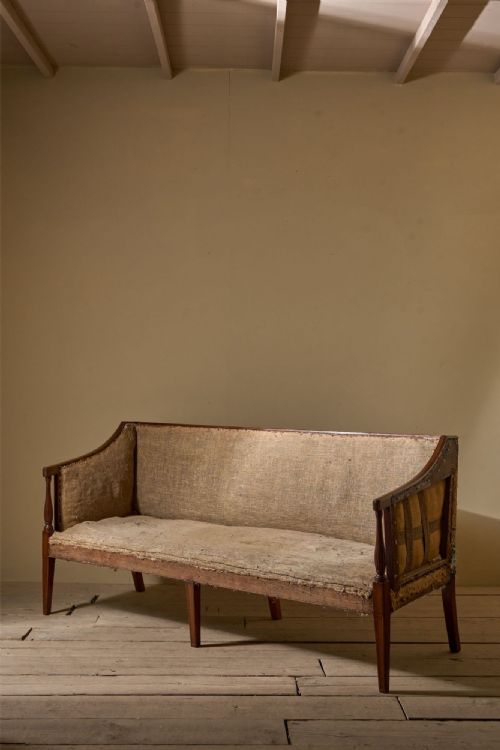
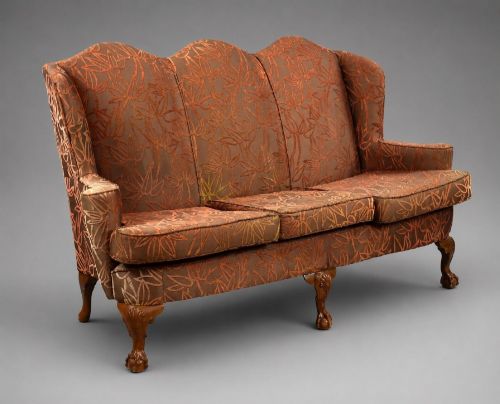
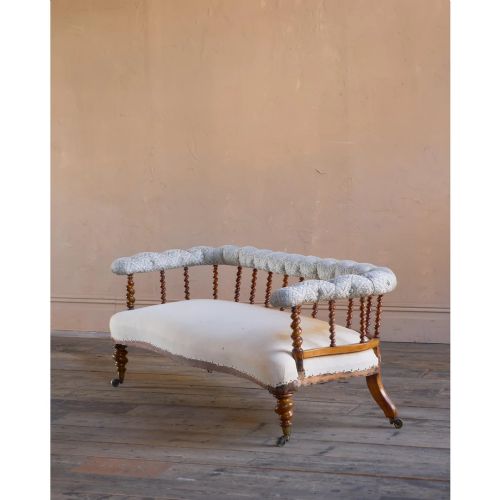
The pieces on this page draw from Victorian, Regency, Edwardian, and Georgian periods alongside later 1930s examples. Forms include camel back designs, drop end sofas, spindle backs, and triple-back settees.
Makers such as C. Hindley & Sons, Hampton & Sons, and Morison & Co appear alongside unmarked regional work. Woods span mahogany, walnut, and simulated rosewood, dressed in velvet, leather, hessian, and various upholstery fabrics.
Materials and construction methods
Frames rely on dense hardwoods like mahogany and walnut, shaped through carving, inlay, and spindle turning. Brass details often accent scroll ends and legs.
Upholstery relies on supportive fabric layers over webbing, hessian, and springs, finished with velvet, leather, or woven textile outer covers.
Brown Upholstered Couch Retail Price Guide 2026
Typical asking prices for brown upholstered couch among the pieces listed under this phrase on Sellingantiques today, from the lower quarter to the upper quarter. They describe what is for sale here now, not the wider market.
Listings span multiple centuries from the 18th Century through to the 1930s, featuring walnut, mahogany, and rosewood frames.
Distinguishing quality across periods
The distinction between ordinary and exceptional pieces lies in the precision of the timber carving and the architectural balance of the frame. Higher tier sofas exhibit crisp joinery, balanced proportions, and substantial wood sections that anchor the design.
Upholstery condition varies widely, with some pieces retaining historic fabric while others require complete restoration from the webbing up. The integrity of the underlying hardwood frame remains the primary marker of lasting value.
C. Hindley & Sons·Hampton & Sons·Morison & Co
The Brown Upholstered Couch Glossary
- Camel back
- A sofa or settee back featuring a distinct undulating serpentine contour resembling a camel's hump. This profile emerged strongly in 18th-century seating design.
- Chaise longue
- An elongated upholstered chair designed for reclining, combining a seat with a single backrest at one end. Examples frequently date from the Regency and Victorian periods.
- Drop end
- A sofa mechanism allowing one or both armrests to lower into a horizontal position. This feature provides flexibility for resting or sleeping.
- Spindle back
- A seat back constructed from multiple slender, turned wooden rods arranged vertically. This technique lightens the visual weight of heavy timber frames.
Brown Upholstered Couch: Frequently Asked Questions
How do I date a brown upholstered couch?
Dating relies upon stylistic markers such as the curve of the leg, the shape of the backrest, and the timber choice. Georgian and Regency pieces show classical proportions and mahogany frames, while Edwardian and 1930s examples introduce alternative frame shapes and different textile combinations.
Examining construction techniques inside the frame provides further clues to the manufacturing decade. Comparing the piece against documented cabinetmaker outputs helps narrow the exact period.
Are these couches comfortable for daily use?
Many antique sofas offer firm support through traditional spring and webbing interiors. Reupholstered examples often provide contemporary sitting comfort while retaining historic frames.
Seat depth and back angle vary significantly between a Regency chaise longue and a 1930s three-seater. Checking dimensions ensures the seating posture suits your living space.
What is the difference between a settee and a couch?
Historically, settees denote upholstered wooden benches designed for multiple sitters, often appearing in Georgian and Victorian parlours. Couches frequently incorporate reclining ends or day bed elements, such as Regency chaise longues.
Terminology overlaps considerably in antique listings, making frame form and back construction more reliable guides than the name alone.
How should I care for antique upholstery?
Protecting fabric surfaces from direct sunlight prevents fading in delicate velvet and woven textiles. Regular light vacuuming removes dust from crevices without stressing historic fibres.
Wooden frames benefit from occasional waxing to nourish mahogany and walnut surfaces. Avoiding excess moisture preserves both the timber and the underlying webbing.