


Brown Tobacco Humidor
These brown tobacco humidors are practical smoking accessories built to keep leaf moist, appearing in wood and metal across several decades.
Brown Tobacco Humidor
A brown tobacco humidor is a dedicated box or cabinet designed for storing and conditioning cigars and pipe tobacco, appearing in forms such as table boxes, wall cabinets and figural carvings. These pieces emerge predominantly from the nineteenth and twentieth centuries, spanning periods from Victorian and Edwardian eras through to Art Deco and mid-century designs.
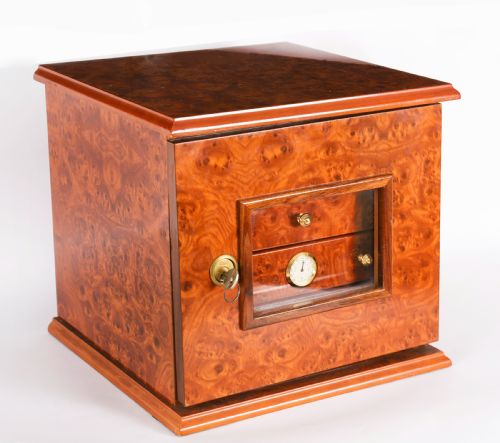
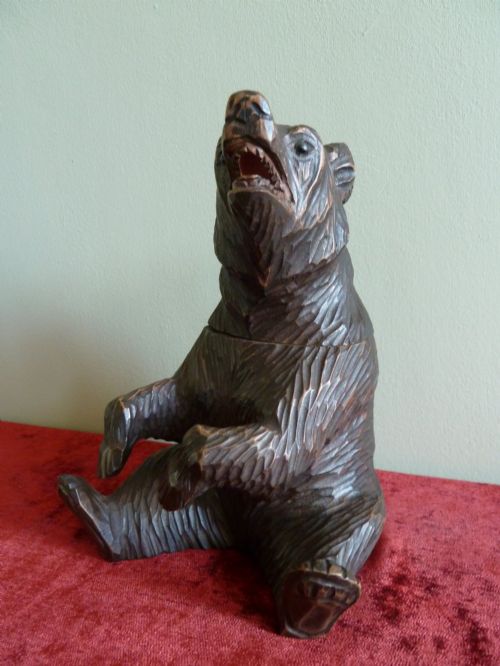
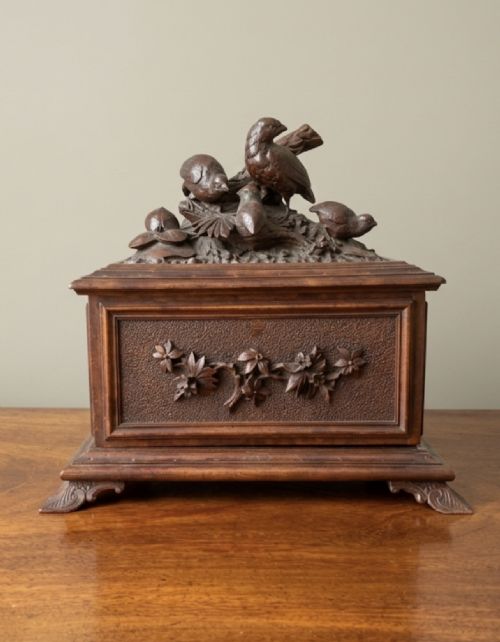
The most common iterations on this page are carved wooden boxes and desktop cabinets made from oak, walnut and linden wood. Many adopt traditional formats, while others take whimsical figural shapes like bears or functional forms modelled on railway coal wagons.
Makers utilised various timbers including burr elm, pollard birch root and cedar, often pairing the wood with brass, glass or sterling silver mounts. Collectors encounter smaller tobacco jars alongside larger locking gentleman's cigar cabinets and advertising shop displays.
How They Were Made
Cabinetmakers constructed these brown tobacco humidors using solid hardwoods and decorative veneers such as oak, walnut and burr elm. Artisans shaped timber through traditional joinery, dovetailing box corners and fitting internal compartments to hold pipes and leaf securely.
Figural pieces like Black Forest models involved intricate hand-carving in linden wood and other timbers to render animals in detail. Metal elements including brass hinges, locks and silver mounts were cast or fabricated and fitted flush to the wooden bodies.
Some Victorian smokers cabinets disguise their serious purpose entirely by doubling as miniature GWR coal wagons on wooden wheels.
What Varies in Quality
The standard of carving distinguishes simpler boxes from exceptional figural pieces, particularly in nineteenth-century Black Forest work where anatomical precision and depth of relief define the carving. Timber selection also dictates grade, with dense burrs and figured walnut commanding greater attention than plain woods.
Internal engineering marks the division between basic containers and high-end gentleman's cabinets, seen in tight-fitting locking mechanisms, functional humidifiers and fitted cedar interiors. Original hardware such as sterling silver mounts and maker-stamped plaques elevates the finish of these smoking accessories.
The Brown Tobacco Humidor Glossary
- Humidor
- A sealed container designed to maintain a constant humidity level for storing cigars or tobacco. These boxes often feature internal linings of cedar to preserve moisture and aroma.
- Black Forest
- A style of wood carving originating from the mountainous region of Central Europe during the nineteenth century. It is best known for realistic animal sculptures, particularly bears holding trays or jars.
- Burr walnut
- A prized timber veneer showing swirling, knotty grain patterns formed from tree growths. Cabinetmakers used it on high-end nineteenth and twentieth-century boxes for decorative effect.
- Smokers cabinet
- A small glazed or panelled wooden cabinet designed to hold pipes, tobacco jars and smoking accessories on a desk or wall. They frequently include small drawers and dedicated pipe racks inside.
Brown Tobacco Humidor: Frequently Asked Questions
What is a brown tobacco humidor used for?
These boxes and cabinets stored loose pipe tobacco, cigarettes and cigars while keeping the leaf from drying out. They sat on desks, tables or hung on walls in studies and smoking rooms.
Many included internal compartments, ceramic jars or metal humidifiers to regulate moisture. Gentlemen kept their daily smoking requisites locked inside away from household dust.
How do I date a wooden humidor?
Dating relies on timber types, construction methods, hardware and prevailing design styles seen in the listings. Victorian and Edwardian pieces display traditional joinery and brass or silver mounts characteristic of their respective decades.
Later examples from the 1920s and 1930s often adopt cleaner Art Deco lines or simpler geometric forms. Maker marks, advertising plaques and silver hallmarks also help narrow down the period of manufacture.
What woods were used for these humidors?
Carvers and cabinetmakers utilised a range of dense hardwoods suited to hand-carving and box construction. Oak and walnut appear frequently alongside exotic varieties like cedar and decorative veneers such as burr elm.
Linden wood was a favourite for intricate animal carvings in the Black Forest style due to its fine grain. Pollard birch root and other figured timbers provided striking exterior patterns on nineteenth-century boxes.
Are figural humidors rare?
Figural pieces carved to resemble animals like bears and dogs are specific to the nineteenth-century Black Forest tradition. These hand-carved linden wood models served as functional tobacco holders on tables and desks.
While multiple examples survive today, each animal carving varies according to the skill of the individual carver. Their distinct sculptural forms make them popular with collectors of smoking antiques.