





Brown Terrier Oil Artwork
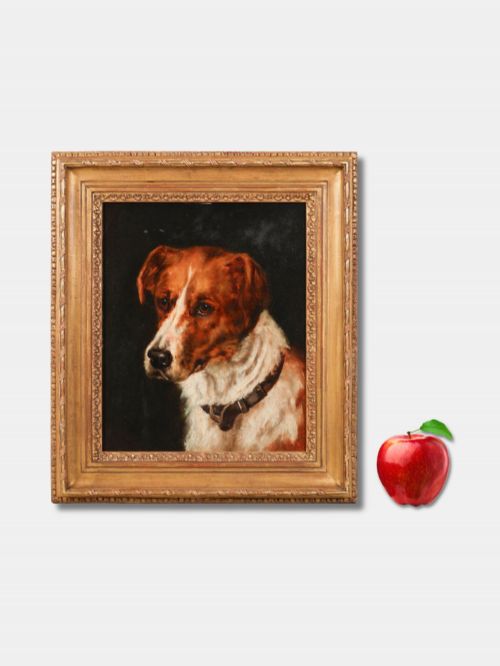
These brown terrier oil artwork pieces capture the sharp focus and lively character of working dogs through traditional brushwork.
Brown Terrier Oil Artwork
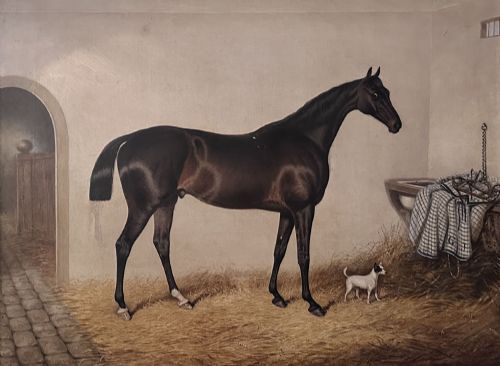
When you search for brown terrier oil artwork, you encounter canine portraits and sporting scenes rendered in pigment on canvas or board. These paintings record the appearance and temperament of terriers through the nineteenth and twentieth centuries.
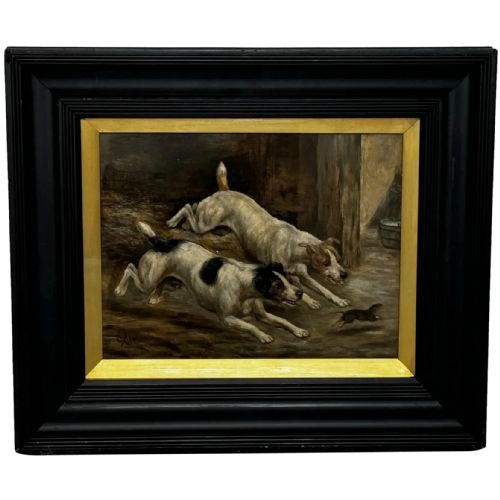
The pieces listed on this page span the Victorian period into the nineteen-forties, capturing breeds such as Jack Russells, fox terriers, Cairn terriers, and Scottish terriers. Most examples appear within traditional frames, depicting the dogs either in repose or engaged in farmyard ratting scenes.
Materials and technique
Artists built these images using oil paint applied to woven canvas or rigid wooden boards. The pigment allows for subtle blending of brown and tan coats, rendering individual hairs and alert expressions with fine precision.
Many works retain their original giltwood or gilded wood frames, which complement the dark tones of the oil medium. The application of oil paint gives depth to the background settings, whether a simple walled garden or a rustic barn interior.
Several terriers are caught mid-action guarding against rats, proving that Victorian dogs took their barn security very seriously.
Assessing quality and execution
Quality rests upon the artist's ability to render the anatomy and intense gaze of the terrier convincingly. Superior works capture the alert posture and characteristic wire-haired texture rather than relying on generic canine shapes.
The handling of light and shadow across the dog's coat distinguishes finer paintings from simpler decorative copies. Stronger compositions place the terrier within a coherent environment, such as a farmyard or garden, with confident brushwork throughout.
Valentine T Garland·Sir Edwin Landseer·Percival Glenfern·John Emms·George Armfield·Edward Armfield
The Brown Terrier Oil Artwork Glossary
- Canvas
- A heavy woven fabric stretched across a wooden frame to serve as a foundation for oil painting. It provides a slightly textured surface that holds layered pigment securely.
- Giltwood
- Wood that has been treated with a thin layer of gold leaf or metallic gilt finish. It forms the decorative border around many traditional oil paintings.
- Oil paint
- A slow-drying medium made of pigments suspended in a drying oil, typically linseed oil. This medium allows painters to blend colours smoothly and build rich surface textures.
- Sporting art
- Artwork that depicts field sports, hunting dogs, and animals in rural or estate settings. This genre gained significant popularity during the Victorian period.
- Victorian
- Pertaining to the reign of Queen Victoria, a period noted for detailed realism in animal portraiture. Paintings from this era often emphasise the individual personality of working dogs.
Brown Terrier Oil Artwork: Frequently Asked Questions
What periods do these terrier paintings come from?
The available selection primarily spans the nineteenth century and the Victorian era, extending into the early decades of the twentieth century.
Dates range from mid-Victorian depictions up to pieces created around nineteen-forty, reflecting changing styles in animal portraiture.
How were these dog portraits displayed originally?
These oil paintings were typically hung in country houses, sporting estates, and parlours, often framed in ornate gilded wood.
They served as tributes to valued working terriers, ratting dogs, and companions belonging to the household.
How do I care for an oil painting on canvas?
Keep the artwork away from direct sunlight and steady temperature fluctuations to prevent the canvas and oil paint from cracking over time.
Dust the surface gently with a soft, dry brush and avoid using liquid cleaners on the paint or the giltwood frame.
How can I tell a Victorian terrier painting apart from later works?
Victorian examples often feature narrative elements like farmyard ratting scenes, deep earth tones, and traditional canvas supports.
Twentieth-century pieces tend toward simpler portrait compositions on board or canvas with slightly brighter colour palettes.