



Brown Spool Chair
A brown spool chair brings sturdy nineteenth-century turned timber and tactile seating directly into a room.
Brown Spool Chair
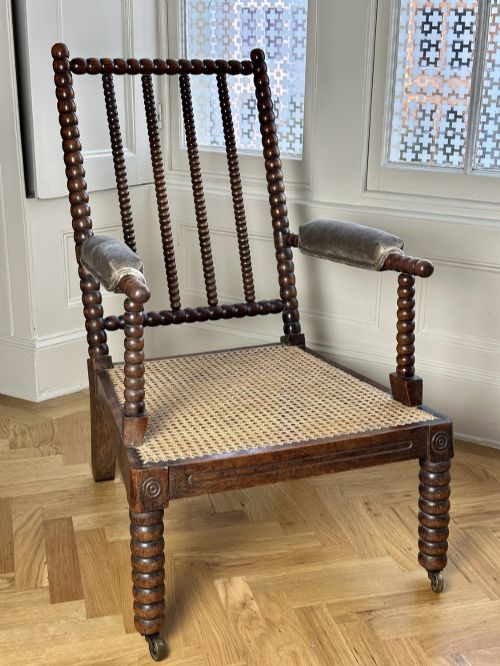
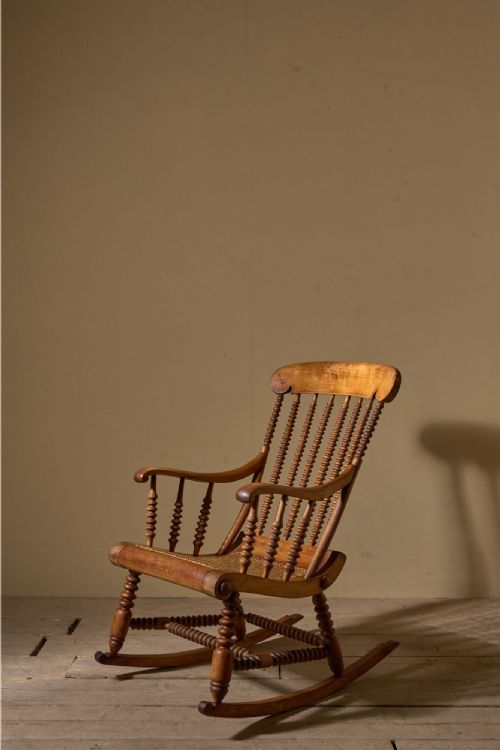
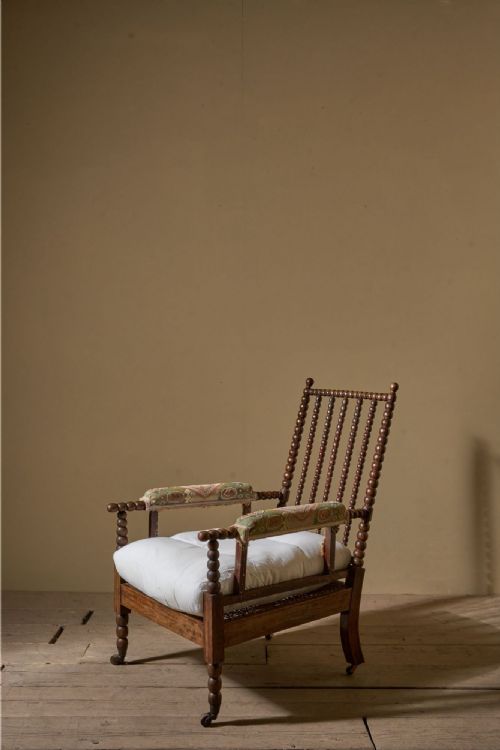
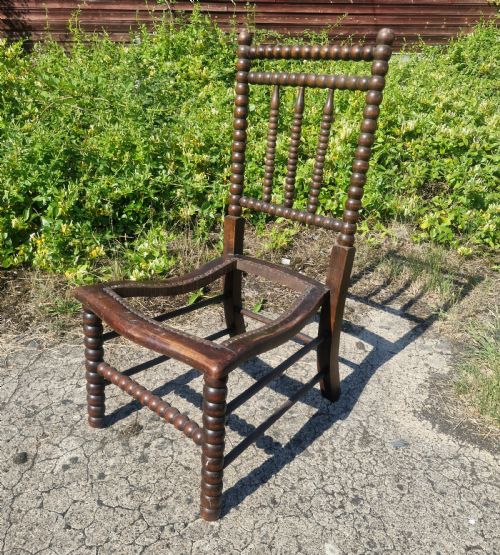
A brown spool chair centres on distinctive turned wood framing that resembles a string of spools or bobbins, appearing primarily across nineteenth-century seating forms. These pieces encompass low bedroom chairs, rocking chairs, and substantial armchairs fashioned from various hardwoods.
The most common examples on this page date from the Victorian era, particularly the mid to late nineteenth century, alongside occasional earlier eighteenth-century oak pieces. Regional variations include Scottish vernacular designs which emphasise robust local craftsmanship and practical rocking frames.
What varies in quality
Quality rests in the precision and crispness of the lathe turning, where sharply defined spool profiles indicate superior craftsmanship compared to softer, worn details. The selection of timber also dictates quality, with dense native oaks and walnuts outlasting softer stained woods.
The integrity of the structural frame and the preservation of original webbing, cane, or textile surfaces determine the overall standard of survival. Finer examples maintain tight joints throughout the bobbin framing without excessive wobble or replacement spindles.
Brown Spool Chair Retail Price Guide 2026
Typical asking prices for brown spool chair among the pieces listed under this phrase on Sellingantiques today, from the lower quarter to the upper quarter. They describe what is for sale here now, not the wider market.
The Brown Spool Chair Glossary
- Bobbin turning
- A form of woodturning characterised by a sequence of rounded spheres or discs resembling bobbins of thread on a spindle. This decorative technique defines the entire framework of the chair.
- Scottish vernacular
- Regional furniture made outside major urban centres using local timber traditions and practical construction methods. These pieces often feature rocking bases and sturdy proportions.
- Simulated rosewood
- A painted or stained finish applied to common hardwood to imitate the dark grain and rich colour of genuine rosewood. Cabinetmakers utilised this method during the nineteenth century to achieve a high-end look affordably.
- Cane
- Woven rattan plant material used to create resilient seats and backs within wooden frames. It provides lightweight flexibility and airflow.
- Jacobean Revival
- A nineteenth-century style reviving seventeenth-century British design motifs, often incorporating heavy turned components and dark finishes. It influences several of the earlier-looking chairs in this tradition.
Brown Spool Chair: Frequently Asked Questions
What is a brown spool chair?
A brown spool chair is a wooden seat featuring distinctive lathe-turned framing shaped like a string of bobbins or spools. These pieces date predominantly from the nineteenth century.
They appear in various forms including armchairs, rocking chairs, and low bedroom seats utilising oak, walnut, and beech.
How do I date a spool chair?
Dating relies on examining the timber species, the turning style, and the overall construction methods used in the frame. Nineteenth-century examples often display machine-assisted lathe work alongside regional vernacular traits.
Earlier pieces from the eighteenth century typically utilise solid oak with heavier structural proportions and hand-carved joinery details.
Are these chairs comfortable for daily use?
Many spool chairs offer comfortable seating through low sloping backs and supportive cane or upholstered pads. Rocking versions add gentle movement suitable for parlours or bedrooms.
Placing them in rooms with moderate humidity helps preserve the turned wooden spindles and tensioned seating materials over time.
What woods were used for spool chairs?
Cabinetmakers utilised dense native hardwoods such as oak, walnut, and beech to withstand the intricate lathe-turning process. Some pieces feature secondary woods treated with a simulated rosewood finish.
The choice of timber directly affects the weight, colour depth, and durability of the finished frame.