

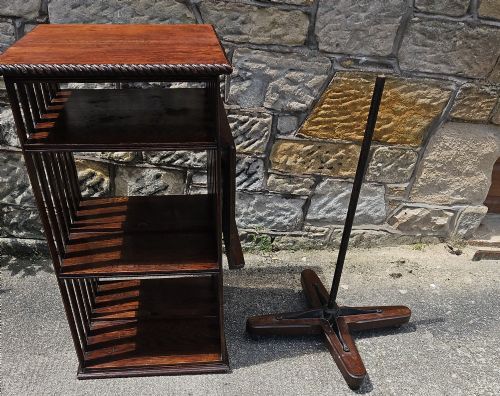



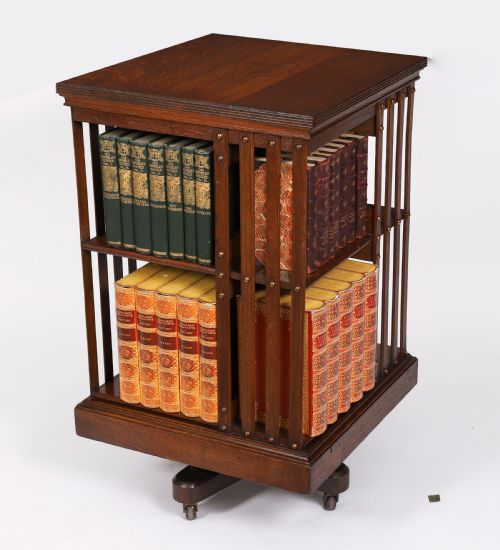


Brown Rotating Bookshelf
A brown rotating bookshelf brings immediate, accessible order to a room, turning a heavy stack of volumes into an interactive display.
Brown Rotating Bookshelf
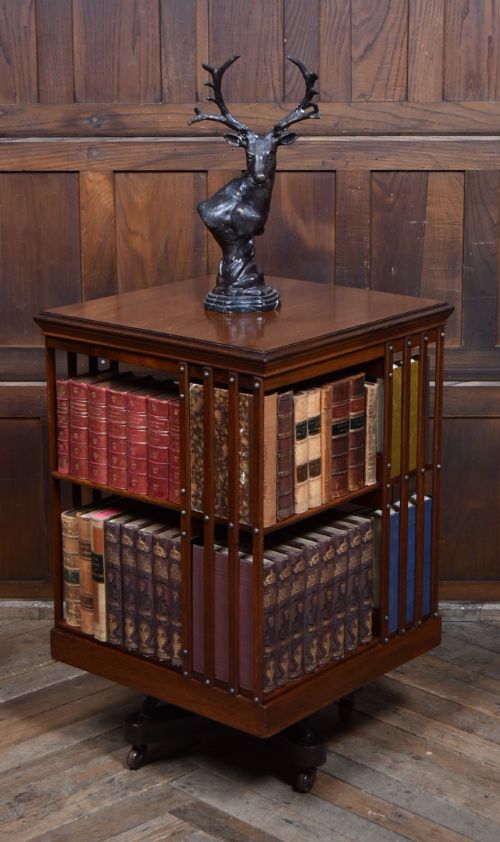
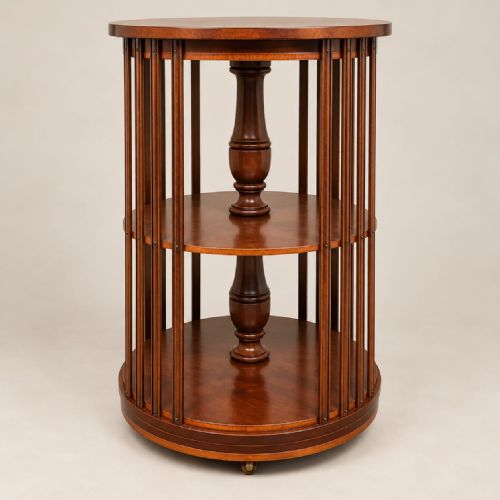
A brown rotating bookshelf sits on a table or floor, allowing users to spin the tiered tiers of books to reach titles quickly from a seated position. These items appear primarily in Edwardian and Victorian styles, spanning the late nineteenth century through to nineteen ten.
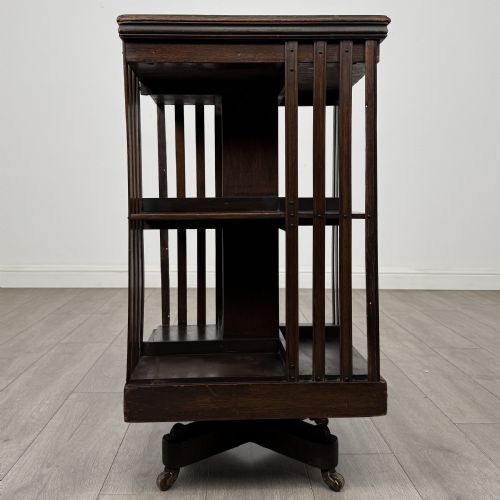
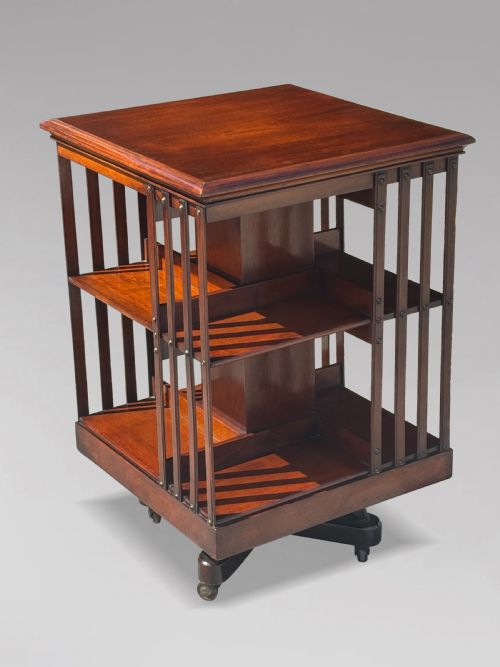
The most common version met here is the Edwardian oak or mahogany revolving bookcase, often featuring slatted sides or subtle inlaid details. Pieces range from small desktop variants to larger floor-standing formats, occasionally drawing on Arts and Crafts or French provincial designs.
Materials and construction
Makers utilised solid timbers and veneered surfaces, most notably oak, mahogany, flame mahogany, walnut, and satinwood. Grain patterns and rich natural tones define the polished brown aesthetic of these rotating units.
Internal revolving mechanisms rely on durable metal and cast iron components, frequently complemented by brass fittings. Slatted wooden sides and inlaid decorations provide structural integrity alongside decorative refinement.
Brown Rotating Bookshelf Retail Price Guide 2026
Typical asking prices for brown rotating bookshelf among the pieces listed under this phrase on Sellingantiques today, from the lower quarter to the upper quarter. They describe what is for sale here now, not the wider market.
Listings feature oak and mahogany predominantly, spanning the Victorian and Edwardian periods with occasional Arts and Crafts influences.
Distinctions in quality
The refinement of the timber selection marks the difference between standard production and superior work. Figured woods like flame mahogany and satinwood inlay demonstrate higher ambition than plain utility pieces.
The smoothness of the turning action depends entirely on the hidden mechanical parts beneath the tiers. Solid brass and cast iron fittings that operate without friction separate sturdier builds from looser, lesser assemblies.
The Brown Rotating Bookshelf Glossary
- Flame mahogany
- A timber veneer displaying a distinct, undulating flame-like grain pattern. It adds decorative movement to the surface of Edwardian and Victorian furniture.
- Revolving bookcase
- A freestanding or desktop shelving unit built on a central pivot mechanism. This design permits the entire tier of books to spin freely.
- Slatted sides
- Open vertical wooden bars forming the outer walls of the bookcase tiers. This construction lightens the visual weight of the timber.
- Satinwood
- A pale, hard exotic wood often used for contrasting stringing and inlay. It provides bright detail against darker surrounding mahogany.
Brown Rotating Bookshelf: Frequently Asked Questions
How do I use a rotating bookcase?
Place the unit either on a sturdy tabletop or directly on the floor depending on its overall scale. Simply spin the tiers gently by hand to browse titles without leaving your seat.
Position the bookcase away from direct heat sources to protect the polished wood surfaces and timber joints over time.
What periods do these bookcases come from?
The available selection primarily spans the Victorian and Edwardian eras, stretching from the late nineteenth century into the early twentieth century. Common design influences range from traditional British cabinet making to Arts and Crafts simplicity.
Dates are typically attributed using construction methods, timber choices, and stylistic markers found across the listings.
Are these bookcases heavy?
Floor-standing models possess substantial weight due to solid timber frames and internal cast iron turning mechanisms. Desktop versions remain light enough to lift and reposition across various surfaces with ease.
Heavier units require two people to move safely to prevent straining the central pivot assembly.
How do I tell oak from mahogany?
Oak displays a prominent, open grain texture with characteristic silver medullary rays visible across the surface. Mahogany offers a smoother, warmer reddish-brown tone with tighter, interlocking grain patterns.
Flame mahogany introduces a distinctive rippled figure that catches the light differently than standard straight-grained oak.