


Brown Rosewood Console
These brown rosewood console and table forms bring rich grain and architectural presence into a room, offering both surface utility and period character.
Brown Rosewood Console
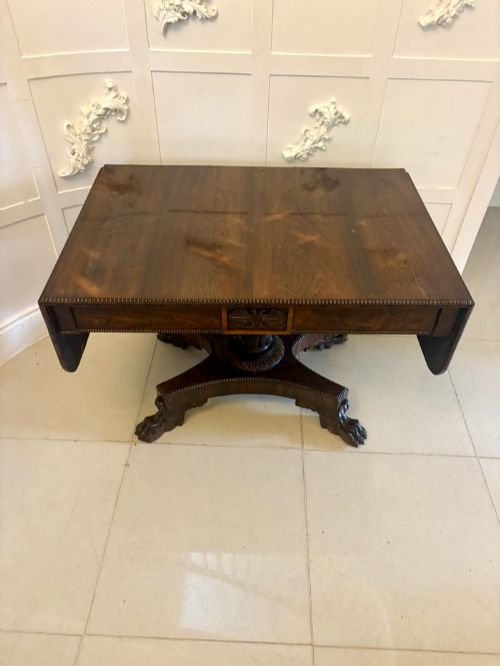
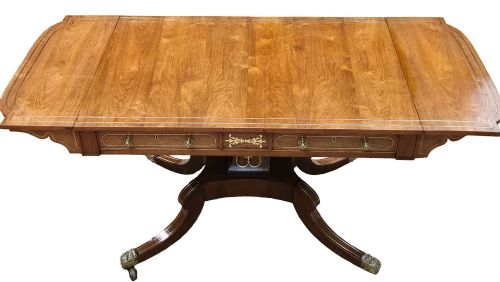
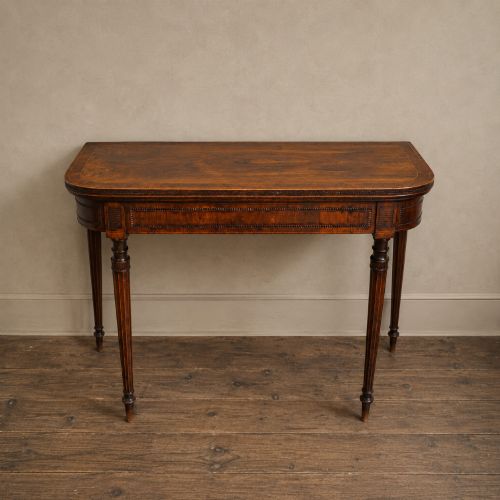
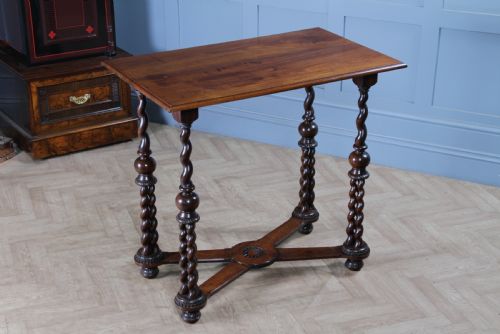
When you search for a brown rosewood console or table, you encounter an array of forms from the Regency, Victorian, and Georgian eras, spanning card tables, sofa tables, library tables, and writing desks.
The sofa table and the fold-over card table dominate the selections on this page, reflecting the domestic needs of the nineteenth century for versatile furniture that adapted from day to evening use.
Originating predominantly from British workshops alongside select continental and Chinese examples, these pieces demonstrate how cabinetmakers utilised dense tropical hardwoods for formal reception rooms.
Distinctions in quality and execution
The hierarchy of quality rests primarily on the choice of timber and the crispness of brass or wood inlay, where master workshops achieved seamless integration of contrasting materials.
Proportion and stability separate standard production items from pieces bearing attribution to notable makers, ensuring that the visual balance of pedestals and table legs remains harmonious.
The preservation of original surface patination and crisp carved details dictates the desirability of a table, distinguishing untouched historic examples from later alterations.
Materials documented across the inventory include brass, mahogany, leather, boxwood inlay, and burr yew alongside primary rosewood.
William Trotter·Gillows·George Bullock
The Brown Rosewood Console Glossary
- Crossbanding
- A narrow strip of veneer laid perpendicular to the grain of the main surface. This technique frames the top of a card or sofa table to create a distinct visual border.
- Marquetry
- The art of forming decorative patterns using fitted pieces of wood veneer. Artisans applied floral motifs in contrasting timbers across table tops.
- Goncalo Alves
- A dense exotic hardwood with striking contrasting grain patterns. Cabinetmakers utilised this timber as an alternative to standard rosewood on select writing and games tables.
- Sabre leg
- A concave curving support tapering toward the foot. Regency designers favoured this form for card and centre tables to impart a sense of dynamic movement.
- Library table
- A large freestanding table designed for the centre of a room rather than a wall. These pieces typically feature drawers and finished backs for all-round viewing.
Brown Rosewood Console: Frequently Asked Questions
What is a brown rosewood console used for?
These tables served various social and domestic functions in historic interiors, operating as writing desks, card tables for evening games, or central display surfaces in grand reception rooms.
Today, they function effectively as statement furniture in hallways or living spaces, providing practical surface area while introducing rich nineteenth-century timber tones.
How do I identify a Regency table?
Regency pieces often display classical architectural influences, incorporating brass inlay, sabre legs, and rosewood veneers that reflect early nineteenth-century aesthetic priorities.
Look for crisp joinery details and specific structural motifs, such as turned columns or brass stringing, which date the piece to the first few decades of the 1800s.
Are card tables still functional?
Fold-over card tables retain their original pivoting and folding mechanisms, allowing the top to open out smoothly for use as a larger surface or game board.
Careful handling of the hinges and proper support of the folded leaf ensure these antique mechanisms remain stable during daily domestic use.
How do I care for rosewood furniture?
Maintain the timber by keeping the table away from direct heat sources and strong sunlight, which can dry out the rosewood veneer and cause fading over time.
Regular dusting with a soft, dry cloth preserves the natural sheen of the polish without requiring heavy commercial waxes or abrasive cleaners.