



Brown Rosewood Chiffonier
These brown rosewood chiffonier pieces are compact low storage cabinets built to anchor a formal parlour or dining room.
Brown Rosewood Chiffonier
A brown rosewood chiffonier stands as a low side cabinet combining enclosed cupboard storage with open or shelf space above, originating primarily in the Regency and Victorian eras. These items serve to ground a room with deep timber tones and provide surface space for display.
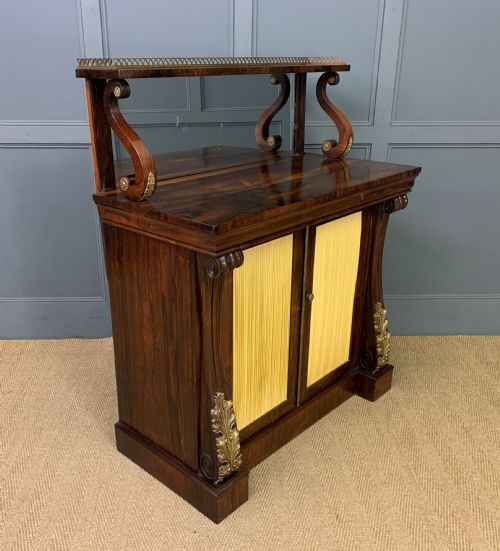
Most examples found in this selection date from the Regency and 19th Century periods, frequently adopting the form of a side cabinet or breakfront sideboard. They bridge the gap between heavy library bookcases and delicate display furniture.
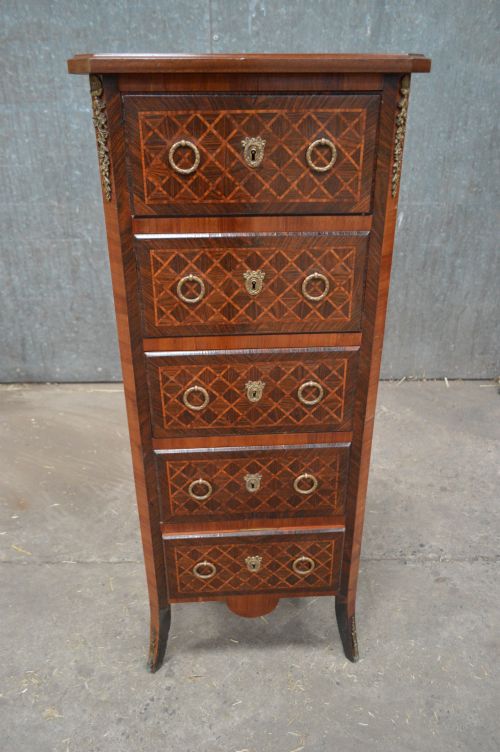
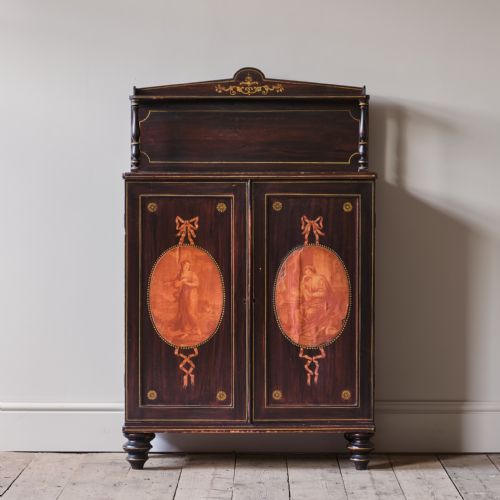
The materials span solid timbers and applied veneers, with genuine rosewood appearing alongside simulated finishes on pine. Buyers will encounter configurations featuring two doors, brass mounts, and inlaid boxwood or marquetry details.
Materials and construction methods
Cabinet makers utilised dense exotic timbers such as rosewood and goncalo alves, often laid as veneers over secondary woods like pine and oak. This technique allowed workshops to display striking grain patterns across flat door panels and breakfront facades.
Metal components played a structural and decorative role, with brass inlay and brass mounts edging shelves and framing doors. Marquetry and boxwood stringing provided contrast against the dark body of the cabinet.
Listings feature pieces spanning the Regency, Victorian, and Aesthetic Movement periods, constructed from rosewood, oak, pine, and goncalo alves.
Distinctions in craftsmanship
Quality rests in the selection of the timber veneer and the precision of the brass inlay or boxwood marquetry. Finer cabinets display continuous grain matching across doors and drawer fronts rather than disjointed patches.
The structural integrity of the secondary woods, such as oak or pine drawer linings, dictates longevity. Superior pieces retain original hardware and smooth-sliding doors without modern replacement panels.
The Brown Rosewood Chiffonier Glossary
- Chiffonier
- A low cabinet featuring cupboards below and frequently a shelf superstructure above. It evolved during the early nineteenth century to hold dining silver or books.
- Goncalo Alves
- A dense exotic hardwood with a distinct mottled brown figure, utilised by cabinet makers for high-status sideboards and cabinets during the Regency period.
- Marquetry
- The art of applying decorative veneer pieces of various woods to a structural panel to form geometric or floral patterns. It requires patient hand-cutting and fitting.
- Breakfront
- A cabinet design where the central section projects forward from the flanking cupboards. This arrangement creates visual depth and breaks up long elevations.
- Simulated Rosewood
- A painted finish applied to common timbers such as pine to imitate the rich grain of rosewood. Workshops employed this technique during periods of timber restriction or economy.
Brown Rosewood Chiffonier: Frequently Asked Questions
What is a chiffonier used for?
A chiffonier provides low-level storage in a dining room, hallway, or sitting room. The enclosed cupboards house tableware or household items.
The flat top surface serves as a convenient place to display decorative objects, lamps, or serving trays in daily use.
How do I date a rosewood cabinet?
Dating relies on observing structural characteristics, timber choices, and decorative motifs such as brass inlay or boxwood stringing. Regency pieces often exhibit classical restraint and goncalo alves or rosewood veneers.
Victorian examples tend toward heavier proportions and incorporate marquetry or display glass panels. Secondary woods inside the cabinet also provide clues to the period of manufacture.
Where should I place a chiffonier?
These cabinets suit dining rooms, living spaces, and wide hallways where floor space is limited. Their low profile prevents them from dominating a wall while still offering substantial internal storage.
Keep them away from direct sunlight and heat sources to protect the rosewood veneer from drying and cracking.
How do I care for rosewood furniture?
Maintain rosewood by dusting with a dry, soft cloth and occasionally applying a quality beeswax to nourish the timber. Avoid silicone-based polishes that build up over time and dull the grain.
Maintain a stable room humidity to prevent the wood and delicate veneer work from warping or lifting.