

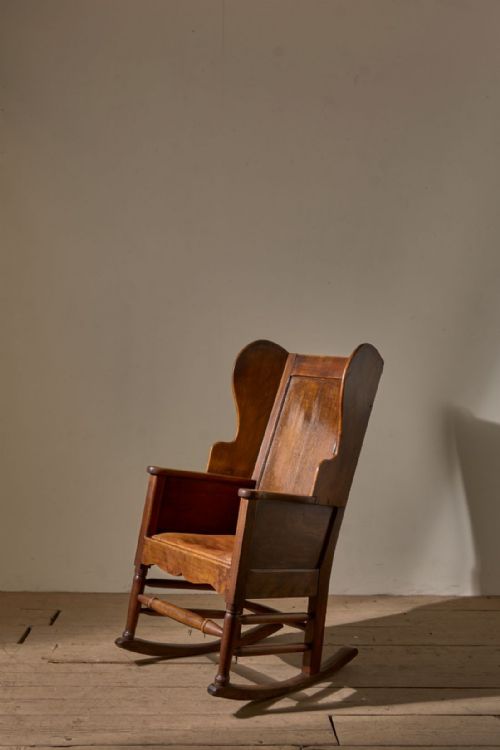
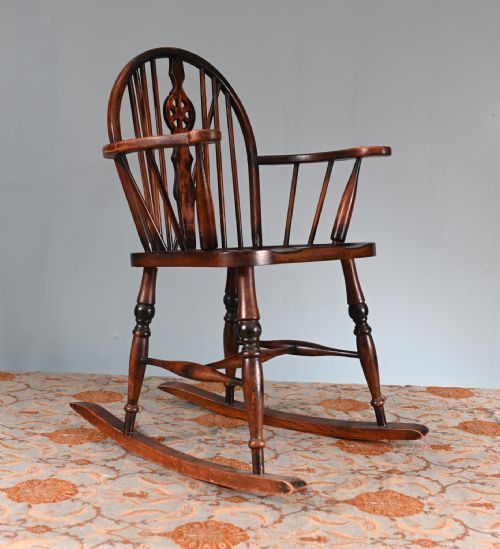


Brown Rocking Chair
A brown rocking chair brings motion and tactile warmth to a room, offering domestic seating crafted across centuries in varied woods.
Brown Rocking Chair
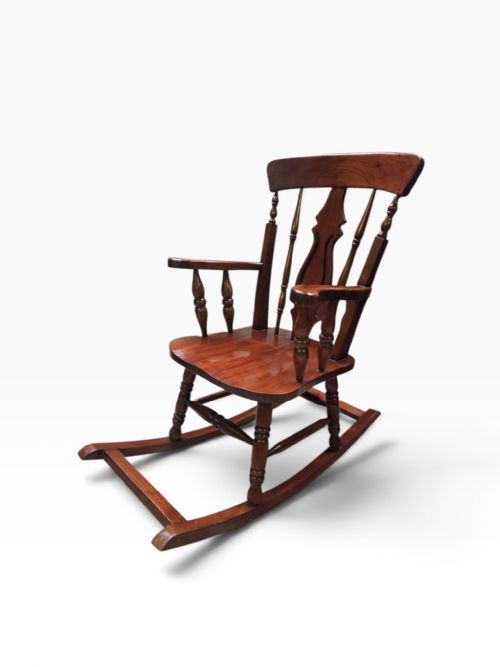
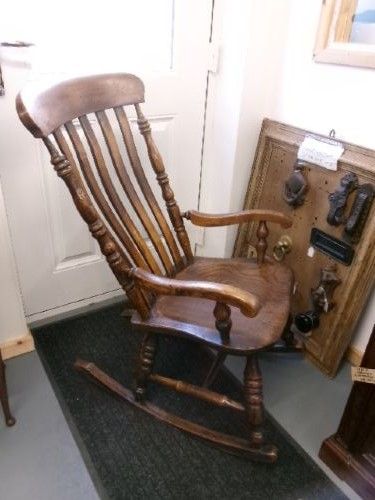
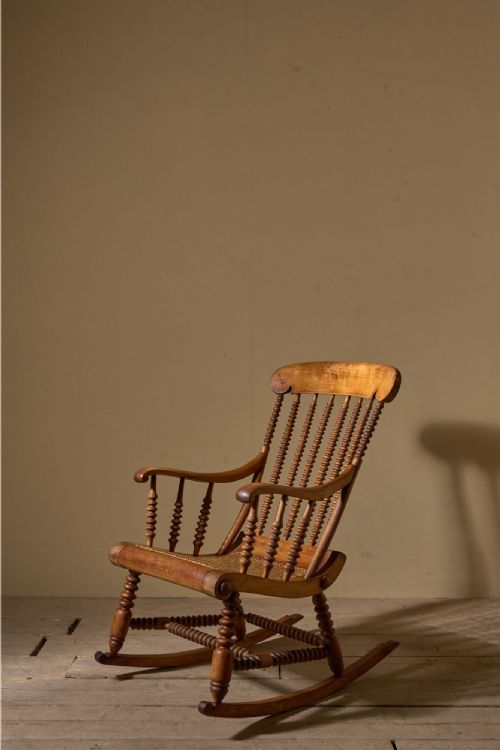
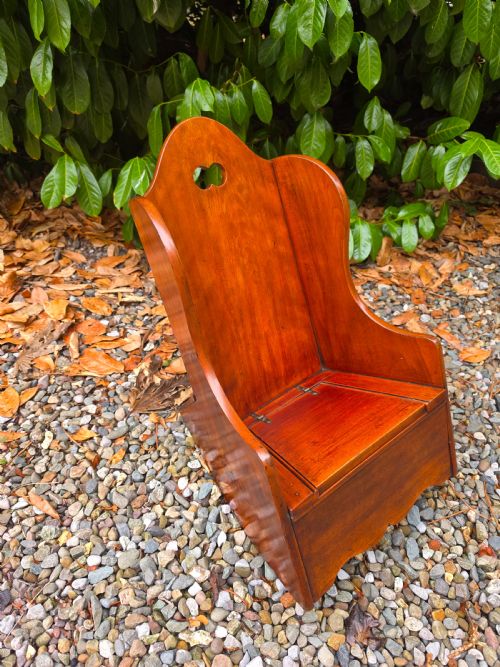
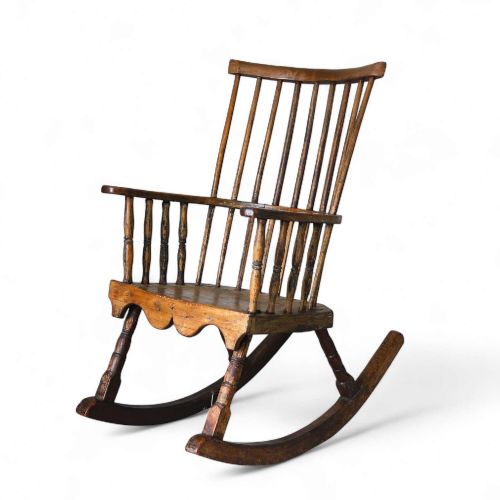
A brown rocking chair spans diverse regional workshops and formal parlours, taking the form of sturdy country windsors, bobbin-turned frames, and refined mahogany seating fitted to rocking rails. When searching for a brown rocking chair, buyers encounter everything from humble elm and ash vernacular pieces to polished Edwardian mahogany designs.
The selection ranges from full-sized fireside armchairs to small children's potty rockers and child-sized spindle backs. Victorian and Edwardian examples dominate the offerings, alongside earlier 18th century oak and fruitwood iterations.
Materials and Construction
Construction relies heavily on native hardwoods such as beech, elm, ash, and oak, often shaped into Windsor comb-backs, spindle backs, and steam-bent bentwood curves. Artisans utilised contrasting timbers for seats and spindles, combining sturdy woods with flexible elements to withstand the constant motion of the rocking action.
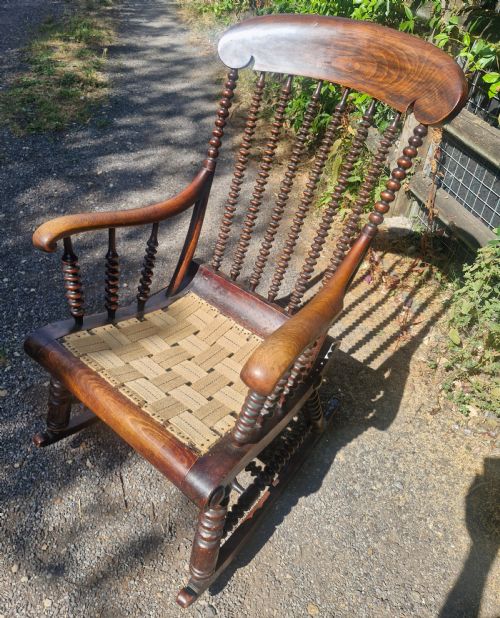
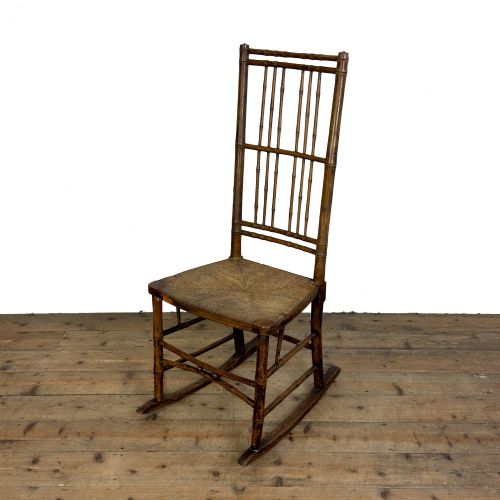
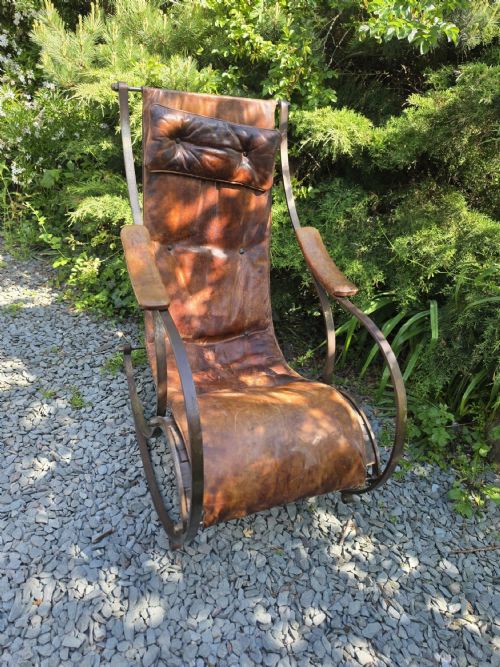
Upholstery and seating surfaces introduce texture through woven cane, moulded wooden panels, and supple leather panels secured with iron or brass fixings.
Brown Rocking Chair Retail Price Guide 2026
Typical asking prices for brown rocking chair among the pieces listed under this phrase on Sellingantiques today, from the lower quarter to the upper quarter. They describe what is for sale here now, not the wider market.
Several miniature child-sized and doll-scale rocking chairs appear among the full-sized armchairs, proving that Victorians took junior relaxation seriously.
Assessing Quality and Build
Quality rests upon the integrity of the timber joints, the balance of the rocker sweep, and the preservation of original surfaces rather than heavy modern restoration. Superior pieces demonstrate crisp turning in bobbin frames, tight spindle junctions, and honest patination across the wood.
Finer examples maintain structural stability without excessive replacement parts, ensuring the rocker curves remain balanced and true to their period of origin.
R W Wingfield·Thonet
The Brown Rocking Chair Glossary
- Windsor
- A chair built with a solid wooden saddle seat into which the legs and back spindles are directly joined. These chairs often feature bentwood bow backs for added lumbar support.
- Bobbin turned
- A method of woodturning that creates a series of rounded, spool-like shapes along the length of a chair leg or stile. This decorative technique appears frequently on 19th-century vernacular frames.
- Lambing chair
- A traditional high-backed armchair designed to shield the sitter from draughts, occasionally mounted on rockers. Early versions utilise solid oak or vernacular framing.
- Bentwood
- Wood softened through steaming and then bent into curved shapes, notably utilised by makers like Thonet. This technique allowed for sweeping, continuous frames without traditional joinery.
- Comb-back
- A Windsor chair variation where the vertical spindles extend upward to support a horizontal headrest piece resembling a traditional hair comb.
Brown Rocking Chair: Frequently Asked Questions
How do I identify a Victorian rocking chair?
Victorian rocking chairs typically display characteristic period turned woodwork, dark mahogany or walnut tones, and often incorporate cane or upholstered elements. Look for proportions and joinery typical of the later 19th century.
Makers of this era frequently produced nursing chairs and fireside models designed with lower seats and supportive spindle or upholstered backs.
Where should I place a rocking chair?
A rocking chair suits living rooms, bedrooms, and nurseries, providing a functional seat that requires adequate floor clearance behind the rockers. Positioning it away from tight corners ensures smooth movement.
Pairing the chair with a small side table creates a comfortable spot for reading or resting.
How do I care for antique wood?
Antique wooden rocking chairs require stable indoor humidity levels away from direct heat sources to prevent the timber from drying out or splitting. Gentle dusting with a dry cloth protects the surface patination.
Avoid harsh chemical polishes and periodically check the joints and rocker bases for stability.