

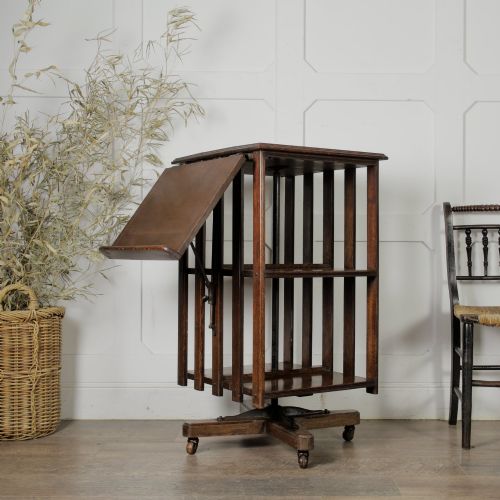
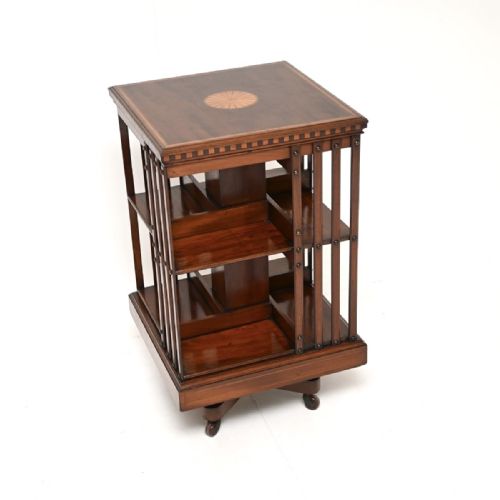
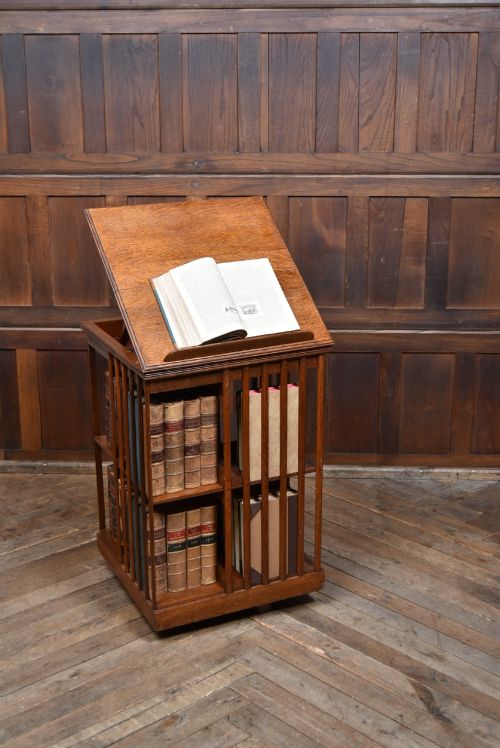
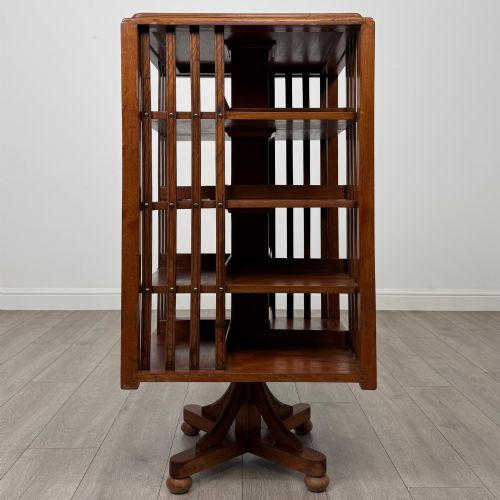

Brown Revolving Bookcase
A brown revolving bookcase turns smoothly to keep volumes within arm's reach, combining practical study storage with compact domestic elegance.
Brown Revolving Bookcase
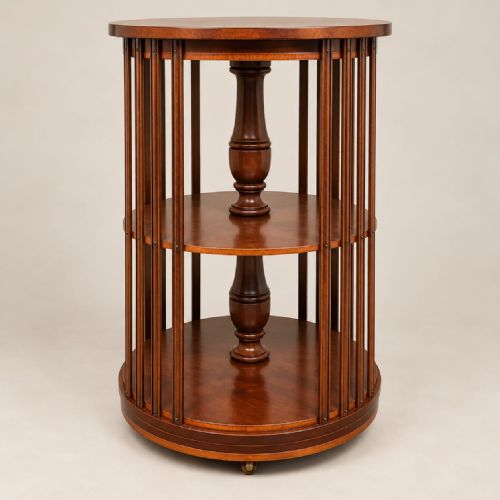
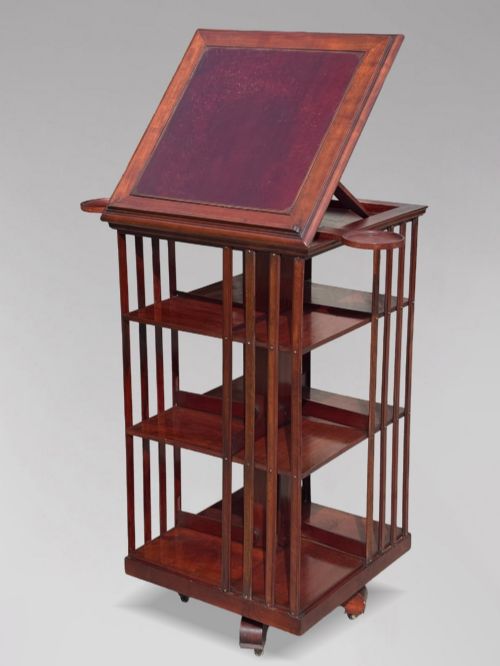
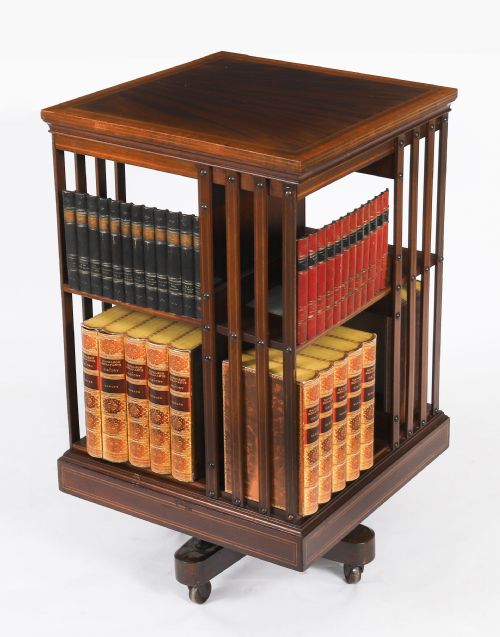
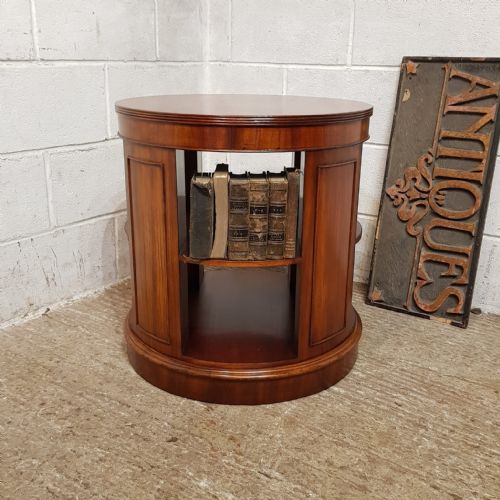
A brown revolving bookcase serves as an accessible tabletop or floor-standing unit designed to hold reference volumes and favourite reading within a compact footprint. These pieces pivot on central axes, allowing users to browse titles without moving from their seats.
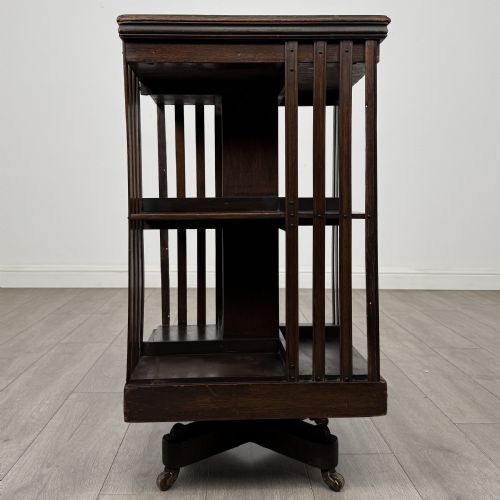
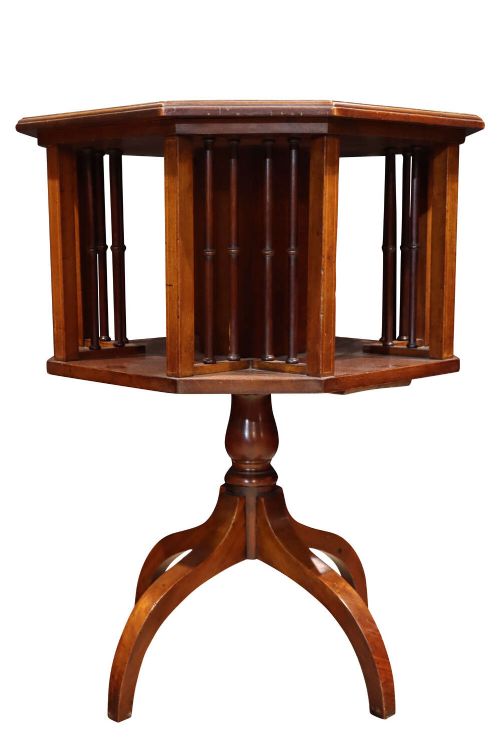
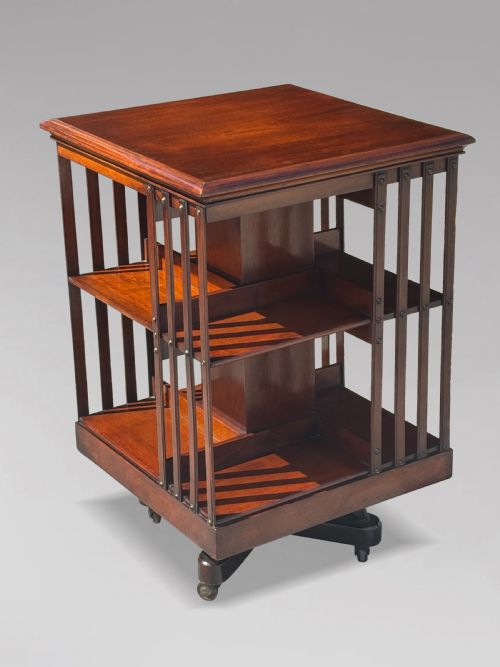
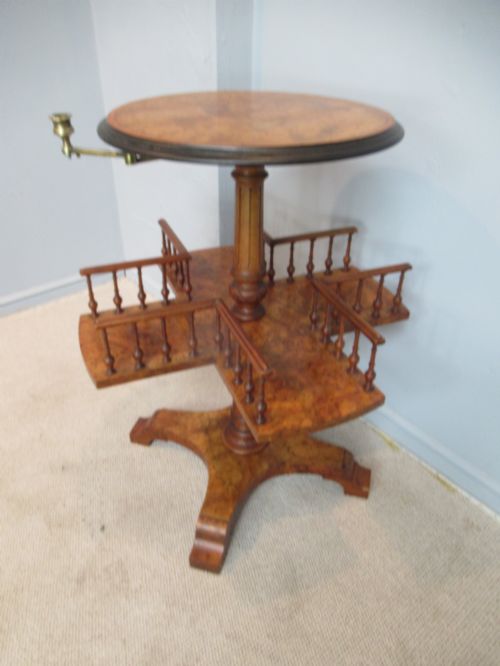
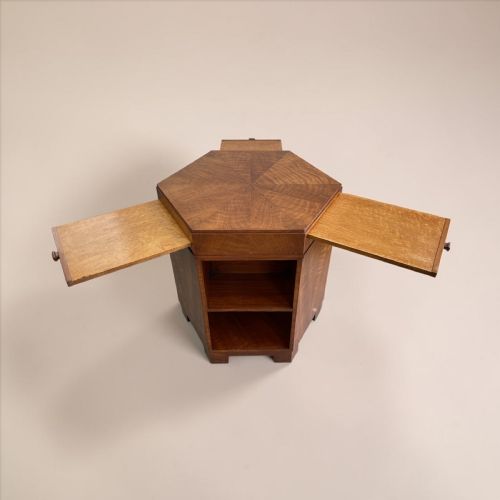
Most examples found here date from the Edwardian period and the nineteenth century, constructed in circular, square, or octagonal configurations. Standard floor models stand alongside smaller desktop versions and multi-tiered variations.
The dominant timbers are mahogany and oak, occasionally rendered in walnut, rosewood, or satinwood with inlaid details. Makers applied diverse styles ranging from plain utilitarian designs to Art Nouveau, Arts and Crafts, and Sheraton-inspired forms.
How they were made
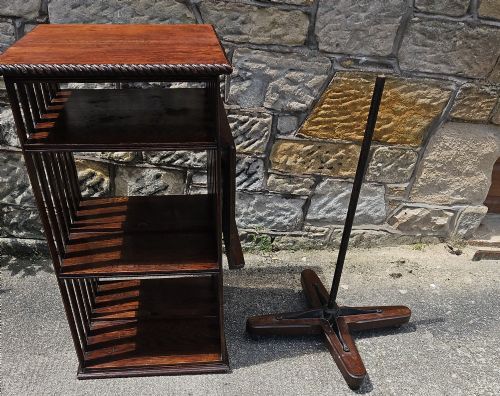
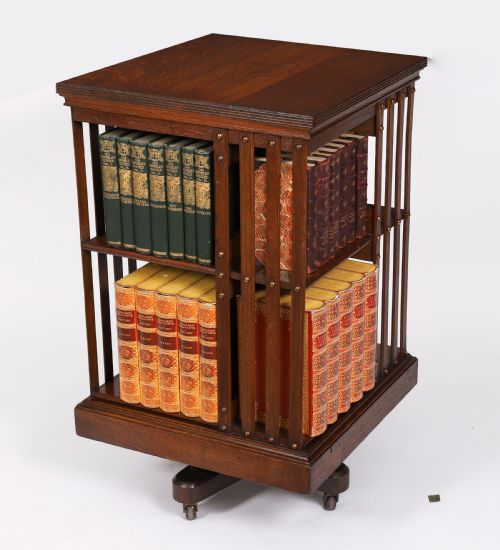
Cabinetmakers utilised solid timbers and selected veneers such as flame mahogany, burr walnut, and oak to build the bodies of these rotating stands. Joinery often incorporated slatted sides or panelled compartments to support heavy volumes without adding unnecessary weight.
The internal turning mechanism relies on cast iron, brass, and metal components hidden beneath the base to ensure smooth rotation. Makers balanced the load carefully so the revolving action remains stable even when loaded unevenly.
Brown Revolving Bookcase Retail Price Guide 2026
Typical asking prices for brown revolving bookcase among the pieces listed under this phrase on Sellingantiques today, from the lower quarter to the upper quarter. They describe what is for sale here now, not the wider market.
Listings span several eras, with Edwardian and nineteenth-century pieces forming the vast majority alongside occasional Art Deco and Art Nouveau examples.
What varies in quality
Quality rests in the precision of the hidden turning mechanism and the stability of the central pivot under a full load of heavy books. Finer examples maintain smooth rotation without side-to-side wobble, while simpler versions may develop stiffness or tilt over time.
Selection of timber grain and subtlety of inlay separate standard production pieces from finer cabinet work. Pieces featuring figured flame mahogany, burr walnut, or delicate satinwood stringing demonstrate greater workshop skill than plain utilitarian variants.
The Brown Revolving Bookcase Glossary
- Revolving bookcase
- A rotating storage unit mounted on a concealed central pivot designed to hold books upright on multiple sides. It permits easy access to volumes from a stationary seating position.
- Flame mahogany
- A timber veneer showing a distinctive flickering flame-like grain pattern prized by cabinetmakers. It appears frequently on the top surfaces of Edwardian and nineteenth-century examples.
- Slatted sides
- Open vertical wooden bars forming the partitions between shelves. This construction method lightens the visual bulk of large oak or mahogany stands.
- Book mill
- An alternative term for a revolving book stand or table designed for desktop or floor use. These units often feature compact multi-tiered storage for heavy reference books.
- Inlay
- Decorative wood or brass pieces set flush into the surface of the primary timber. Edwardian makers often utilised satinwood stringing to accent mahogany panels.
Brown Revolving Bookcase: Frequently Asked Questions
How do I care for the revolving mechanism?
Keep the internal metal or cast iron pivot free from dust and debris by occasionally clearing the underside base. Avoid applying heavy oils or lubricants that might attract dirt to the hidden bearing surfaces.
Ensure the weight of the books remains reasonably balanced across all sides to prevent uneven wear on the central pivot over years of daily rotation.
Can these hold heavy reference books?
Floor-standing models constructed from solid oak or mahogany handle heavy volumes, encyclopaedias, and bound journals with ease. The internal framework is built to bear substantial weight while maintaining stability during rotation.
Desktop or smaller table-top variants suit lighter novels, poetry, and current reading material rather than massive multi-volume sets.
Where did people use revolving bookcases?
These units found homes beside armchairs in studies, libraries, and drawing rooms where quick access to reference volumes mattered. Their compact footprint allowed them to sit in tight corners or beside desks.
Smaller desktop and table versions sat directly on writing desks or reading tables to keep dictionaries and journals close at hand.
How do I tell Edwardian pieces from nineteenth-century ones?
Edwardian examples frequently display lighter mahogany with delicate satinwood inlay, along with Sheraton-style influences or Arts and Crafts simplicity. Oak versions from this era often feature clean slatted sides.
Nineteenth-century pieces tend to show heavier proportions, deeper timber tones, and occasionally French or Victorian styling with simpler, sturdier architectural lines.