
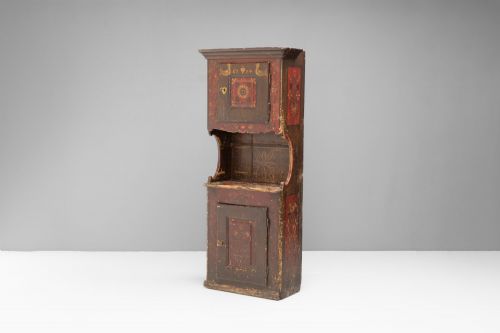


Brown Pine Dressers
These brown pine dressers bring honest utility and historic character into a room, offering robust storage built from timber that ages gracefully.
Brown Pine Dressers
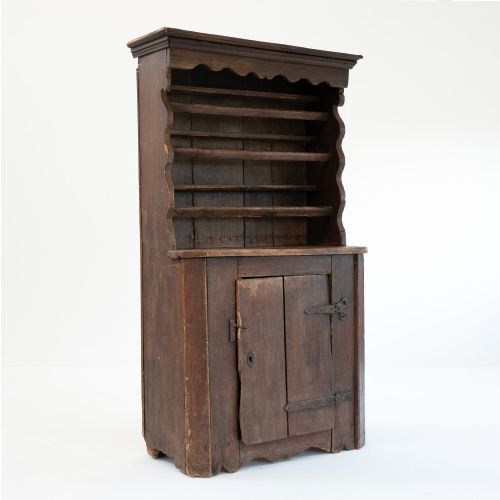
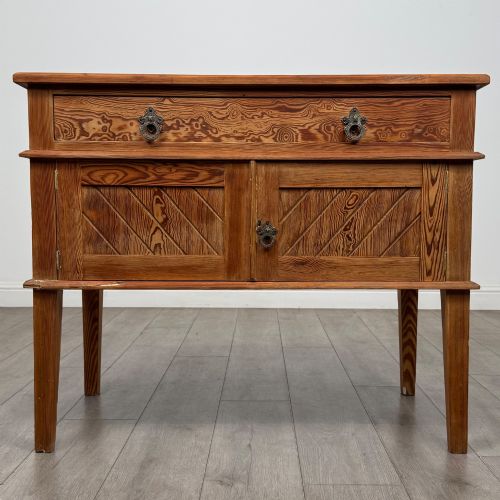
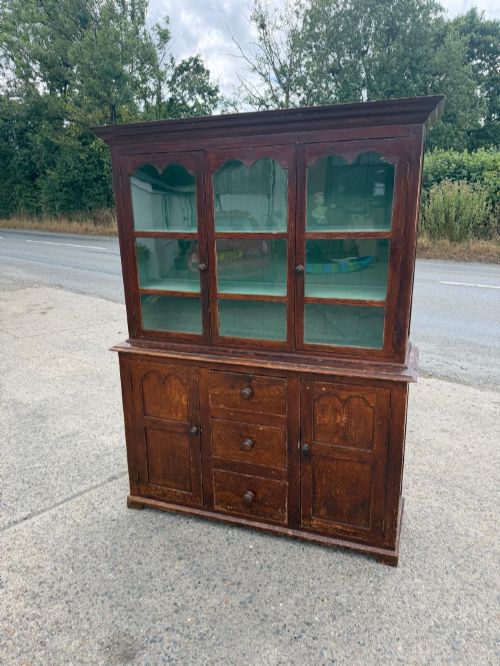
Brown pine dressers span the eighteenth and nineteenth centuries, taking forms such as kitchen dressers, dresser bases, and glazed top dressers. They emerge from regional traditions across England, Scotland, Ireland, Wales, Sweden, and Scandinavia, reflecting local vernacular needs.
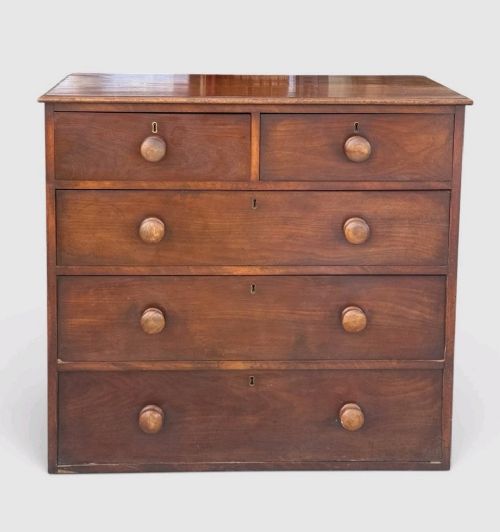
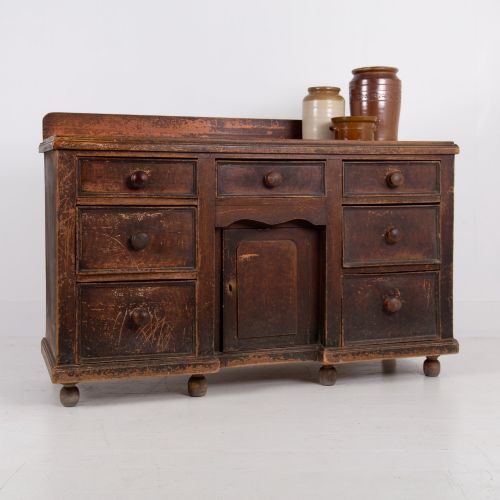
The pieces on this page lean heavily towards the Victorian era and the eighteenth century, alongside related storage like cupboards and chests of drawers. You will encounter kitchen dressers with open plate racks or enclosed storage alongside simpler painted and scumbled surfaces.
How they were made
Construction relies primarily on pine and pitch pine, occasionally paired with oak or iron hardware and brass details. Carpenters shaped these softwoods using hand tools, joining planks for practical everyday use in domestic kitchens and sculleries.
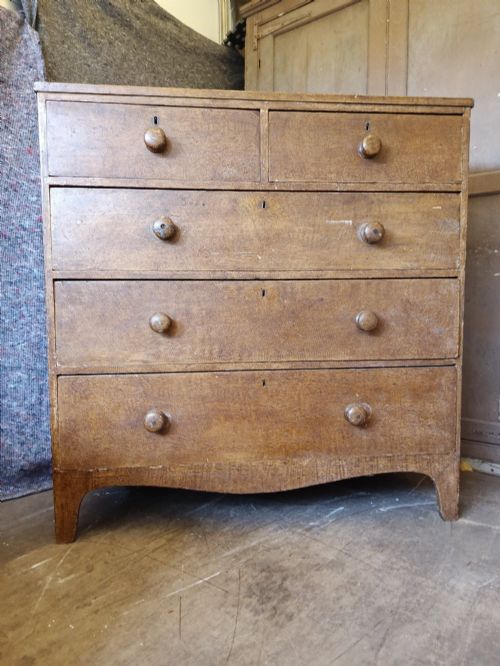
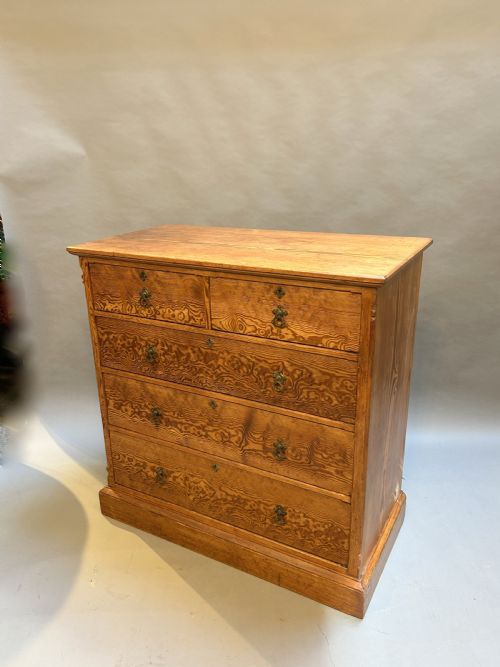
Surfaces frequently receive layers of paint, folk art decoration, or scumble glazes to imitate finer timbers or add colour. These finishes age naturally over decades of cleaning and daily wear.
Several cupboards still wear their original nineteenth-century paint, having outlasted numerous kitchen redesigns and generations of domestic life.
What varies in quality
Quality rests upon the preservation of original surfaces, such as early paint finishes or scumble work, rather than pristine perfection. Pieces retaining their original turned knobs, feet, and brass fittings hold distinct historical integrity.
Proportion and regional carpentry distinguish standard utility items from finer vernacular examples. The harmony of a dresser base with its upper rack, or the balance of Corinthian column details, separates ordinary storage from exceptional regional furniture.
The Brown Pine Dressers Glossary
- Scumble
- A decorative paint technique involving translucent glazes dragged or mottled over a base coat to simulate the grain of richer woods like oak or mahogany. It was widely employed in the nineteenth century to elevate ordinary pine furniture.
- Delft rack
- An open set of wall-mounted or dresser-integrated shelves designed to display ceramic plates and platters upright. These racks formed a central feature of traditional country kitchens.
- Pitch pine
- A dense, resinous softwood sourced mainly from North America and utilised heavily during the Victorian period. Its prominent grain pattern and durability suited hard-wearing furniture.
- Welsh dresser
- A traditional kitchen storage unit combining base cupboards or drawers with an upper plate rack. Examples from regions like Talwrn display distinct local joinery characteristics.
- Housekeeper cupboard
- A large storage piece traditionally used in manor houses for linens, dry goods, and kitchen equipment. These substantial cupboards feature sturdy panelled doors and internal shelving.
Brown Pine Dressers: Frequently Asked Questions
What is a scumbled pine dresser?
A scumbled pine dresser is a piece finished with a translucent glaze layered over paint to imitate figured timber grain. This decorative method was popular in the nineteenth century.
Such finishes give the pine a warmer, textured appearance while protecting the softwood beneath.
How do I care for antique pine?
Antique pine benefits from a stable indoor environment away from direct heat sources and strong sunlight. Regular dusting with a soft cloth maintains the surface.
Apply occasional natural wax feeds if the timber appears dry, avoiding modern silicone polishes that damage historic finishes.
Are these dressers English or Scottish?
The listings include pieces from English, Scottish, Irish, Welsh, and Scandinavian workshops. Regional differences appear in the moulding profiles, proportions, and painted decorations.
Scottish and Irish examples often display distinct vernacular traits that set them apart from standard English cabinet work.
What is the difference between a dresser and a dresser base?
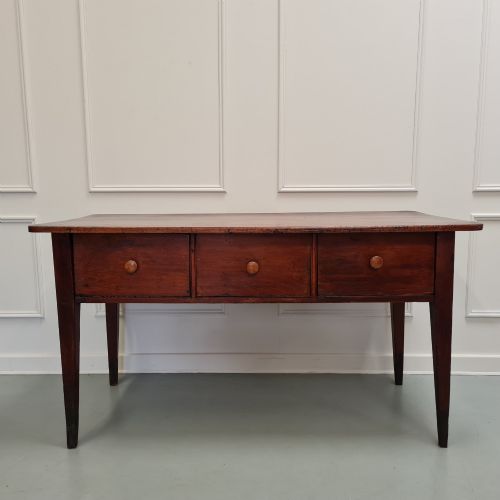
A complete dresser incorporates both a lower storage cabinet or base and an upper shelving rack for plates. A dresser base consists solely of the lower section with drawers and cupboards.
Dresser bases function well as sideboards or serving tables where vertical space is limited.