

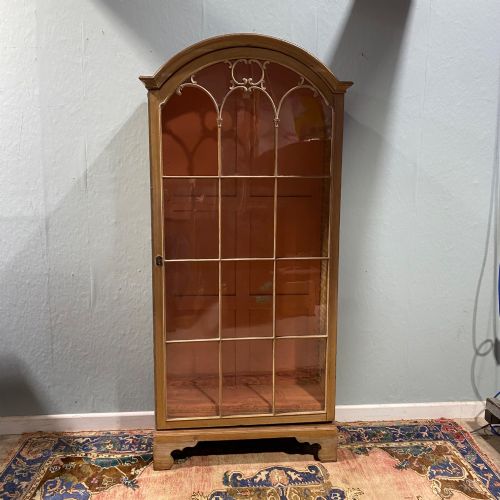
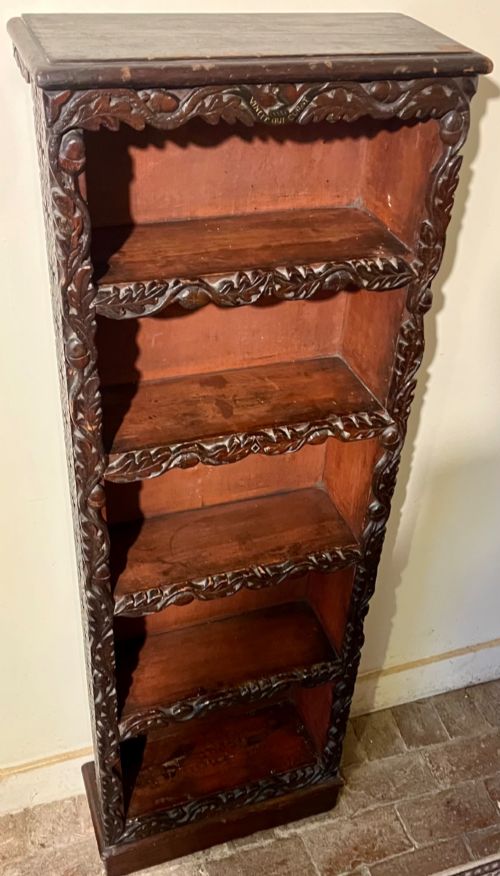
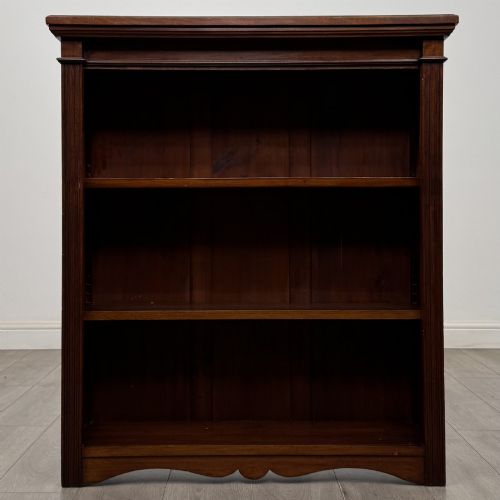
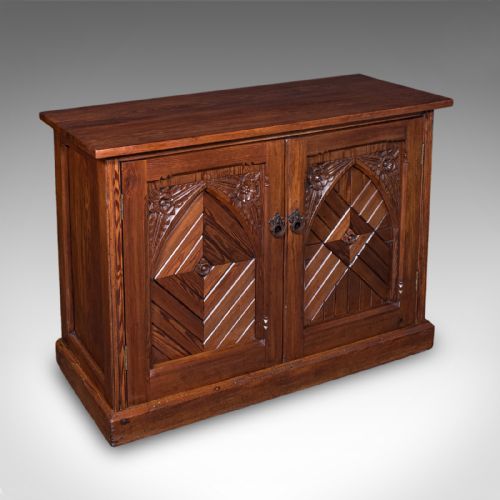
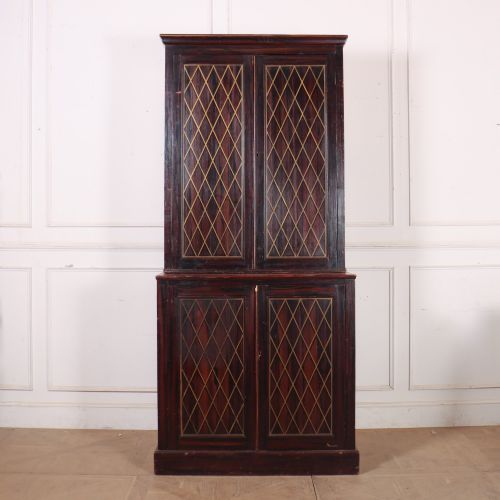


Brown Pine Bookcase
A brown pine bookcase brings honest utility and warm timber grain into a room, offering sturdy shelving for a growing library.
Brown Pine Bookcase
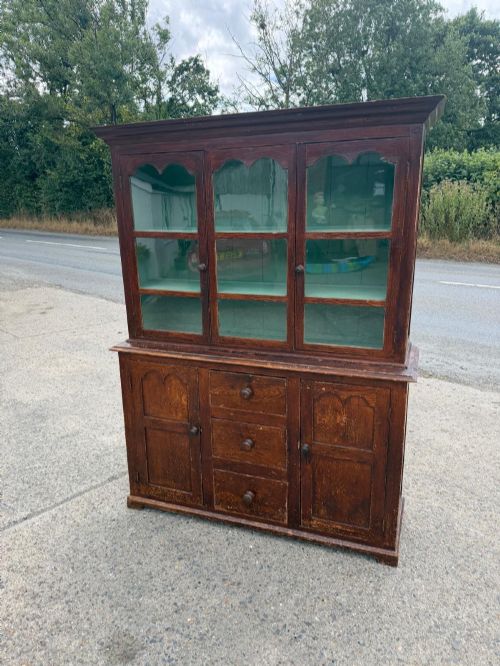
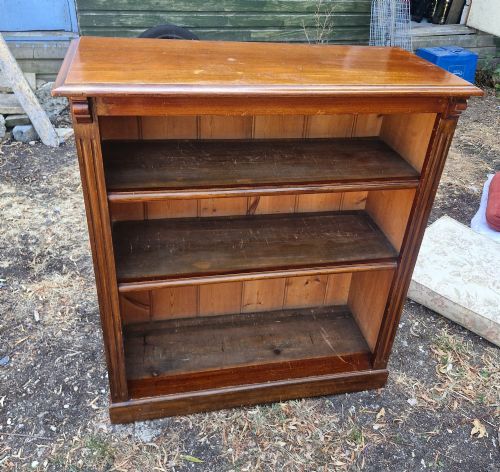
A brown pine bookcase serves as a practical storage solution, frequently appearing in forms ranging from open front shelving units to glazed top dressers and cabinet bookcases. These pieces span the Victorian era, the nineteenth century, and early twentieth century periods, reflecting vernacular domestic and institutional use.
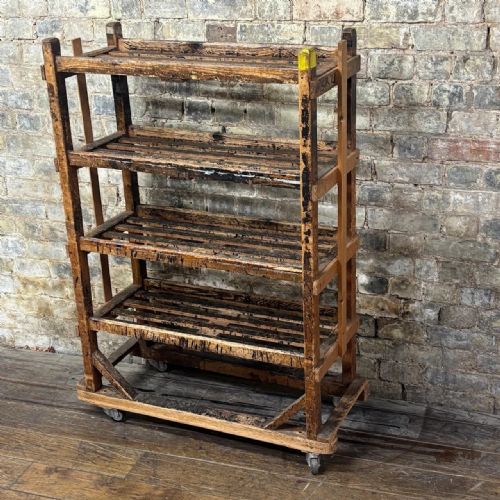
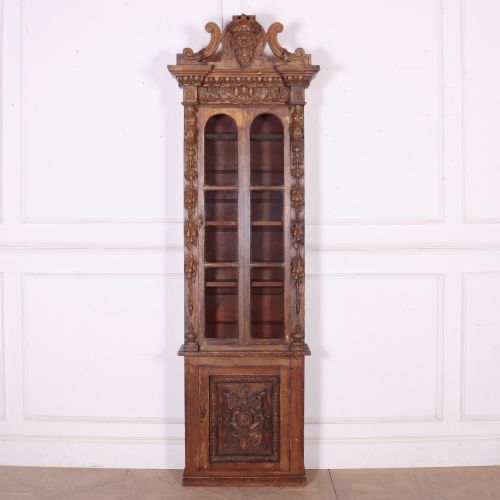
Buyers encounter variations including Gothic Revival cabinets, rustic country pieces, and industrial wooden trolleys alongside standard open bookcases. The timber surface ranges from natural deal wood and stained finishes to painted or scrumbled treatments.
Originating primarily from British workshops, these utilitarian items combine functional shelving with traditional cabinetmaking. The scale varies from small chimney cupboards to large two-part arrangements designed for substantial book collections.
Materials and construction
Construction relies heavily on pine, deal wood, and pitch pine, occasionally incorporating oak for structural integrity. Joinery techniques connect solid timber boards to form sturdy carcases, fixed or adjustable shelves, and panelled doors.
Hardware typically consists of brass and iron fittings, including hinges, latches, and pulls that secure doors and drawers. Surface finishes involve applied paint, scrumbled effects, or clear varnishes that protect the wood while revealing natural grain patterns.
Brown Pine Bookcase Retail Price Guide 2026
Typical asking prices for brown pine bookcase among the pieces listed under this phrase on Sellingantiques today, from the lower quarter to the upper quarter. They describe what is for sale here now, not the wider market.
Assessing quality in pine furniture
Quality reveals itself in the selection of timber and the precision of the construction, where tight joinery and well-fitted backboards distinguish better pieces from utilitarian workshop builds. The retention of original surface treatments, whether aged paint or natural patinated pine, significantly influences the integrity of the piece.
Proportions and decorative details, such as carved mouldings or Gothic Revival architectural elements, separate simple vernacular items from more ambitious cabinet work. Hardware originality and the smoothness of door and drawer operation further indicate the care taken in the original manufacture.
The Brown Pine Bookcase Glossary
- Deal wood
- A term traditionally used for softwood timber derived from pine or fir trees. It forms the primary structural material for much nineteenth-century vernacular furniture.
- Scrumbled paint
- A decorative technique involving layers of translucent glaze applied over a base coat to imitate the appearance of finer hardwoods. It appears on various nineteenth-century storage pieces.
- Gothic Revival
- A nineteenth-century stylistic movement drawing on medieval architectural motifs such as pointed arches and heavy tracery. This style influences the ornamentation on select bookcases and cabinets.
- Glazed top
- A cabinet configuration featuring glass-paned upper doors that protect books while keeping them visible. This format is common on Victorian dresser and bookcase combinations.
- Pitch pine
- A dense, resinous softwood variety noted for its pronounced grain pattern and durability. It was frequently utilised in British furniture production during the late Victorian and Edwardian periods.
Brown Pine Bookcase: Frequently Asked Questions
How do I date a pine bookcase?
Dating relies on examining construction methods, tool marks, and overall style characteristics relative to Victorian and early twentieth-century conventions. Machine-sawn timber and simpler joinery typically point towards the later periods.
Hardware styles, backboard construction, and existing paint layers also provide reliable clues for establishing the approximate decade of manufacture.
Are pine bookcases sturdy enough for heavy books?
Solid pine and pitch pine offer substantial structural strength capable of supporting significant weight when the shelves are properly supported. Fixed shelving generally provides greater load-bearing capacity than adjustable systems.
Evaluating the thickness of the shelves and the condition of the internal supports helps determine suitability for heavy volumes.
What is the difference between deal wood and pine?
Deal is simply a historical term for softwood timber, specifically pine or fir, commonly utilised by British carpenters and cabinetmakers. Furniture described as deal wood shares the same botanical origin as standard pine pieces.
Both materials yield durable domestic storage when seasoned and constructed correctly.
How should I care for a painted pine surface?
Painted and scrumbled surfaces require gentle cleaning with a dry or barely damp cloth to preserve the historic finish. Avoiding harsh chemical cleaners prevents stripping the aged layers.
Maintaining stable room humidity protects the underlying timber from shrinking or expanding, which can otherwise cause paint to crack.