

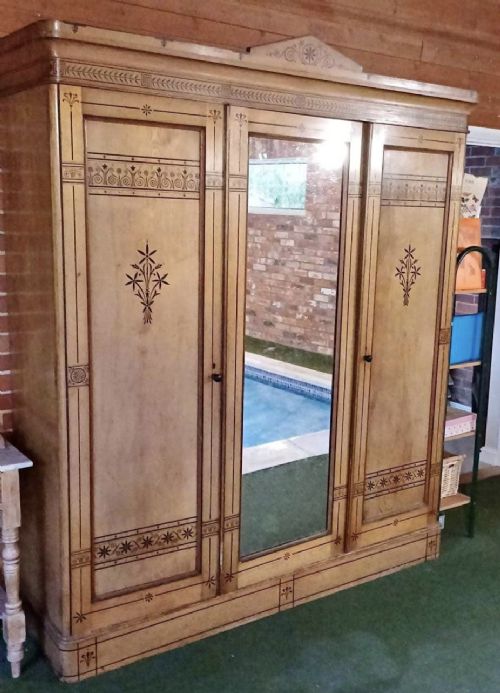
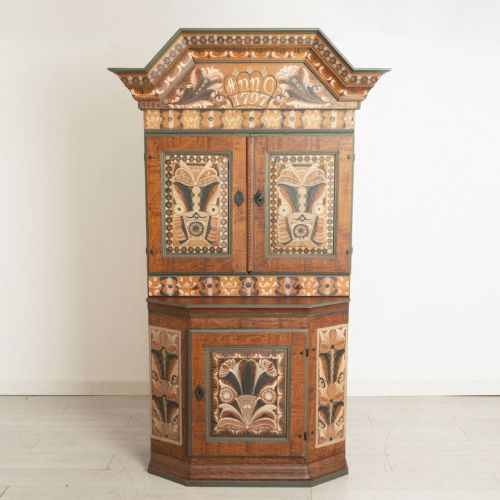
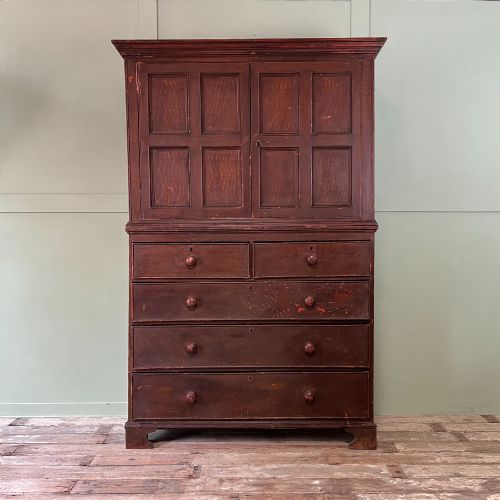
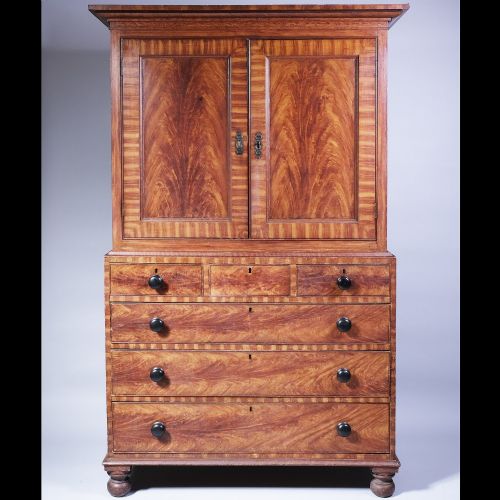
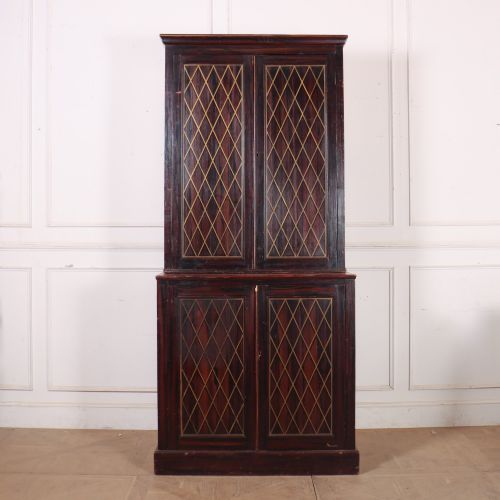


Brown Painted Armoire
A brown painted armoire brings rustic charm and practical storage into a room, offering authentic period character through aged surfaces and traditional timber construction.
Brown Painted Armoire
When you search for a brown painted armoire, you encounter substantial storage furniture designed to hold garments, linen, and household goods. These pieces bridge the gap between utility and decorative folk art, serving as focal points in bedrooms and living spaces.
The items seen on this page span from the eighteenth century to the mid twentieth century, drawing on diverse regional traditions including Scandinavian folk art, Irish vernacular, and Italian country styles. Most examples are constructed from pine or ash, finished with historical or later painted coats that display varied patination.
Forms range from single door skeleton cupboards and housekeeper cupboards to marriage cupboards and linen presses. Each variation reflects the specific storage needs of past rural households, adapted through regional woodworking and finishing customs.
How they were made
Makers relied primarily on native timbers such as pine and ash, selected for their availability and structural stability in large storage carcasses. Panels were frequently joined using traditional methods to accommodate wood movement over decades of seasonal temperature shifts.
Surfaces were prepared and finished using traditional techniques, including scumble painting, polychrome work, hand painting, and mineral paint applications. Iron and brass hardware, such as hinges and latches, were forged or cast by hand to secure heavy doors.
Brown Painted Armoire Retail Price Guide 2026
Typical asking prices for brown painted armoire among the pieces listed under this phrase on Sellingantiques today, from the lower quarter to the upper quarter. They describe what is for sale here now, not the wider market.
The selection includes pieces spanning the eighteenth century through the Victorian era and into 1930s institutional designs.
What varies in quality
Quality rests heavily on the integrity of the timber frame and the survival of the original or early painted surface. Pieces that retain their authentic finish alongside working iron or brass fittings demonstrate superior historical value.
Construction details differentiate standard utility furniture from finer folk art pieces. Well executed joinery and balanced proportions separate utilitarian workshop items from more ambitious regional creations.
The Brown Painted Armoire Glossary
- Scumble paint
- A decorative finishing technique where a translucent top glaze is manipulated with combs, brushes, or rags to imitate the grain of more expensive woods or to create textured patterns.
- Marriage cupboard
- A traditional celebratory piece of furniture often commissioned or gifted for a wedding, frequently personalised with specific dates, initials, or symbolic painted motifs.
- Linen press
- A tall storage piece combining sliding trays or shelves in the upper section with deep drawers below, originally utilised for storing household textiles.
- Skeleton cupboard
- A specialised cabinet construction featuring open or slatted frame doors, historically used for specialised ventilation of contents.
- Polychrome
- The practice of decorating furniture surfaces in multiple colours, common in folk art traditions to create vibrant pictorial or geometric designs.
Brown Painted Armoire: Frequently Asked Questions
What is a brown painted armoire?
A brown painted armoire is a large freestanding storage cabinet finished in historical or decorative brown paint. These items provide generous interior space while adding distinct historical character to an interior.
Originating from various European traditions, they combine practical shelving or hanging capacity with hand-applied surface decoration. Their physical presence makes them suitable for modern bedrooms, hallways, or living spaces needing substantial storage.
How were these cupboards used historically?
These pieces served as the primary storage units for households before fitted wardrobes became common. Families utilised them to store folded linen, garments, and dry goods.
Different regional forms accommodated specific domestic chores, from housing household ledgers in a housekeeper's cupboard to preserving ceremonial textiles in marriage presses.
How do I tell different periods apart?
Differentiating periods relies on observing construction methods, timber selection, and surface finish styles. Eighteenth-century examples often display simpler, heavier joinery and distinct folk art paint applications.
Nineteenth and twentieth-century variations show shifts towards industrial or institutional designs, alongside different formulations of mineral or scumble paint finishes.
How do I live with antique painted furniture?
Living with these pieces involves placing them away from direct heat sources and extreme humidity fluctuations to protect the timber and paint layers. Regular dusting with a dry cloth keeps the surface secure.
Allowing adequate space around the cabinet highlights its proportions while ensuring functional door clearance in daily use.