




Brown Oak Wall Rack
A brown oak wall rack brings practical timber warmth to a room, offering sturdy shelves and hooks shaped by centuries of daily use.
Brown Oak Wall Rack
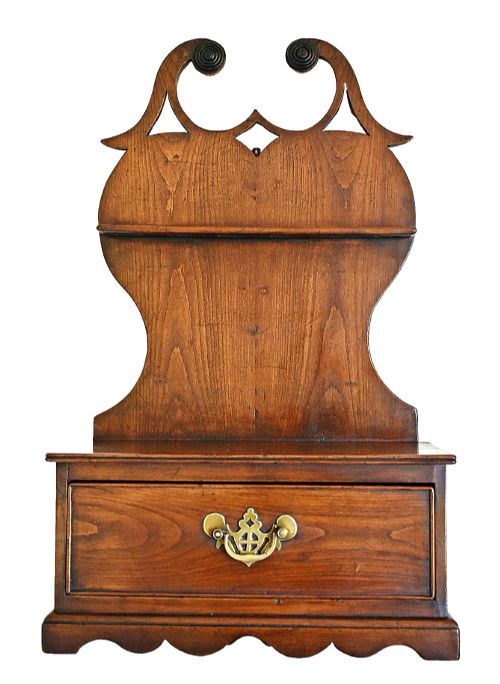
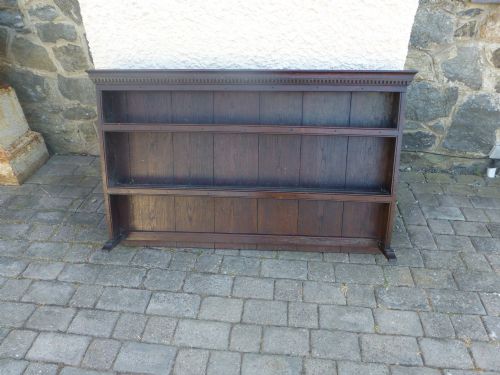
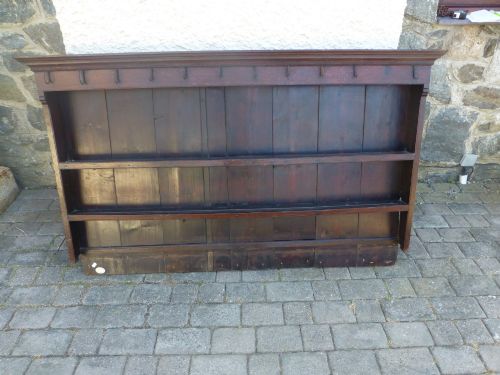
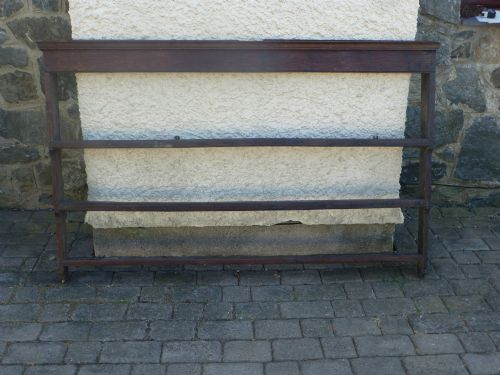
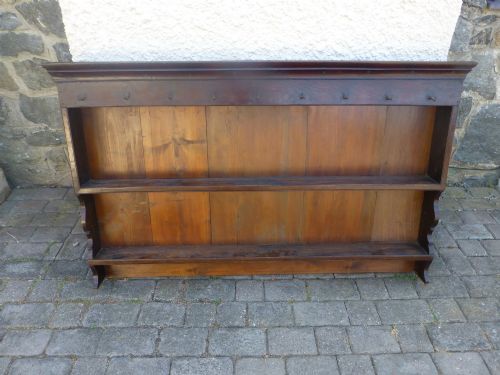
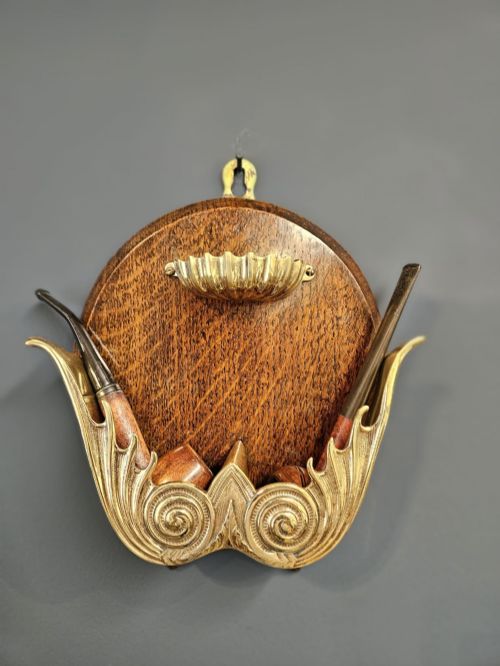
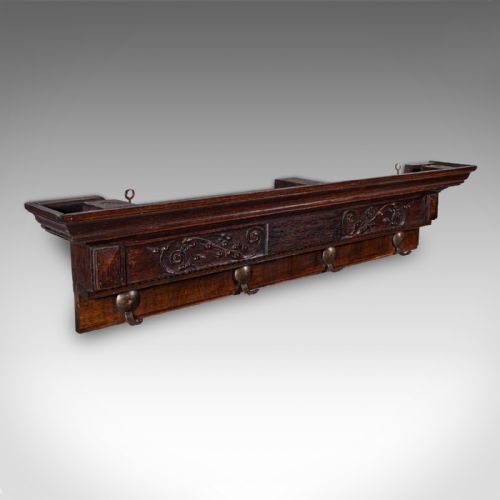
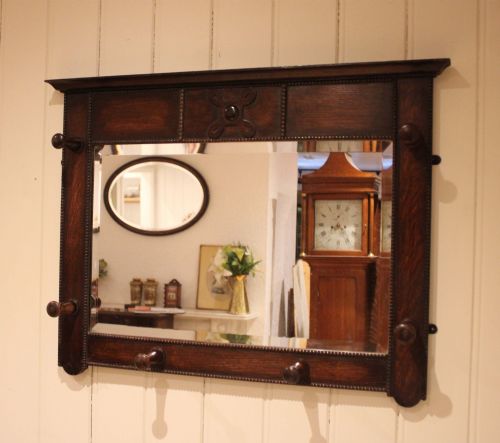
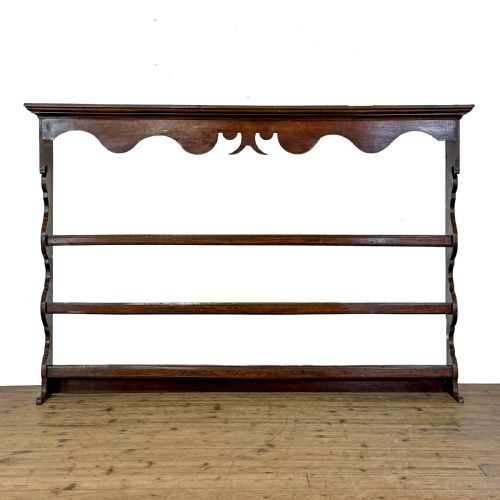
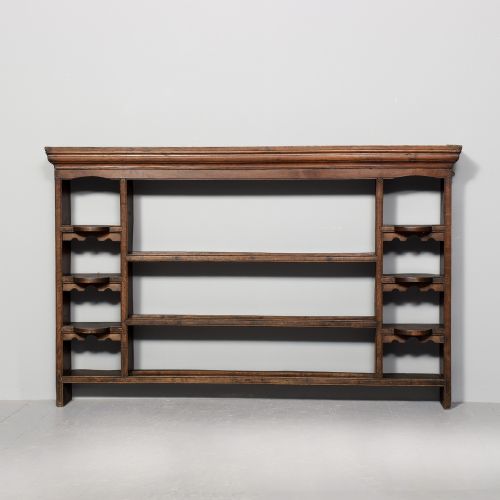
When you search for a brown oak wall rack, you encounter a selection of hanging furniture designed to hold plates, books, coats, and pipes. The most common forms on this page are 18th century delft racks and wall shelves, alongside Victorian and Edwardian coat racks and hall mirrors.
The periods span the 17th, 18th, and 19th centuries, stretching into the early 20th century with items from the Edwardian era and the 1920s and 1930s. Styles range from Georgian and Victorian country house to Arts and Crafts and French hunting lodge.
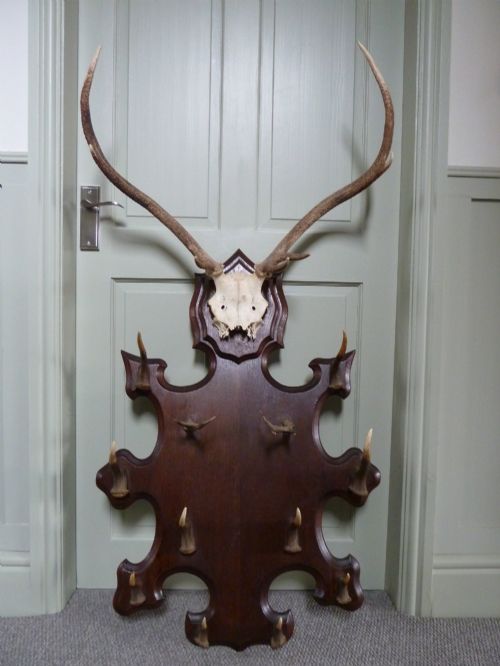
Makers and origins cross English and continental traditions, encompassing utilitarian plate racks and decorative hall furniture incorporating stag horn and brass.
What varies in quality
The distinction between standard utility items and finer pieces rests on the depth of the timber's grain, the crispness of architectural details such as Corinthian columns, and the integrity of original construction.
Workmanship shows in the dovetailing of shelves, the turning of pegs, and the survival of original brass or iron hardware rather than later replacements.
Brown Oak Wall Rack Retail Price Guide 2026
Typical asking prices for brown oak wall rack among the pieces listed under this phrase on Sellingantiques today, from the lower quarter to the upper quarter. They describe what is for sale here now, not the wider market.
A taxidermy deer foot occasionally doubles as a sturdy coat hook in the continental hunting lodge selections.
The Brown Oak Wall Rack Glossary
- Delft rack
- A wooden wall-mounted shelf specifically designed for displaying ceramic plates and platters upright. These structures often feature grooved plate rails and front retaining bars.
- Delft
- Tin-glazed earthenware popular for domestic display on wooden racks during the eighteenth century. The name derives from the Dutch town famous for its production.
- Corinthian column
- An ornate classical column capital decorated with acanthus leaves, occasionally found on the pilasters of eighteenth century provincial furniture. It represents a neoclassical influence on country pieces.
- Stag horn
- Antler material utilised for decorative and functional coat hooks on Victorian and continental hall stands. This organic medium reflects a taste for rural and sporting aesthetics.
Brown Oak Wall Rack: Frequently Asked Questions
How do I hang a heavy oak wall rack safely?
Heavy oak racks require direct fixing into timber wall studs or solid masonry using appropriate steel screws and wall anchors. Given the dense weight of old oak, relying on simple plasterboard plugs risks structural failure.
Distributing the weight across multiple fixing points ensures the piece remains secure when loaded with plates or heavy coats.
What is the difference between a plate rack and a coat rack?
Plate racks feature narrow sloped shelves with plate grooves designed to display ceramics upright against a wall. Coat racks utilise wooden pegs, iron hooks, or brass fittings to suspend garments.
Some hybrid pieces combine shelving with hooks for hats and keys beneath the main display tier.
How do I date an 18th century oak rack?
Dating relies on observing construction methods, timber movement, tool marks on the reverse boards, and stylistic cues such as provincial mouldings. Eighteenth century examples often show hand- cut dovetails and pegged joints.
Hardware styles, including forged iron hooks, also provide chronological markers for the period.
How do I care for antique oak furniture?
Maintain old oak by applying traditional beeswax sparingly and buffing with a soft cloth to nourish the dry timber. Avoid modern silicone sprays that build up and attract dust over time.
Keep wooden racks away from direct heat sources and drastic humidity shifts to prevent timber splitting.