


Brown Oak Office Chair
A brown oak office chair combines sturdy nineteenth and early twentieth-century construction with practical seating for a working desk.
Brown Oak Office Chair
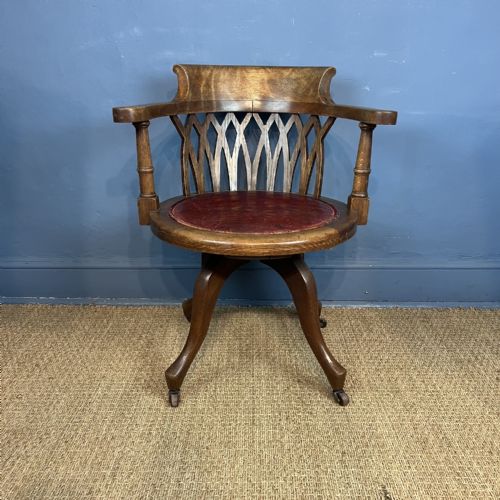
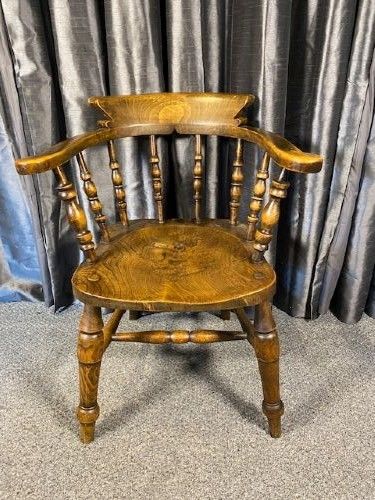
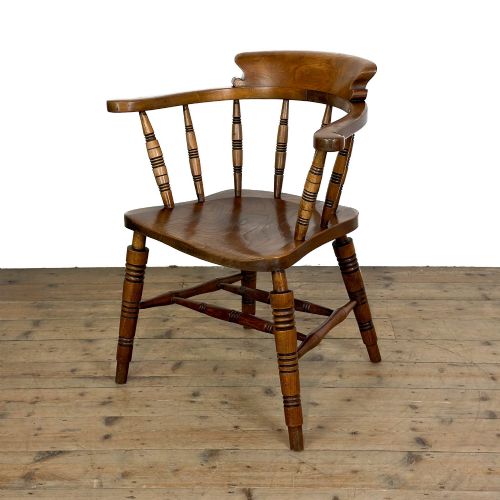
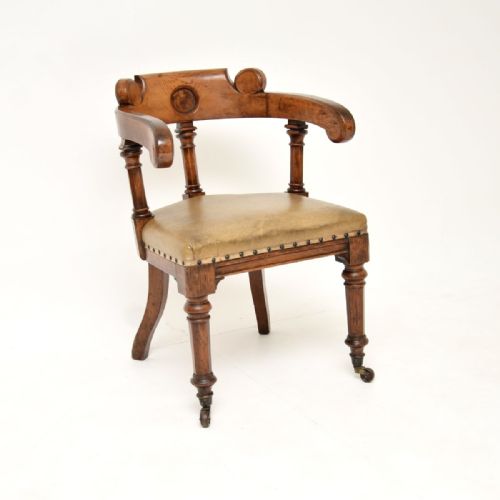
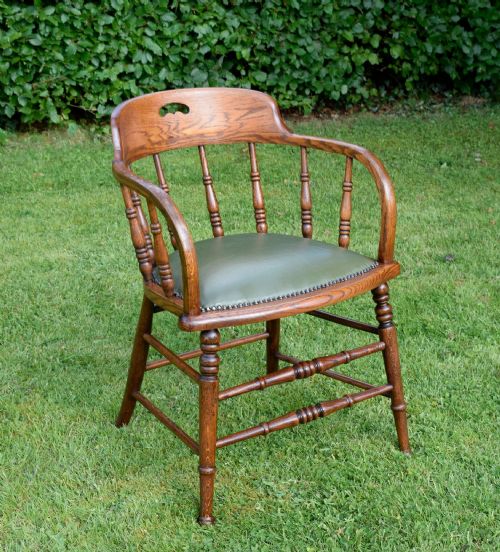
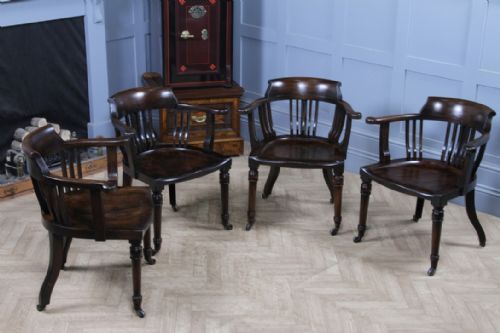
A brown oak office chair serves as a functional workspace seat drawing on Victorian and Edwardian design traditions. You will frequently encounter revolving desk chairs, captain's chairs, and smoker's bow armchairs originating from the nineteenth and early twentieth centuries.
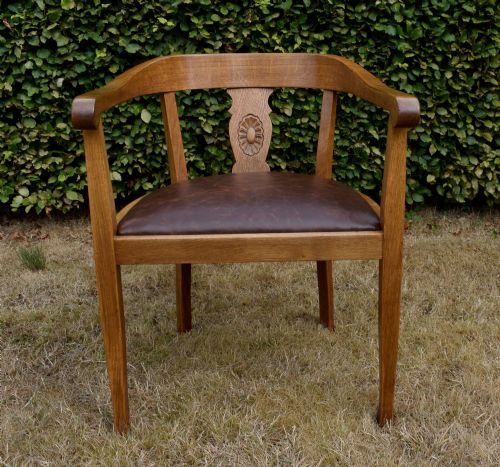
The selection ranges from simple wooden spindle-back designs to heavily carved Gothic Revival armchairs and adjustable swivel seats fitted with brown leather upholstery. These seating forms developed to provide posture support in studies, offices, and maritime settings.
Makers utilised durable hardwoods such as oak, elm, and beech, often combining them with cast iron and brass mechanisms for movement. The resulting pieces reflect the industrial and domestic needs of the Victorian period and subsequent Edwardian era.
How they were made
Carpenters constructed these seats using solid oak frames, frequently incorporating steam-bent wood for curved armrests and back rails. Elm and beech frequently appear in structural components, particularly in Windsor and captain's chair variations.
Upholstered versions integrate supple brown or tan leather fixed with brass studs over supportive padding. Mechanical swivel models rely on cast iron and steel spindles, enabling height adjustment and rotation for daily office use.
Listings span the Victorian, Edwardian, and early twentieth-century periods, showcasing oak, elm, leather, and cast iron.
What varies in quality
The depth of carving and the sophistication of the timber grain distinguish standard workshop output from exceptional commissions. Heavily carved Gothic Revival details or attributed maker pieces demonstrate superior joinery and sculptural ambition.
The integrity of the revolving mechanism and the original condition of the swivel or tilting hardware dictate mechanical quality. Examples retaining genuine leather upholstery and working cast iron adjustable screws command greater interest than heavily altered pieces.
Bruce James Talbert·Gillows·Kendrick and Jefferson
The Brown Oak Office Chair Glossary
- Smoker's bow
- A low-backed Windsor armchair featuring a rounded spindle rail, commonly utilised as a desk seat.
- Captain's chair
- A sturdy wooden armchair with a low, curved back rail supported by numerous spindles, designed for stability.
- Revolving desk chair
- An office seat mounted on a central pivot column, allowing the user to turn through a full circle.
- Gothic Revival
- An architectural and decorative style drawing inspiration from medieval forms, characterised by pointed arches and heavy carving.
- Bergere
- An enclosed upholstered armchair with woven cane panels on the back and sides.
Brown Oak Office Chair: Frequently Asked Questions
Are these chairs comfortable for daily desk work?
Many designs feature contoured wooden seats or leather upholstery shaped to support the lower back during long periods of sitting.
Revolving and adjustable models allow users to modify the height and orientation to suit modern desk configurations.
How do I identify a Victorian example from an Edwardian one?
Victorian pieces often display heavier carving, darker finishes, and distinct stylistic revivals such as Gothic or Jacobean influences.
Edwardian alternatives tend to show lighter construction, simpler lines, and more widespread use of mechanical swivel hardware.
Did these chairs always have leather seats?
Many office chairs were manufactured with solid carved wooden seats designed for durability in commercial environments.
Upholstered versions featuring brown or tan leather hide became prevalent in libraries, private studies, and executive offices.
Can I adjust the height on antique swivel models?
Most antique revolving chairs utilise a threaded central iron spindle that raises or lowers the seat when turned.
Some Edwardian designs incorporate metal springs and tilting mechanisms to assist with movement.