



Brown Oak Box Lock
These pieces for a brown oak box lock bring together sturdy timber and working ironwork, offering a secure and handsome spot for treasured letters or small belongings.
Brown Oak Box Lock
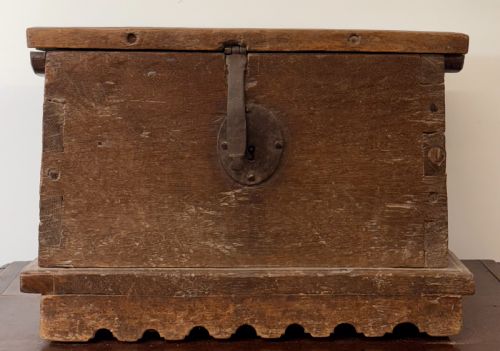
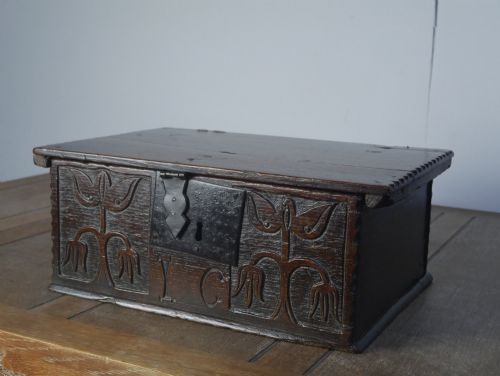
A brown oak box lock connects sturdy timber storage with functional metal security, appearing on everything from early coffer lids to tea caddies and stationery cabinets. These items span periods from the sixteenth century through the Georgian and Victorian eras, reflecting centuries of practical craftsmanship.
The most direct examples of this mechanism sit within Georgian and Victorian boxes, where working locks and keys operate alongside rich oak grain. Buyers encounter these fittings mounted to small tabletop boxes, letter racks, and larger coffers made of plain or pollard oak.
Materials and construction
Makers utilised native oak alongside pollard oak for the body of the boxes and chests, shaping the timber to highlight dense grain patterns and rich natural colour. Iron and brass formed the durable mechanisms and exterior plates necessary to secure the lids and doors safely.
Metal components were hand-forged or cast to fit individual boxes, often accompanied by matching iron keys and keeps. Cabinetmakers joined the wooden panels with traditional joinery, housing the metal box locks flush into the timber frames.
Brown Oak Box Lock Retail Price Guide 2026
Typical asking prices for brown oak box lock among the pieces listed under this phrase on Sellingantiques today, from the lower quarter to the upper quarter. They describe what is for sale here now, not the wider market.
Some Victorian lock assemblies arrive with their steel keys still tucked safely inside, waiting patiently after more than a century.
Judging quality and character
The distinction between standard examples and finer pieces lies in the integration of the lock mechanism and the selection of the timber. Finely figured pollard oak and crisp hand-worked brass or steel indicate a higher grade of manufacture from the outset.
Originality dictates the standing of an item, particularly where the original lock, key, and internal fittings remain entirely intact. Well-preserved surfaces that display deep patination without excessive restoration command greater appreciation from collectors.
The Brown Oak Box Lock Glossary
- Pollard oak
- Timber taken from trees that were cut back near the main stem, producing a dense, highly figured grain with rich circular patterns. This wood was frequently utilised for decorative box veneers and small cabinets.
- Coffer
- A large heavy wooden chest traditionally used for secure storage of valuables and documents. These pieces often feature early joinery and substantial iron locking mechanisms.
- Tantalus
- A locking drinks cabinet holding decanters visible behind a wooden frame, designed to restrict access to the contents. They typically incorporate brass or steel hardware to secure the handle bar.
- Keep
- The metal bracket or plate attached to the frame of a box or chest that receives the bolt of the lock. It ensures a secure closure when the key is turned.
- Tea caddy
- A small lidded box designed to store loose tea leaves securely, often featuring internal compartments. Georgian examples frequently display fine timber selection and compact locking systems.
Brown Oak Box Lock: Frequently Asked Questions
What periods do these pieces come from?
The selection spans from the late sixteenth and seventeenth centuries through the Georgian and Victorian eras, extending into the early twentieth century.
Earlier examples tend to be heavy coffers or chests, while the later periods cover tabletop boxes, stationery cabinets, and letter racks.
Are the locks still in working order?
Many pieces retain their original working locks and keys, allowing the mechanism to function just as it did historically.
Individual listings specify whether a key is present and if the lock remains operational.
What is pollard oak?
Pollard oak comes from trees pruned high up to encourage dense, highly decorative branch growth and swirling grain patterns.
Cabinetmakers utilised this timber for its distinct visual character on decorative boxes and fine furniture.
How do I care for antique oak boxes?
Keep the timber away from direct heat sources and sudden humidity changes to prevent the wood from splitting.
Apply a traditional beeswax polish occasionally to nourish the surface and maintain the natural lustre of the oak.