



Brown Marquetry Chairs
Brown marquetry chairs bring patterned wood inlay into daily seating, offering a tactile mix of rich timber and decorative floral or geometric detail.
Brown Marquetry Chairs
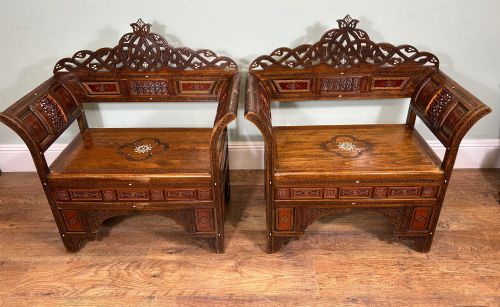
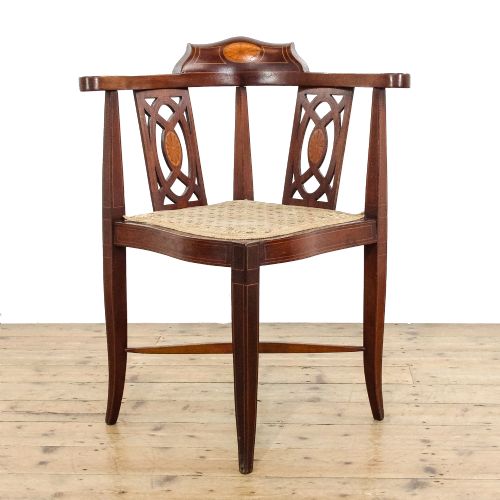
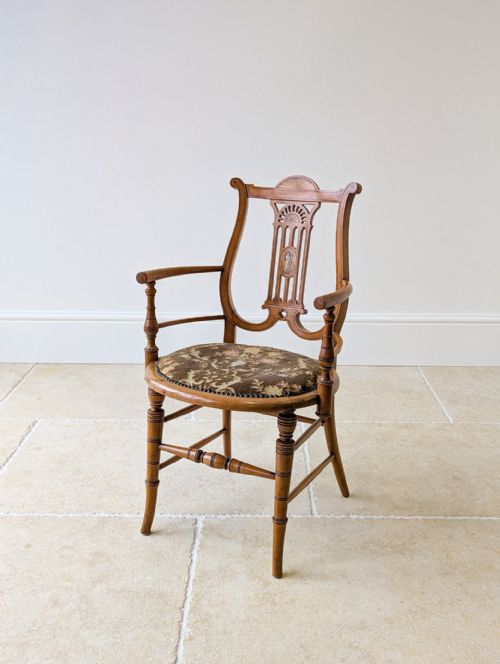
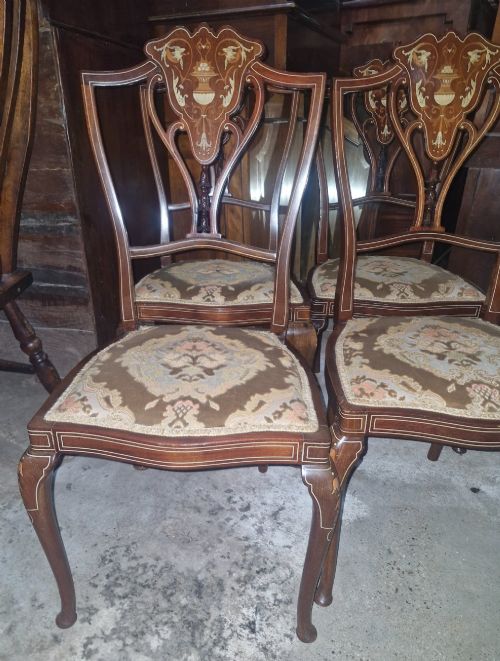
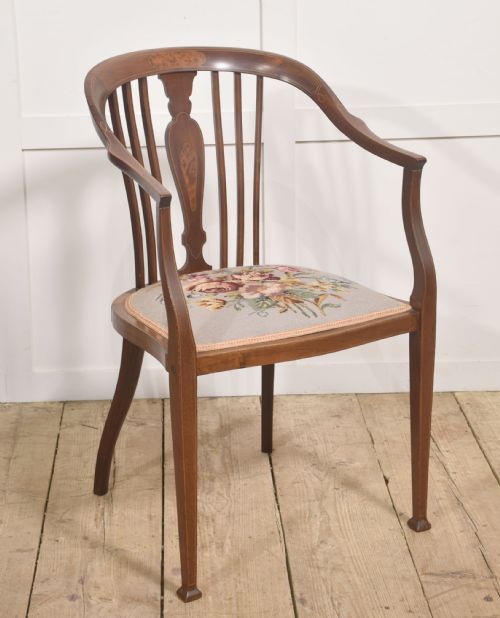
Brown marquetry chairs encompass seating made from mahogany, walnut, and rosewood, decorated with contrasting wood veneers. When searching for brown marquetry chairs, buyers encounter forms ranging from dining chairs and carver armchairs to corner seats, occasional chairs, and desk chairs.
The selection spans several eras, featuring examples from the 18th century through to Edwardian interpretations of earlier styles. Edwardian mahogany pieces with inlaid decoration appear most frequently alongside Victorian and 19th-century variants.
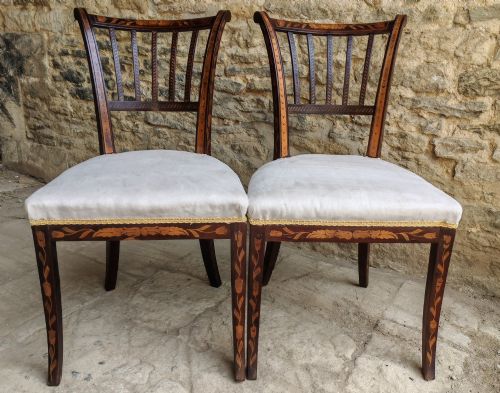
Different seating types serve varied functions within a room, from high-backed Dutch dining chairs to low bedroom chairs and revolving ships chairs. Each form demonstrates how makers applied detailed wood inlay to practical household furniture across multiple decades.
How they were made
Craftsmen built the structural frames using solid hardwoods like mahogany, walnut, and rosewood, shaping supports into cabriole legs, turned spindles, or curved armrests. These dense timbers provided a sturdy skeleton capable of supporting everyday use.
Makers applied thin veneers of contrasting materials such as satinwood, fruitwood, and other light timbers onto the primary surface to form intricate patterns. Brass mounts, ormolu details, and upholstered fabric pads supplemented the wooden marquetry on select pieces.
Brown Marquetry Chairs Retail Price Guide 2026
Typical asking prices for brown marquetry chairs among the pieces listed under this phrase on Sellingantiques today, from the lower quarter to the upper quarter. They describe what is for sale here now, not the wider market.
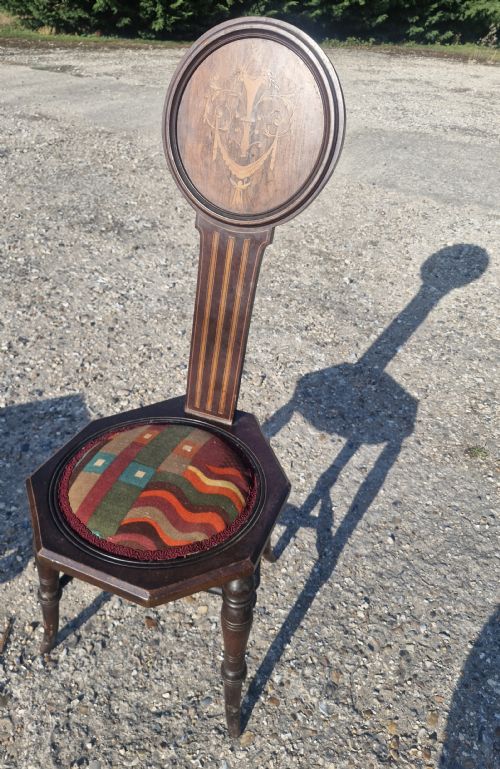
Among the seating are specialised spinning chairs, designed tall and narrow so practitioners could work their distaffs unhindered.
What varies in quality
The precision and complexity of the wood inlay dictate the visual hierarchy of these chairs. Finer examples display tightly fitted veneers with seamless transitions between contrasting timbers, whereas simpler versions rely on basic geometric borders.
The choice of primary timber and the execution of the carved details affect overall distinction. Chairs retaining original upholstery methods and undisturbed surface patination demonstrate superior preservation compared to heavily altered specimens.
Shoolbred·Jenks and Wood
The Brown Marquetry Chairs Glossary
- Marquetry
- Decorative veneer work assembled in patterns using different coloured woods and materials. It differs from inlay by covering the entire surface rather than resting inside a carved recess.
- Satinwood
- A pale, durable timber utilised for contrasting details and panels in marquetry designs. Its yellow hue provides sharp visual separation against darker mahogany frames.
- Carver
- An armchair designed to match a set of smaller dining chairs, traditionally placed at the head of a table. These pieces often feature broader armrests and more elaborate back designs.
- Sheraton Revival
- A late 19th and early 20th-century design movement mimicking the neoclassical furniture styles of the late 18th century. It frequently incorporates delicate mahogany framing with satinwood inlay.
- Parquetry
- Geometric mosaic woodwork forming repeating patterns like cubes or herringbone. Unlike floral marquetry, parquetry relies on angular symmetry.
Brown Marquetry Chairs: Frequently Asked Questions
How do I care for inlaid wooden chairs?
Keep the wood nourished with appropriate wax polishes and avoid placing the furniture near direct heat sources or strong sunlight. Excessive temperature changes cause the thin veneers to lift.
Inspect the joints periodically and lift chairs by their main frame rather than fragile armrests or decorative crest rails to maintain stability.
Are these chairs suitable for daily use?
Most sturdy dining and desk chairs handle regular seating well, provided the structural joints remain tight and secure. Antique chairs benefit from mindful usage compared to modern counterparts.
Softer occasional chairs or delicate bedroom pieces work better for light service or decorative placement rather than heavy lounging.
What is the difference between marquetry and inlay?
Marquetry covers an entire surface with a veneer puzzle of different woods to create a pictorial or decorative scene. The pieces are assembled before being glued to the carcase.
Inlay involves carving a recess directly into solid wood and fitting a contrasting material into that specific pocket.
How can I tell the period of a chair?
Examine the timber species, construction methods, and design motifs to identify the era. Edwardian pieces often utilise light mahogany frames with refined satinwood stringing, while 18th-century examples display heavier walnut construction with high backs.
Cross-reference the secondary woods and joinery techniques underneath the seat to confirm the manufacturing period.